

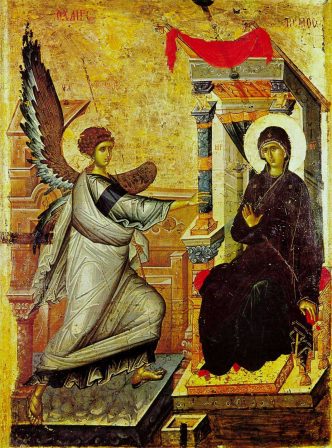
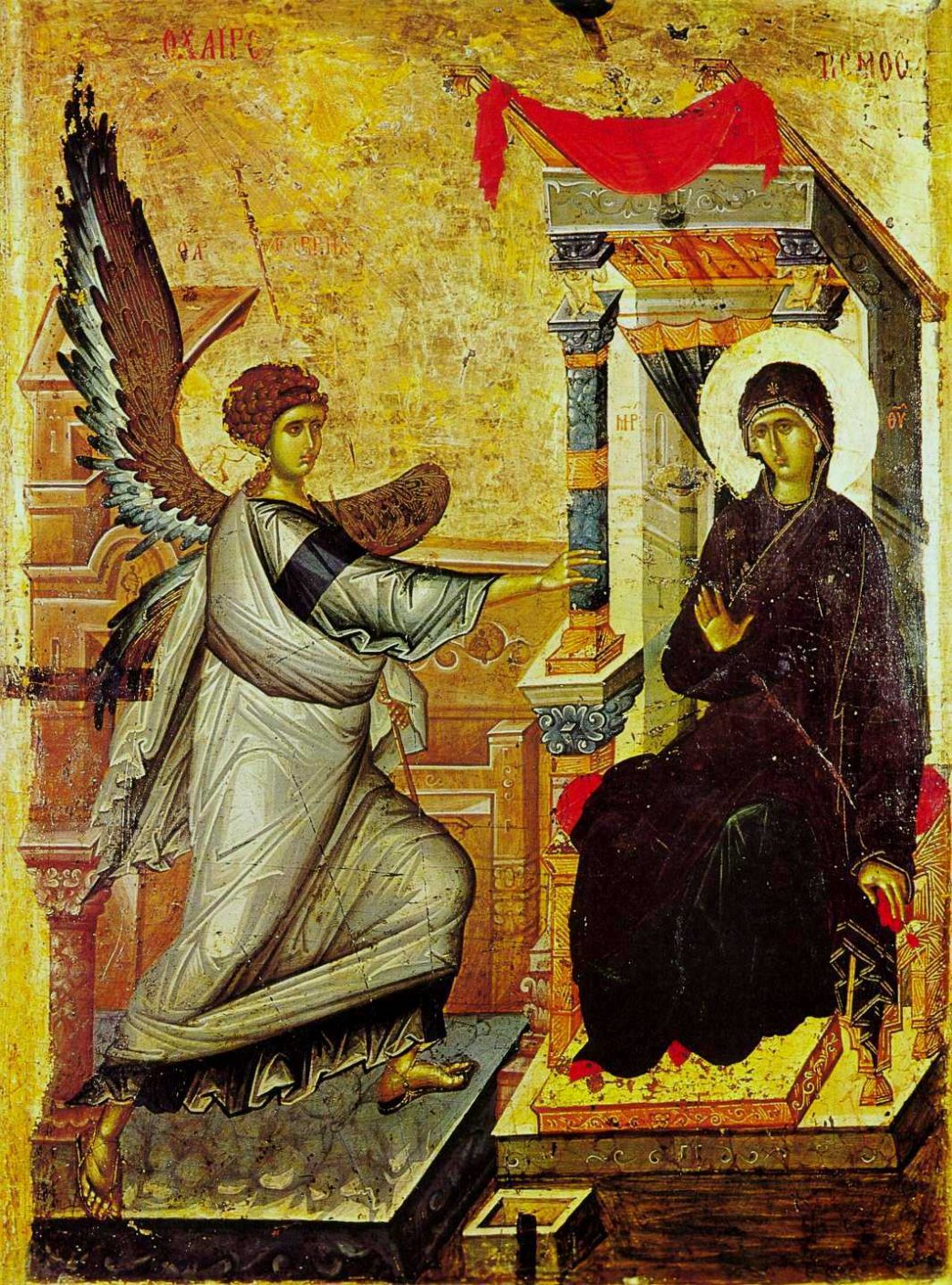
The Annunciation is one of the twelve greatest feasts in Orthodox Christianity. It marks an event that, in theological terms, represents the beginning of the Christian history of salvation. The Serbian Orthodox Church celebrates it on April 7 according to the Gregorian calendar, or March 25 according to the Julian calendar.
The feast is dedicated to the moment when the Archangel Gabriel told the Virgin Mary that she would give birth to Jesus Christ. In theology, that event is understood as the beginning of God’s incarnation in human form.
Theological meaning of the feast
According to Christian tradition, the Archangel Gabriel appeared to the Theotokos in Nazareth and told her that she had been chosen to give birth to the Son of God. This event holds a central place in Christian doctrine. It marks the beginning of the Incarnation, the beginning of the salvation of humankind, and the moment in which God’s will is fulfilled in history.
This interpretation belongs to the official teaching of Christianity. It is the foundation for understanding the feast itself.
The feast in the calendar and liturgical rules
The Annunciation is a fixed feast and is always observed on the same date. What makes this day special is the fact that it falls during Great Lent, yet it holds an exceptional status within that period. Although it is a time of restraint, fish is permitted on the Annunciation, unless the feast falls during Holy Week.
In liturgical practice, fasting and joy are joined together on this day. That reflects the dual nature of the feast, which is both ascetic and celebratory.
Folk beliefs: the beginning of a new cycle
Beyond its church meaning, the Annunciation also has a strong place in folk tradition. In that context, the feast is seen as a symbolic beginning of spring and of a new natural cycle.
According to the folk calendar, this is the day when “winter ends,” farm work begins, and nature awakens. It is often said that birds start building nests only after the Annunciation. It is also believed that work in orchards and vineyards begins only then.
These interpretations belong to folk heritage. They are not part of official church teaching.
Customs and practices in Serbia

In different parts of Serbia, customs connected with this feast developed as symbolic acts of protection and renewal. One of the most widespread is making noise by banging on metal objects and lighting fires. This is interpreted as a way of “driving away” snakes and pests.
The Church recognizes the Annunciation as a feast of the Mother of God. However, the specific beliefs related to fertility and the outcome of pregnancy come from folk tradition, not from dogmatic teaching.
There is also the custom of washing in a river or stream, which is linked with health and purification. At the same time, in some regions there are certain prohibitions. These include avoiding harder physical work or postponing certain activities until another day.
All of these customs belong to the layer of folk practice. They carry symbolic meaning that developed independently from official church tradition.
The feast’s special meaning for women
In folk tradition, the Annunciation is especially connected with women, above all in the context of childbirth and family life. The feast is seen as a suitable moment for prayer, for going to church or a monastery, and for seeking a blessing.
The symbolism of a “new beginning”
In modern interpretations, especially in the media, the Annunciation is often presented as a day suitable for new beginnings and making decisions. This idea is rooted in the symbolism of the feast itself, which marks the beginning of salvation. In the modern context, however, it has taken on a more practical and everyday meaning.
It is important to stress that such readings are interpretations, not part of religious teaching.
Weather-related beliefs
Within folk tradition, there are also beliefs that connect the weather on the Annunciation with the course of the coming year. Clear weather is seen as a sign of a fertile year. Snow is viewed as an unfavorable sign. Cloudy weather is linked with an unstable period.
These beliefs belong to agrarian tradition. They are characteristic of societies that depended directly on natural conditions.
Separating the layers of meaning
Viewed as a whole, the Annunciation includes several distinct layers of meaning.
In the church sense, it marks the beginning of Christ’s incarnation and has a clearly defined place in Christian theology. In folk tradition, it is linked with spring, the renewal of nature, protection, and health. In the modern media space, it is often interpreted as a day suitable for personal decisions and symbolic beginnings.
Distinguishing between these layers allows for a more precise understanding of the feast. It helps avoid mixing dogmatic teaching, folk beliefs, and modern interpretations.