

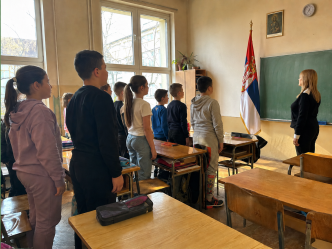
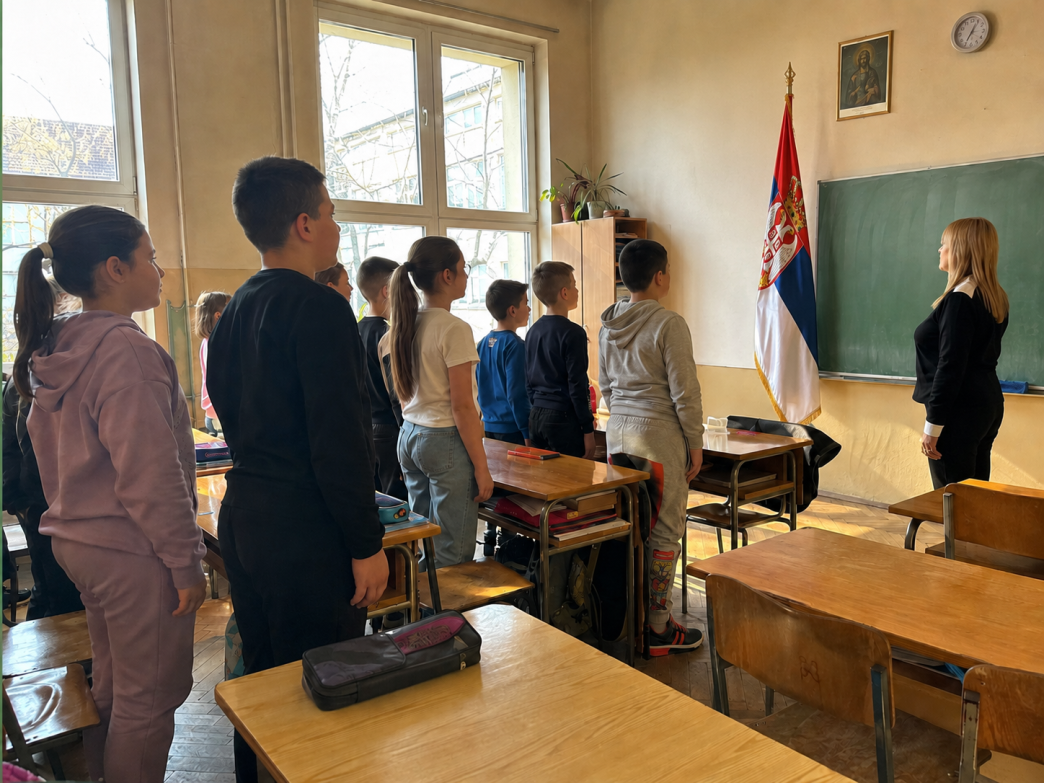
It Is Time to Amend the Law: The National Anthem “Bože pravde” Should Be Heard Every Day in Serbian Schools and State Institutions
Under Serbia’s current Law on the Foundations of the Education System, the national anthem, “Bože pravde” (“God of Justice”), is played only on the first day of the school year. That is a step forward compared with earlier practice, but it raises a logical question: if the anthem, the flag, and the coat of arms are the country’s most important state symbols, why are students exposed to them only once a year?
There is another question worth asking. Why was the former Yugoslav anthem, “Hej Sloveni” (“Hey, Slavs”), almost never a source of controversy among Serbs? Very few people would have thought of ignoring it, staying seated, or kneeling while it was being performed. The same is true today for Serbs living abroad, who generally have no problem respecting the national symbols of the countries where they have settled.
The author of this text has repeatedly seen children of Serbian origin in American schools sing the anthems of their new homelands without hesitation, treating it as a normal part of school life and civic education. That is precisely why it is worth asking why something considered normal and acceptable in other countries sometimes becomes controversial when it comes to respecting the national symbols of Serbia.
Why the anthem should become a daily part of schools and the state
A national anthem represents the state, its historical continuity, its institutions, the sacrifices made to create it, and the values on which it stands. That is why more and more people believe the time has come to amend the law and require “Bože pravde” to be played every school day before classes begin in all elementary and secondary schools across Serbia.
The same practice should apply in state institutions. Ministries, local governments, courts, public enterprises, and other institutions that represent the state should begin each working day with the national anthem. In that way, the state would show that it takes its own symbols seriously and that respect for statehood is expected not only from citizens, but also from the institutions that represent it.
The experience of other countries and the educational role of the anthem
This idea is not based only on emotion or politics. It also has strong support in the educational and civic practice of many countries around the world. In Canada, for example, it is officially emphasized that the anthem helps develop loyalty to the country and encourages the social, moral, and spiritual development of students. In Australia, Singapore, India, and Thailand, the anthem plays an important role in connecting young people with the history, culture, and identity of their nation.
Beyond strengthening national identity, the anthem also serves an integrative purpose. Regardless of social class, political belief, or personal opinion, everyone becomes part of the same community. That is why many countries stress that the anthem helps foster solidarity and a sense of shared belonging among citizens.
Its disciplinary and educational role is no less important. Respect for the flag, the coat of arms, and the anthem ultimately means respect for the institutions of the state. When students learn to stand, remain still, and observe the anthem with dignity, they are learning more than protocol. For that reason, countries such as Singapore, Turkey, and Vietnam treat the playing of the anthem in schools as an important part of educating responsible citizens.
Human rights, freedom of conscience, and the limits of personal belief
Opponents of such proposals usually appeal to human rights and freedom of conscience. And it is true that the Charter of Fundamental Rights of the European Union guarantees freedom of thought, conscience, religion, and expression. Article 10 states that everyone has the right to freedom of thought, conscience, and religion, including the right to manifest or not manifest their beliefs. Article 11 guarantees freedom of expression, which also includes the right not to be forced to express views or beliefs against one’s will.
However, neither of these provisions prevents states from introducing the playing of the national anthem in schools or public institutions as part of civic education and respect for national symbols.
No one should be required to sing the anthem
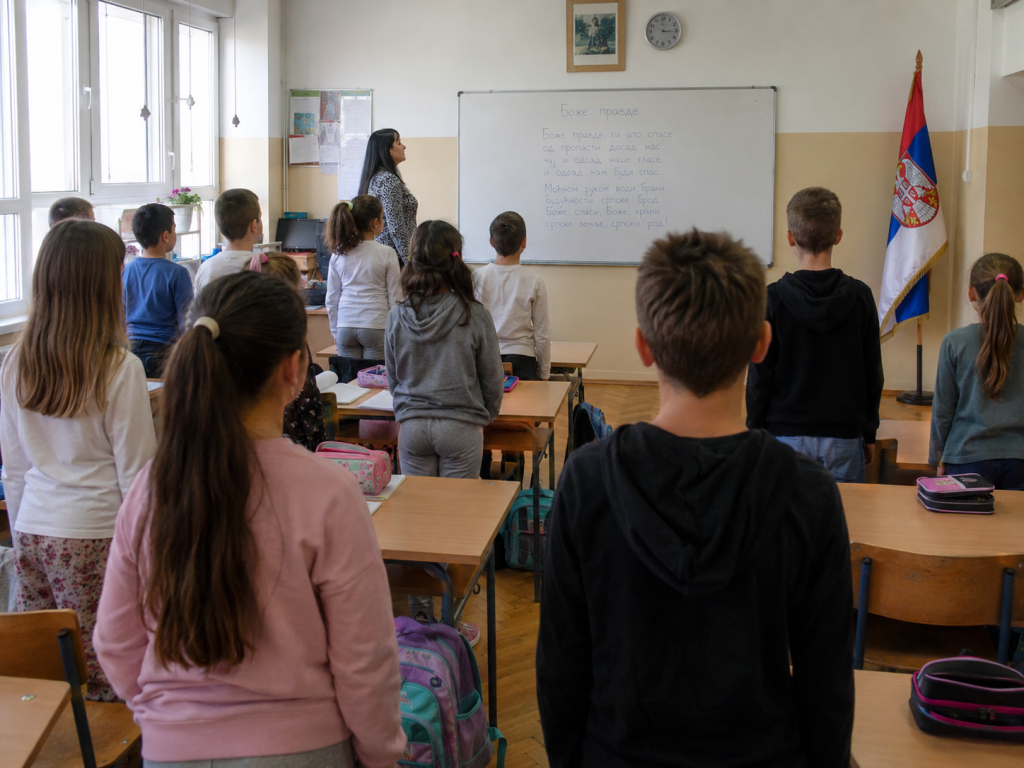
No one should be required to sing the anthem if they do not wish to do so. However, respect for a national symbol should be the minimum expected of every student and every public servant. Standing respectfully during its performance and behaving with dignity represent a basic level of respect that does not infringe upon anyone’s freedom.
In practice, however, the idea of freedom is often interpreted very broadly. It is enough for someone to say that something is “offensive,” inconsistent with their beliefs, or simply makes them uncomfortable, and suddenly every obligation comes into question. Yet that raises an important issue: where is the line between a genuine right to personal belief and the avoidance of civic responsibility?
This becomes especially sensitive when refusal to respect the anthem is based not on religious grounds, but on political ones. In some communities, there have already been cases in which people refused to play the anthem or even to stand during its performance and show basic respect. Such behavior cannot be viewed only as a matter of personal conscience. It also reflects an individual’s attitude toward the state and its institutions.
Law, penalties, and the need for new standards of conduct
According to amendments to the Law on the Foundations of the Education System adopted at the end of 2021, a school that fails to play “Bože pravde” at the beginning of the school year commits a misdemeanor. Institutions can be fined between 100,000 and 1,000,000 dinars, while directors and other responsible officials can face fines ranging from 25,000 to 100,000 dinars. On the other hand, Serbian legislation still does not provide a specific misdemeanor penalty for individuals who refuse to stand during the anthem or who disrupt its performance through their behavior.
The law should be tightened, and new provisions should be introduced. It is especially important that responsibility should not rest only with institutions that fail to organize the anthem, but also with individuals who knowingly and deliberately show disrespect toward national symbols during its performance. Intentionally remaining seated, whistling, shouting remarks, mocking the anthem, turning one’s back, disrupting the ceremony, or engaging in other inappropriate conduct should not be treated as expressions of political opinion or exercises of freedom of thought. They are acts of disrespect toward national symbols.
The purpose of such measures would not be punishment for its own sake. The goal would be to establish clear standards of conduct and ensure consistent respect for state symbols. Just as respect for the flag, the anthem, and other national emblems is expected in most countries around the world, Serbia also has the right to expect a dignified attitude toward the symbols that represent its statehood, history, and institutions.
Photos: AI