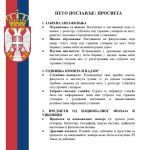


The Serbian Sovereigntists movement, led by Vukša Dragović, has unveiled the “Sovereigntist Act,” a document setting out principles for amending legislation governing the activities of non-governmental organizations in Serbia.
The proposed measures include establishing a register of entities under foreign influence, monitoring their funding and public activities, and regulating their involvement in the media, the electoral process, government institutions, the judiciary, education and scientific research institutions.
The document also proposes fines and prison sentences for violations of its provisions.
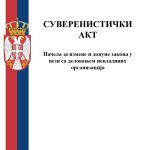
SOVEREIGNTIST ACT
Principles for Amending Legislation Governing the Activities of Non-Governmental Organizations
Belgrade, September 2026
CHAPTER ONE: OVERSIGHT OF ENTITIES UNDER FOREIGN INFLUENCE
1. Institutional Framework and Registers
- Definition of foreign influence: Foreign influence would be defined as receiving or using donations from abroad.
- Establishment of an oversight authority: An Authority for the Oversight of Entities Under Foreign Influence would be established (hereinafter: the Authority).
- Public registers: The Authority would maintain public registers of all entities under foreign influence and all members of citizens’ associations.
- Abolition of informal associations: Informal citizens’ associations would no longer be recognized.
2. Membership and Donations
- Professional associations: Membership and funding would be restricted to Serbian citizens, government bodies and legal entities registered in the Republic of Serbia. Judicial associations could be financed exclusively through membership fees and government grants.
- Trade unions: Membership fees and government funding, or donations from the parent company, would be their only permitted sources of income.
- Prohibition on transferring donations: The further transfer or assignment of foreign donations would be prohibited.
3. Financial Oversight and Taxation
- Monitoring financial inflows: Documentation and prior approval from the Authority would be required for every foreign-currency transfer.
- Taxation: All foreign donations would be subject to a uniform special tax rate of 20 percent.
- Transparency: Entities would be required to publish a detailed breakdown of all income and an itemized account of expenditures.
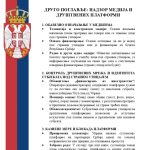
CHAPTER TWO: OVERSIGHT OF THE MEDIA AND SOCIAL MEDIA PLATFORMS
1. Mandatory Disclosures in the Media
- Television and digital media: A permanent, clearly visible notice would have to appear during any program in which a person under foreign influence speaks or is mentioned.
- Funding disclosure: Media outlets would be required to display continuously whether they are under foreign influence or funded from the budget of the Republic of Serbia.
- Radio and other audio media: At the beginning of a program, broadcasters would be required to disclose the participation of any person under foreign influence. They would also have to inform listeners every three hours of their own sources of funding, whether foreign or from the state budget.
2. Regulation of Social Media and the Identities of Entities Under Foreign Influence
- “Foreign-funded” notice: Social media platform operators and administrators would be required to place this label alongside the name of an individual or entity after receiving instructions from the Authority.
- Placement of the label: The label would have to appear above every post, including text, photographs, videos and stories; next to the name in comments; in search results; and whenever content is shared by third parties.
- Mandatory identification: Entities under foreign influence would be permitted to appear on social media only under the individual’s full legal name or the entity’s official name.
3. Penalties and Platform Blocking
- Temporary suspension: Upon detecting or receiving a report of a violation, the Authority would order the immediate suspension of the platform in Serbia until the violation had been remedied.
- Operating ban: A platform suspended three or more times within a calendar year would be completely banned from operating for a period of one to three years.
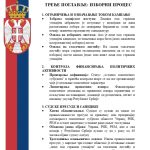
CHAPTER THREE: THE ELECTORAL PROCESS
1. Restrictions and Disclosures During Election Campaigns
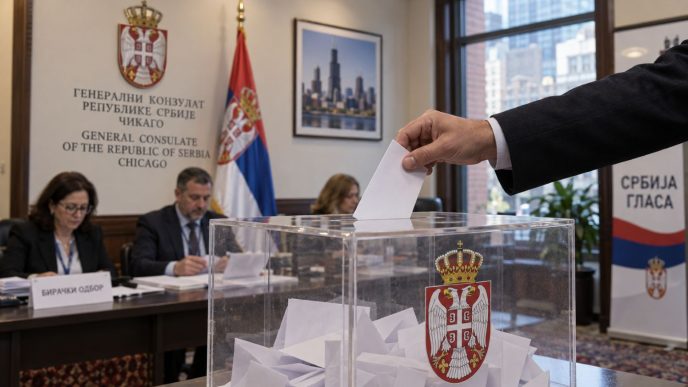
- Ban on media appearances: Individuals under foreign influence would be prohibited from appearing in the media from the day elections are called until the polls close, unless they are officially registered candidates.
- Labeling of electoral lists: If an individual under foreign influence is a candidate, that fact would have to be clearly indicated on the officially approved electoral list.
- Notice on the ballot: The ballot itself would have to carry an explicit notice stating that the electoral list includes one or more individuals under foreign influence.
2. Oversight of Political Financing
- Expanded definition: The category of “other political entities,” together with the corresponding oversight measures, would be extended to all organizations whose activities are political in nature.
- Restrictions on private funding: Private funding of political activities would be limited exclusively to membership fees, donations from Serbian residents, bequests and assets located within the Republic of Serbia.
3. Court Judgments and Sanctions
- Immediate notification: Once a judgment establishing the criminal or misdemeanor liability of a political entity becomes final, courts would be required to notify the Authority, the Republic Electoral Commission, the Regulatory Authority for Electronic Media and all other relevant institutions immediately so that they could take further action.
- Mandatory publication: The Authority, the Republic Electoral Commission, the Regulatory Authority for Electronic Media and all media outlets in Serbia would be required to publish the court ruling within 48 hours.
- Three-year punitive label: For three years following a final judgment, the label “person under foreign influence” would have to appear on the ballot and during every media appearance by the entity concerned. If the subject were a legal entity, the requirement would also apply to its leadership or members.
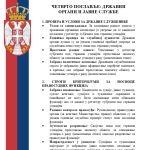
CHAPTER FOUR: GOVERNMENT BODIES AND PUBLIC SERVICES
1. Vetting and Eligibility Requirements for Civil Servants
- Employment requirement: Anyone seeking employment in a government body would be required to provide a certificate confirming that they are not listed in the register of entities under foreign influence.
- Mandatory annual review: Government bodies would be required to obtain annual confirmation that each civil servant does not have the status of a person under foreign influence.
- Termination of employment: Entry in the register of entities under foreign influence would constitute statutory grounds for the immediate termination of employment.
- Prohibition on political activity: Civil servants would be strictly prohibited from publicly endorsing a particular political position. Any violation would constitute statutory grounds for immediate dismissal.
2. Strict Eligibility Criteria for Judicial Officeholders
- Prohibition on appointment: Candidates for positions as judges, public prosecutors, court-appointed expert witnesses, judicial or prosecutorial associates, and assistants could neither be appointed nor continue to serve if they were listed in the register of entities under foreign influence.
- Regular review within the judiciary: Heads of judicial institutions—and, in the case of expert witnesses, the Ministry of Justice—would be required to conduct an official annual review of the status of all officeholders.
- Automatic dismissal: Being designated a person under foreign influence would constitute statutory grounds for the immediate termination of employment or removal from judicial office.
- Public impartiality: Judges and prosecutors would be strictly prohibited from engaging publicly in political activity or endorsing political entities. Violations would result in immediate removal from office.
CHAPTER FIVE: EDUCATION
1. Employment Restrictions
- Restrictions in schools: Preschool and school teachers listed in the register of entities under foreign influence would be prohibited from working in schools and preschool institutions.
- Higher education: University faculty members designated as persons under foreign influence could neither be appointed to academic positions nor enter into employment.
- Scientific research institutes: Researchers at state-run scientific institutes could neither be appointed to research positions nor continue working if they were registered as entities under foreign influence.
2. Annual Vetting and Oversight
- Official review: The heads of all preschools, schools, universities and research institutes would be required to obtain annual confirmation that their employees were not listed in the register of entities under foreign influence.
- Prohibition on outside involvement: Informal individuals or entities under foreign influence would be strictly prohibited from participating in regular classes or extracurricular activities at educational institutions.
3. Subjects of National Importance and Textbooks
- Subjects of national importance: These would include the Serbian language, history, biology, geography, religious education, civic education and physical education.
- State publisher: All textbooks and educational materials for subjects of national importance could be published exclusively by the state-owned Institute for Textbooks.
CHAPTER SIX: LIABILITY
1. Fines for Misdemeanors and Commercial Offenses
- For misdemeanors and commercial offenses in any of the areas listed above, legal entities would be fined between 500,000 and 5,000,000 dinars. Responsible individuals and natural persons would be fined between 100,000 and 1,000,000 dinars. Any funds involved in the misdemeanor or offense would be confiscated.
2. Penalties for Criminal Offenses in the Electoral Process
- Criminal offenses in this area would be punishable by prison sentences ranging from six months to three years, as well as fines. All funds involved in the offense would be confiscated.
3. Criminal Offenses Involving Government Bodies, the Judiciary and Online Platforms
- Criminal offenses in this area would be punishable by prison sentences ranging from one to five years, as well as fines. All funds involved in the offense would be confiscated.
The Serbian Sovereigntists call on all Serbian citizens and legal entities owned by Serbian citizens to assist us in creating a National Register of Agents of Foreign Influence and drafting amendments to 14 laws that would regulate the activities of the “NGO hydra”. These measures would protect the vital interests of the state and the Serbian people and support our fight against foreign agents operating in the Republic of Serbia.
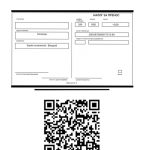
You can assist us by submitting proposals, ideas and information about the activities of the “NGO hydra” in your village or town, or by making a financial contribution in accordance with the instructions shown in the image. We do not wish to depend on anyone other than the citizens of Serbia.