

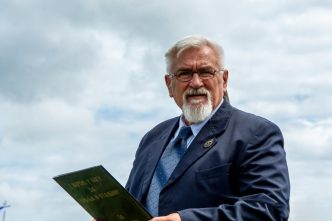
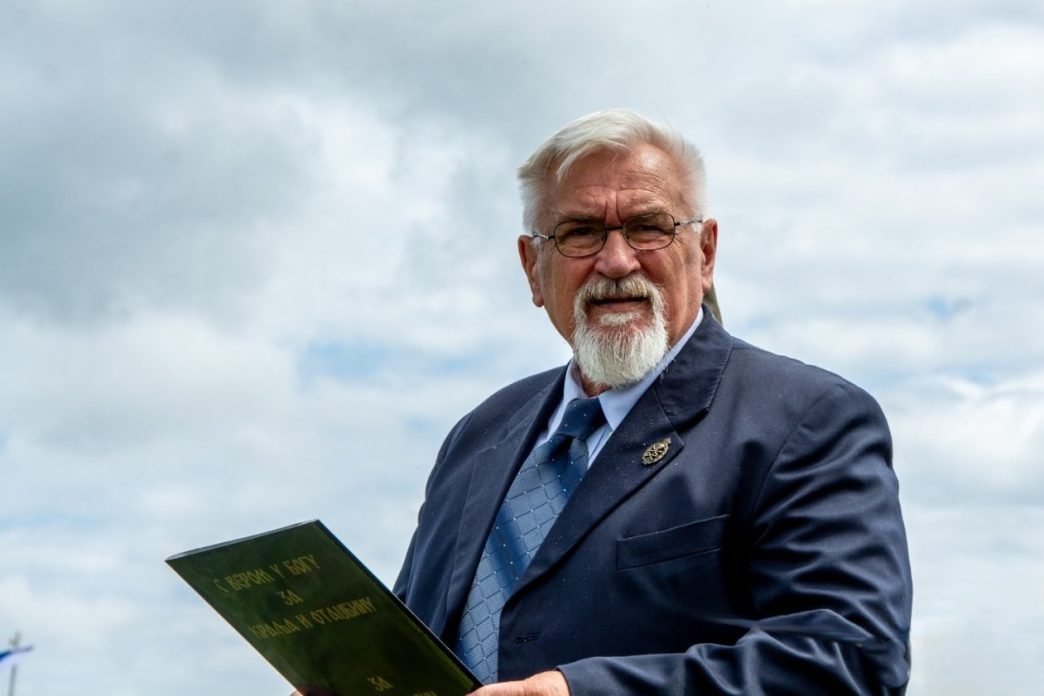
Interview with Ljubivoje Nenadović, President of the Ravna Gora Movement
Do you know what the Ravna Gora Movement is? Probably very few people know that it is an organization whose primary goal is the prosperity and renewal of the Serbian people.
“The Ravna Gora Movement is a national and above-party organization, not renewed to be a party organization but an all-Serbian and responsible people’s movement. The committees of the Ravna Gora Movement are organizationally structured according to its statute. The idea of the Ravna Gora Movement continues to live and to be realized through the work of our committees.
The goal of the Ravna Gora Movement is not the struggle to seize power, but to direct all of its strength toward the spiritual, moral, national, social, economic, and cultural renewal of the Serbian people. We believe that no private interest can be above the interest of the community as a whole.” — this is stated in the Declaration of the Ravna Gora Movement.
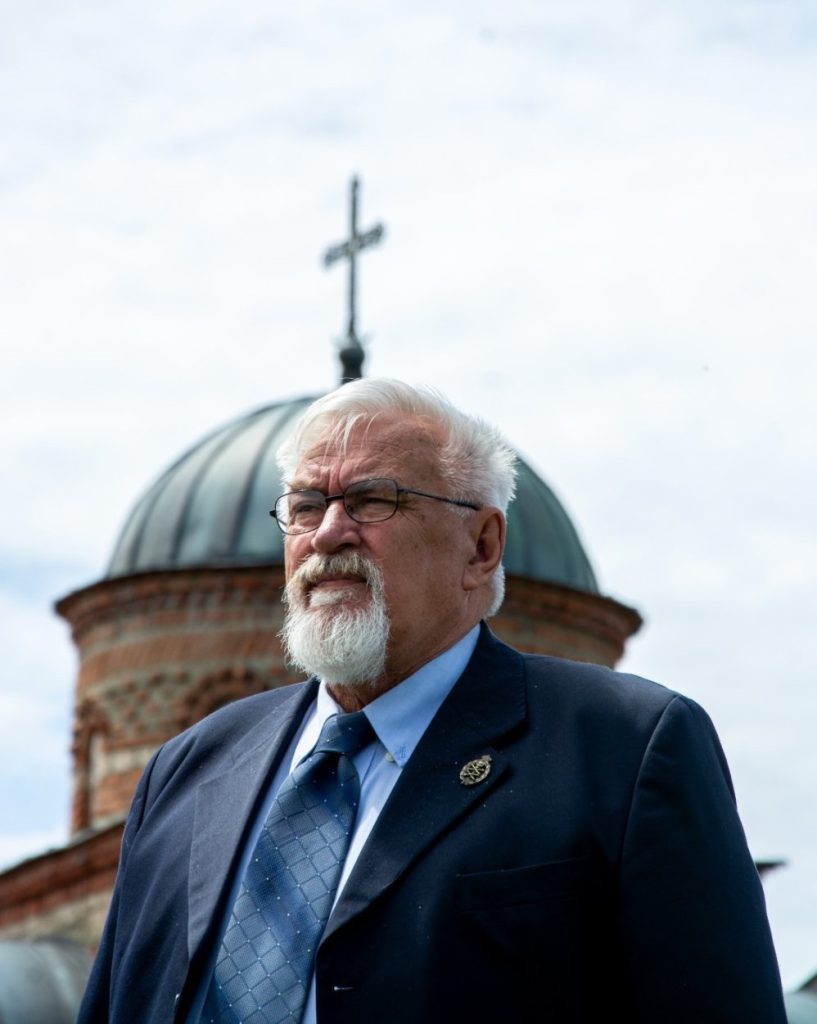
In an interview for Chicago na dlanu, the Movement’s president Ljubivoje Nenadović answered some of the key questions. Among other things, we asked him what has changed since the rehabilitation of General Draža Mihailović, how the Chetnik movement has modernized, and what can be expected from it in the future.
Rehabilitation, history, and unresolved questions
General Draža Mihailović was legally rehabilitated back in 2015. Has anything fundamentally changed in Serbia since then?
The legal rehabilitation of General Mihailović, apart from “equating” the two anti-fascist movements, has practically brought nothing new. No surviving Chetnik has received a veteran’s pension, and their descendants still cannot attend military and police schools, nor can they be employed in state services. The Ravna Gora Movement operates semi-legally, while the decisions of the Ba Congress have remained unknown to the political public.
This year marks 80 years since the death of Draža Mihailović, and the place where he was buried is still unknown. How will you mark this anniversary?
It has already been 80 years since the general’s death, and the place where he was buried is still unknown, as is the identity of the person who killed him.
At our gatherings, we remind the authorities and ask the state of Serbia to publish the documents related to this. To bury Čiča Draža in a place worthy of the first guerrilla fighter of Europe, and for the Military Academy to bear his name, because he is, among other things, one of the most decorated Serbian officers of all time. He is certainly the Serbian officer who underlined to the whole world that “the word capitulation does not exist in the Serbian language!”
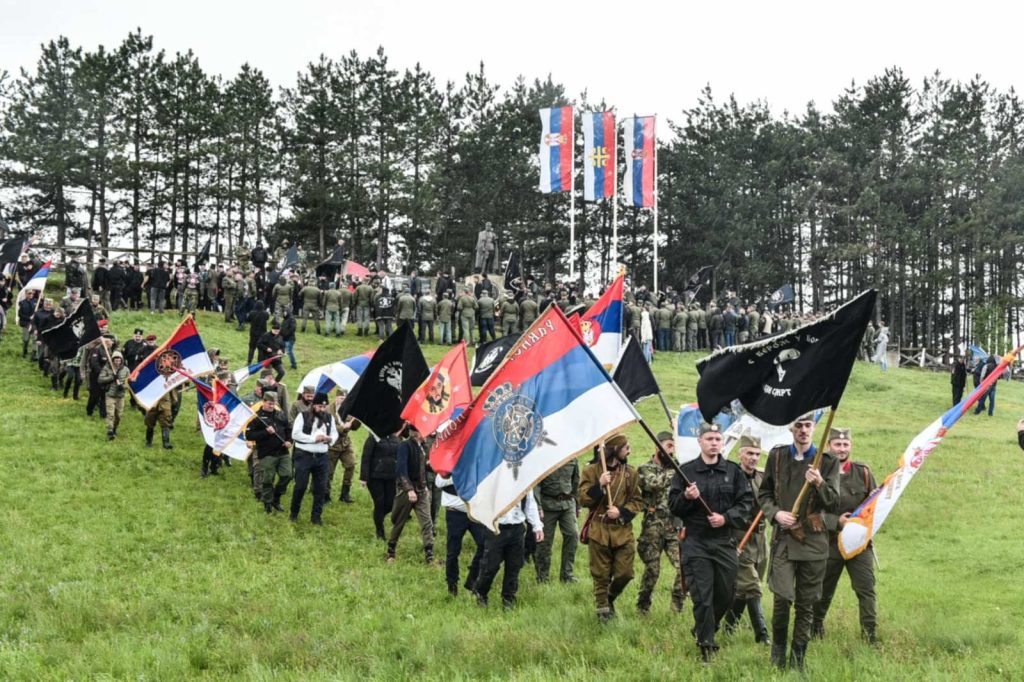
This year as well, on Ravna Gora, we repeated and sent those requests to the authorities of the state of Serbia, to the Serbian public, and to the international public.
How aware are younger and older generations that history is written by the victors, and that some events described in “official” history did not happen the way they are described?
History is mostly written by the victors. In our case, the question of who the victor is remains open.
Are they the descendants of the units that carried the red star and turned themselves toward ruling Serbia, looting, and carrying out thieving privatizations, trying persistently to establish themselves as some new “nobility,” or are they us, the descendants of the Ravna Gora followers and their like-minded supporters?
The difference between us, put briefly, is that to them Serbia is spoils and a “homeland,” while to us it is the Fatherland. The history they wrote and based themselves on is increasingly being proven to be one great lie.
The movement today, youth, and ties with the diaspora
Has the Chetnik movement in Serbia and abroad modernized, and if so, how?
The Ravna Gora Movement in Serbia and the Serbian lands is an above-party, people’s organization that tries to keep its eyes open to everything happening in the world and in Serbia, and to adapt its way of organizing and acting, as much as possible, to the situation. At the same time, we firmly hold to our basic principles: we want a constitutional parliamentary monarchy that will unite all Serbian lands, and a King as the guardian of faith and protector of the people.
In that sense, we attract young people who, guided by patriotism, accept the Ravna Gora idea. With the arrival of the “young lions,” a large and organizationally functional Movement is being created.
Which organizations do you cooperate with most closely today? We are especially interested in your cooperation with the Serbian National Defense in Chicago.
Cooperation with brotherly movements abroad has been intensively improving in recent years, although it could be much better. To our brothers abroad whose roots are not from Serbia, we offer a brotherly hand so that they never feel rootless. Serbia is the mother to all of them, just as she is to us. To our brothers in the homeland, we offered the Declaration on urgently needed cooperation, that is, the achievement of common goals.
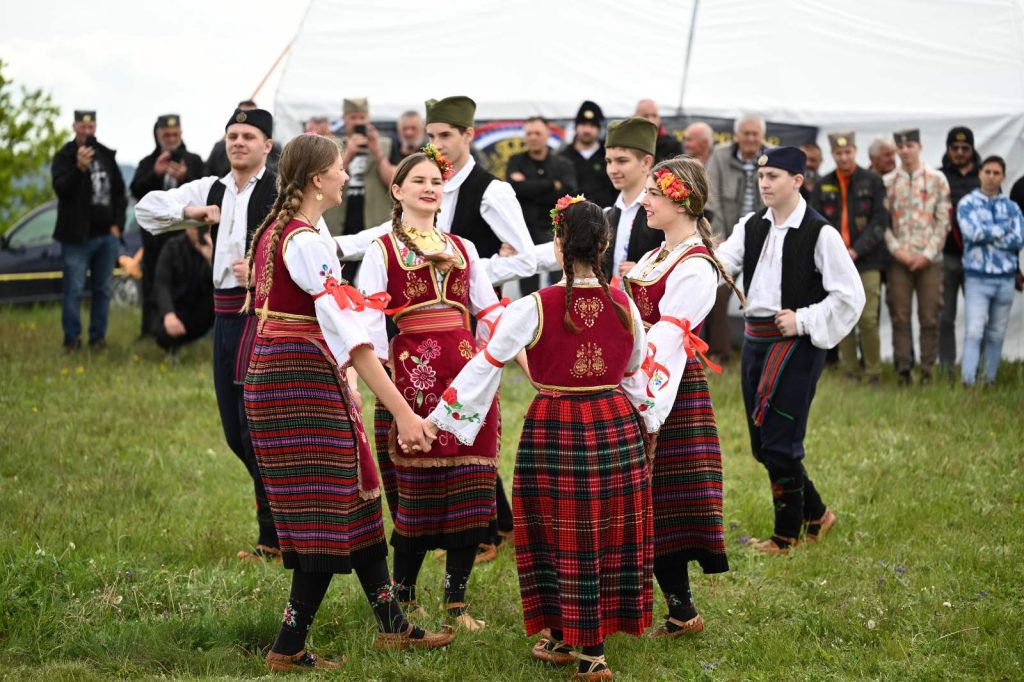
The Declaration as such has been very well received. That was seen and proven at our central Assembly on St. Mark’s Day on Ravna Gora, where the organizations that signed the Declaration were present.
We greatly respect and value the Serbian National Defense in the United States as one of the oldest Serbian national organizations. We would like to raise our relations to a higher level, all for the purpose of better cooperation related to the Serbian national question.
We also have very intensive and fruitful cooperation with the Organization of Serbian Chetniks Ravna Gora from Chicago and their president Mr. D. Selaković. Therefore, we are open to cooperation both with SNO and with other brotherly organizations.
We proudly wear T-shirts carrying the message: “From Chicago, my people — you know very well which ones.”
Reconciliation, national interests, and political vision
Is Serbia ready for genuine reconciliation between Chetniks and Partisans? Do you see room for cooperation with people from a different ideological framework who still act in the interest of Serbia and the Serbian people?
Serbia is, of course, ready for genuine reconciliation between Chetniks and Partisans, but for that to happen, certain preconditions must be fulfilled for what I would call national reconciliation.
I would start with the so-called session in Jajce. That session brought some fateful decisions, negative for the Serbian people. It was held in the middle of the war, very unlawfully both in terms of timing and in terms of the choice of representatives. Therefore, that session and the decisions made there should be annulled and the injustice done to the Serbs and Serbia should be corrected.
Then it is necessary to open, or make accessible, the files of the secret Yugoslav communist services, as well as to carry out lustration of all those services. Lustration would imply banning all those who sinned against the Serbian people while serving Josip Broz from dealing with state and public affairs.
Individuals from other ideological frameworks are welcome if they do not belong to the previously listed categories.
How do you define Serbian national interests today? Is there a realistic possibility of a broader social consensus around them?
A national program should be defined and arranged, one that would contain national interests and whose realization would be the goal of all relevant political parties, individuals, the King, and the Church.
A Serbian national program could be drawn up quickly, modeled after Ilija Garašanin’s “Načertanije,” and with the help of the media, presented to and adopted by the people and the state.
Where the Movement sees itself in the future
Where do you see the Ravna Gora Movement in the next 10 to 20 years?
In the future, with God’s help and our unity, and through the engagement of young and energetic people, the Ravna Gora Movement will become a strong above-party organization that will protect the interests of the Serbian people in the Parliament, in the Government, and on all sides and in all fields… In that way we will have a parliamentary group, God willing ministers, and of course generals, who together will be true and worthy representatives of the Serbian people.