

Two U.S. lawmakers have introduced a bill that would tie relations between Washington and Belgrade to progress on “the rule of law, media freedom, and the fight against corruption”. Although the bill is sharply worded, it has only been referred to congressional committees and currently lacks broader support.
A bill concerning Serbia was introduced in the U.S. House of Representatives on August 27. It was sponsored by Republican Congressman Joe Wilson of South Carolina and Democratic Congressman William Keating of Massachusetts.
The document is officially titled the Supporting the Rule of Law, Building Institutional Justice, and Accountability Act, abbreviated by its sponsors as the SRBIJA Act. It was introduced as H.R. 10183 and referred to the House Committee on Foreign Affairs and the House Committee on the Judiciary.
Although some media outlets have described it as a “law on Serbia,” it has neither been passed nor put to a vote. At this stage, it is merely a proposal backed by two of the House’s 435 members.
What Does the Bill Say?
Wilson and Keating claim that Serbia has experienced democratic backsliding, as well as a deterioration in the rule of law, judicial independence, and media freedom. The bill also refers to alleged corruption, alleged police conduct toward protesters, and the investigation into the collapse of the railway station canopy in Novi Sad, which killed 16 people.
A separate section focuses on Serbia’s relations with Russia, China, and Iran. If the bill were enacted, the U.S. Secretary of State would be required to prepare a report on Russian and Chinese political, economic, energy, and security influence in Serbia.
The State Department would also be required to submit to Congress a strategy for future relations with Belgrade. Among other issues, the document would address election conditions, anti-corruption efforts, public procurement, media freedom, judicial reform, and the investigation into the Novi Sad tragedy.
Is Serbia Being Threatened With Sanctions?
The bill supports financial sanctions and U.S. entry bans against individuals whom the U.S. administration determines to have been involved in alleged corruption, alleged human rights violations, alleged attempts to undermine democratic institutions, or alleged actions threatening stability in the Western Balkans.
However, the bill does not name any individuals who could face sanctions. Its introduction has not resulted in any new measures against Serbia, Serbian officials, or Serbian citizens.
The proposal also addresses the U.S.–Serbia Strategic Dialogue. It would require the Secretary of State to notify Congress before each future meeting that the talks would cover Belgrade’s relations with Moscow, Beijing, and Tehran, as well as election conditions, corruption, media freedom, and freedom of assembly.
If such certification were not submitted, State Department officials would be barred from participating in the dialogue, and federal funds could not be used for that purpose.
A Long Road to Passage
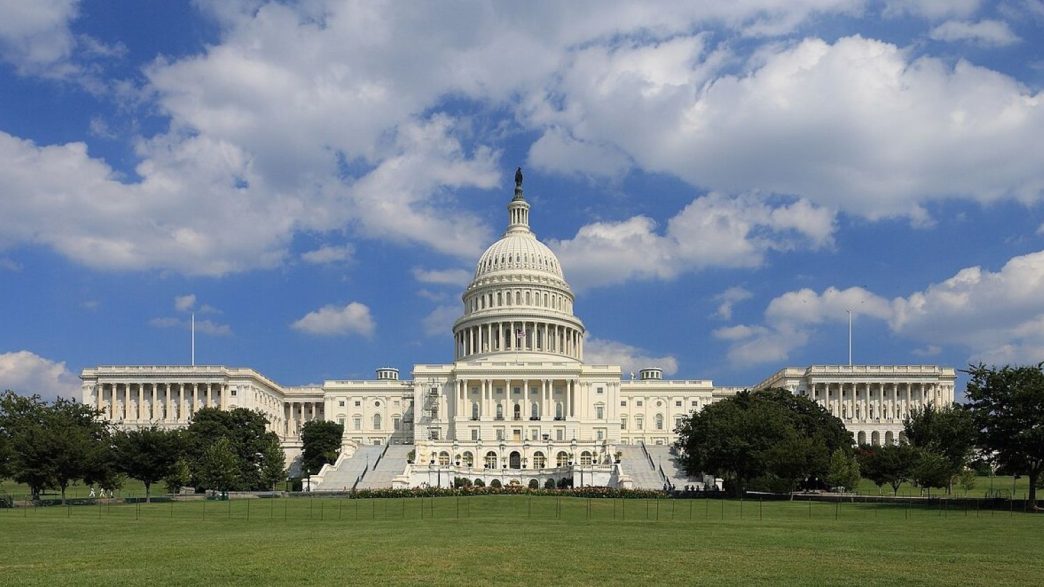
For the proposal to become law, it would first have to be considered by the relevant House committees. If approved by the committees, it could then be brought before the full House for a vote. Corresponding legislation would also have to pass the Senate before a final version could be sent to the U.S. president for signature.
None of these steps has been taken. No committee hearing has been scheduled, the bill has not been placed on the legislative agenda, and no corresponding proposal has been introduced in the Senate.
Because the two sponsors belong to different political parties, they can describe the proposal as bipartisan. However, this does not mean that it has substantial support among either Republicans or Democrats. At present, it is backed by only two members of Congress.
What Are Its Chances of Passing?
The chances of the bill being enacted as standalone legislation are very slim. It was introduced near the end of the current congressional term and ahead of the midterm elections, leaving little time for it to complete the entire legislative process.
Several other lawmakers may decide to support it. However, for the bill to have a serious chance of passage, it would need the backing of the leadership of the relevant committees, a much larger group of House members, and senators willing to introduce corresponding legislation in the upper chamber.
It is more likely that the sponsors could attempt to attach some of its provisions to a broader piece of legislation that Congress is already expected to consider. One possibility mentioned is the National Defense Authorization Act for Fiscal Year 2027, known as the NDAA. So far, however, there is no confirmation that any such effort has begun.
No Consequences for Serbia at This Stage
H.R. 10183 currently has no legal effect. It has not imposed sanctions, suspended the Strategic Dialogue, or changed relations between Serbia and the United States.
Its significance is primarily political. Wilson and Keating are seeking to send a message both to the authorities in Belgrade and to the U.S. administration that some members of Congress are closely monitoring developments in Serbia and want Washington to take a tougher approach toward the Serbian government.
However, the position of two lawmakers does not represent the position of Congress as a whole or the official policy of the White House. Unless the bill gains substantially broader support and begins moving through the committee process, it remains a form of political pressure rather than an immediate threat to Serbia.
Sources: BBC, GOV, Quiverquant Photo: Wikimedia