


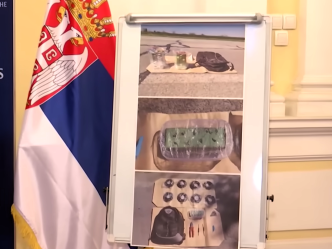
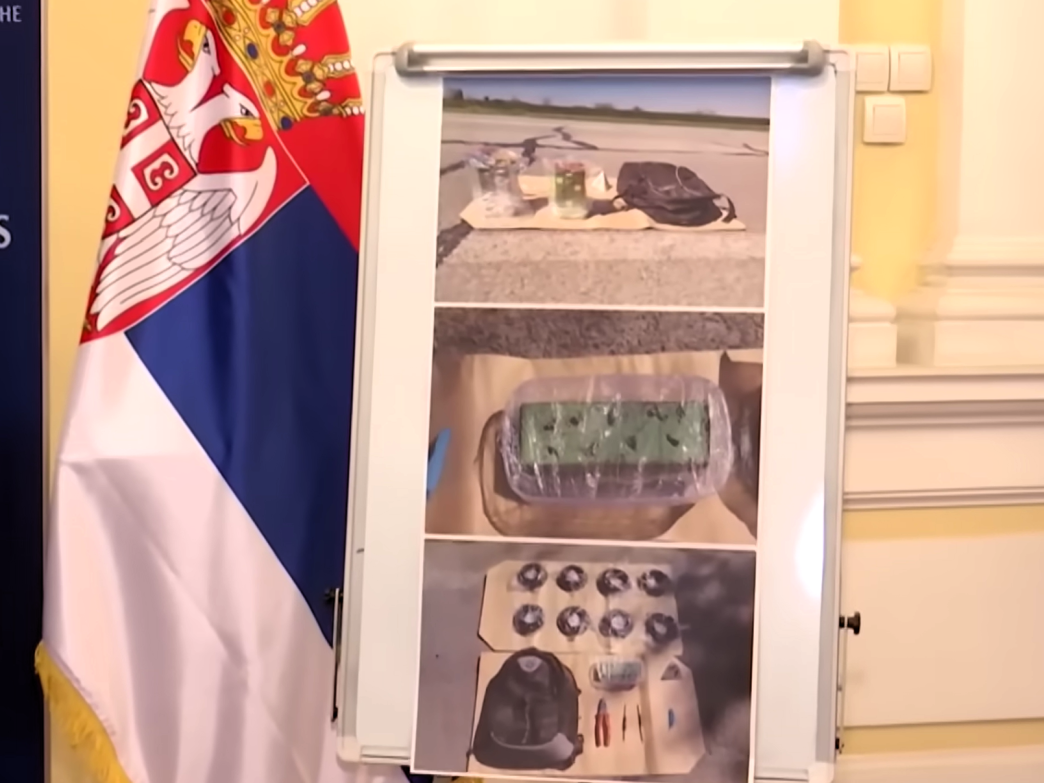
In northern Serbia, in the municipality of Kanjiža, a large security operation was launched after suspicious items were found near gas infrastructure. According to the report, “the Criminal Police Directorate and military police found suspicious items in the immediate vicinity of gas infrastructure in the Kanjiža area.” That discovery triggered the deployment of several security structures.
The operation was carried out with the approval of the Higher Public Prosecutor’s Office in Subotica. It followed information that critical gas infrastructure, as well as people living in the area, could be at risk. From the early morning hours, members of the Criminal Police Directorate, Military Police, the 72nd Special Brigade of the Serbian Army, and other Interior Ministry units were on the ground. Their task was to block and search a wider area of the municipality of Kanjiža.
Roadblocks and aerial surveillance
Several roads were closed as part of the operation. The goal was to control movement and allow the action to proceed without disruption. Roads from the village of Trešnjevac toward Vojvoda Zimonjić were blocked. The road from Vojvoda Zimonjić toward the village of Velebit was also closed. At the same time, helicopters were deployed overhead. They monitored the terrain and coordinated the activities of units on the ground.
The search combined ground action with aerial control. This pointed to a high degree of organization and risk assessment. Counter-sabotage teams and sniffer dogs were involved. Technical equipment such as drones and thermal imaging cameras was also used. The scale of the engagement indicated a well-founded suspicion that dangerous devices were located in the area. Those devices could threaten both infrastructure and public safety.
Explosives found near the pipeline
The discovered items were handled with maximum caution. “For the safety of citizens and the gas infrastructure, members of the Criminal Police Directorate and military police approached the items in order to examine them.” This points to the standard procedure used in cases of possible explosive danger.
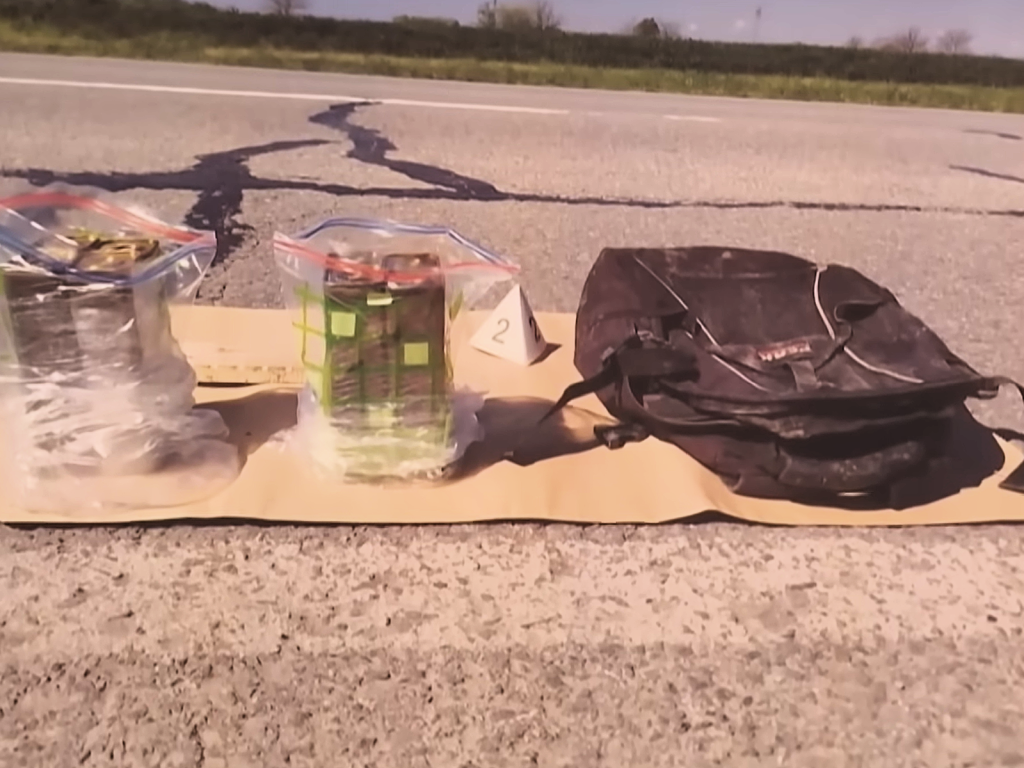
Vučić: ‘Hungary and northern Serbia would have been left without gas’
A key detail was disclosed by Serbian President Aleksandar Vučić. He confirmed that explosives had been found near the pipeline. He stated that “a couple of hundred meters from the pipeline, two large backpacks containing explosives and detonating cord were found.” According to the available information, explosives and detonators were discovered near the settlement of Velebit. The location was just a few hundred meters from the pipeline.
The president also warned about the possible consequences of such an incident. He said that damage to the pipeline would have led to a supply disruption. “I was informed that Hungary would not have had gas, and we in northern Serbia would not have had gas either,” he said. He stressed the importance of this infrastructure for regional energy supply.
This pipeline is one of the key supply routes in the region. Hungary receives most of its natural gas from Russia through the TurkStream system. Its branches pass through Bulgaria and Serbia. Because of that, any damage to this infrastructure would have had wider regional consequences, not just local ones.
Maria Zakharova: ‘Hungary is being deprived of its sovereignty’
Hungarian Prime Minister Viktor Orbán convened an emergency session of the Defense Council. The meeting followed the attempted sabotage of critical gas infrastructure between Serbia and Hungary.
The incident also triggered reactions at the international level. Russian Foreign Ministry spokesperson Maria Zakharova said that Hungary was facing pressure in the political, economic, and energy spheres. She placed this event in that broader context. She stated that “Hungary is being deprived of its sovereignty.” She also said pressure was being applied “through energy — with attempts to block its access to quality and affordable resources.” She added that “scenarios involving the use of force have now appeared, similar to those already seen in the case of Nord Stream.”
The entire operation in Kanjiža showed a high level of engagement by security structures in protecting critical infrastructure. At the same time, it raised questions about the broader context and the possible risks to the region’s energy stability.
Photo: RTS/Printscreen