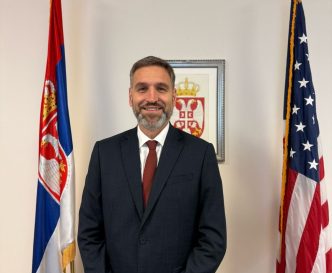


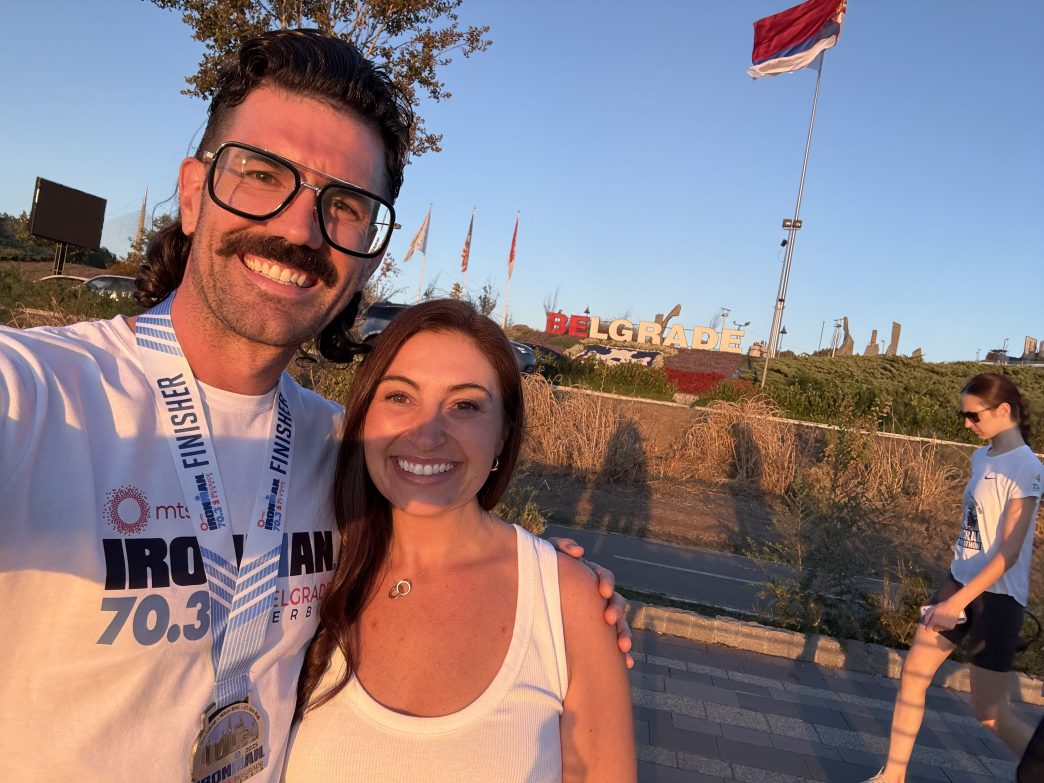
Michael Lombard, an Italian-American from Texas known online as “Mihajlo Srbin,” did not expect his love for Serbia and the Serbian people to become part of his public identity. After competing in the Ironman 70.3 race in Belgrade, he earned a nickname that quickly followed him beyond the finish line. Through years spent in the trucking industry, friendships with Serbs in the United States and Serbia, and a growing interest in Serbian history, faith, and tradition, Michael developed a connection that he describes as deeply personal. In this interview, he speaks about Belgrade, Serbian hospitality, the diaspora in Chicago, Orthodox Christianity, and why the Serbian spirit resonates with him so strongly.
How “Mihajlo Srbin” Was Born
Michael, how did an Italian-American guy from Texas become “Mihajlo Srbin”? What was the first moment or experience that sparked your strong love and connection to Serbian culture and people?
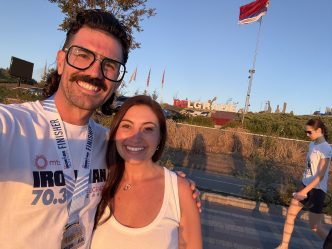
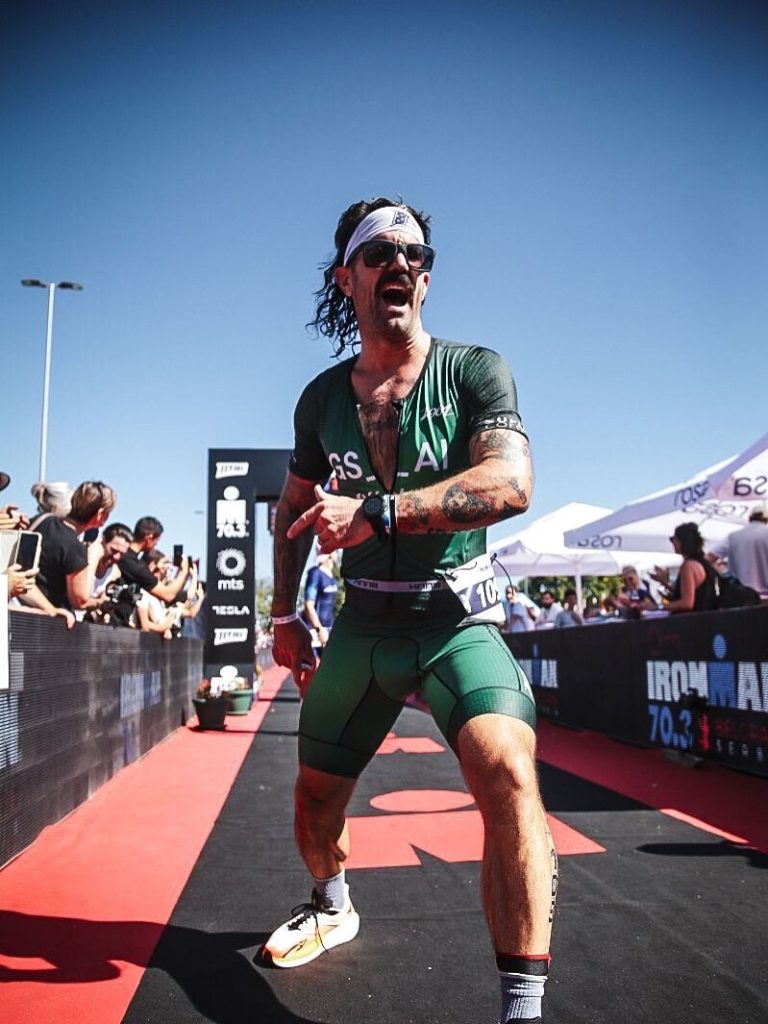
I got the nickname “Mihajlo Srbin” after I completed the Ironman 70.3 in Belgrade. I did the race with a friend of mine, and his videographer made a short reel that was posted the day after the race. Funny enough, there was another racer from Austin, Texas, at the event, and I met him and his wife. After the video was posted, she told me that people from the race were calling me “Mihajlo Srbin.”
I became connected with Serbian people because I have spent nearly 10 years working in the trucking industry. I worked for several years in a warehouse, spent three years as a driver, have been making trucking content since 2020, and now work full-time for Truck Parking Club, a truck parking marketplace. I have become friends with Serbs across the industry, both here in the U.S. and in Serbia, and they are truly great people — salt of the earth, and people I share a lot in common with. 
Interest in Serbia and the Region
You often call yourself “Mihajlo Srbin” publicly. Can you tell us the story of how your love for Serbia and the Serbian people began?
Adding to the previous answer, I have always been interested in history and fascinated by the region. On my mother’s side, I am Slovak, and my wife is also predominantly Slovak. So when it comes to the region, I enjoy learning about its history.
First Impressions of Belgrade
You traveled all the way to Belgrade in September 2025 to compete in the Ironman 70.3 Serbia. What was your first impression when you arrived in Serbia? What surprised or impressed you the most about Belgrade and the Serbian people?
My first impression was that I felt like I was in “real Europe.” From the moment I arrived, I knew I was in God’s country. For such an old city that has seen so much, the word that best describes both the city and the people is “resilient.”
Hospitality, History, and the Feeling of Home
What do you like most about Serbs — the hospitality, the spirit and resilience, the food, the history, or something else? Do you have any special memories or funny stories from your time in Serbia that still stay with you?
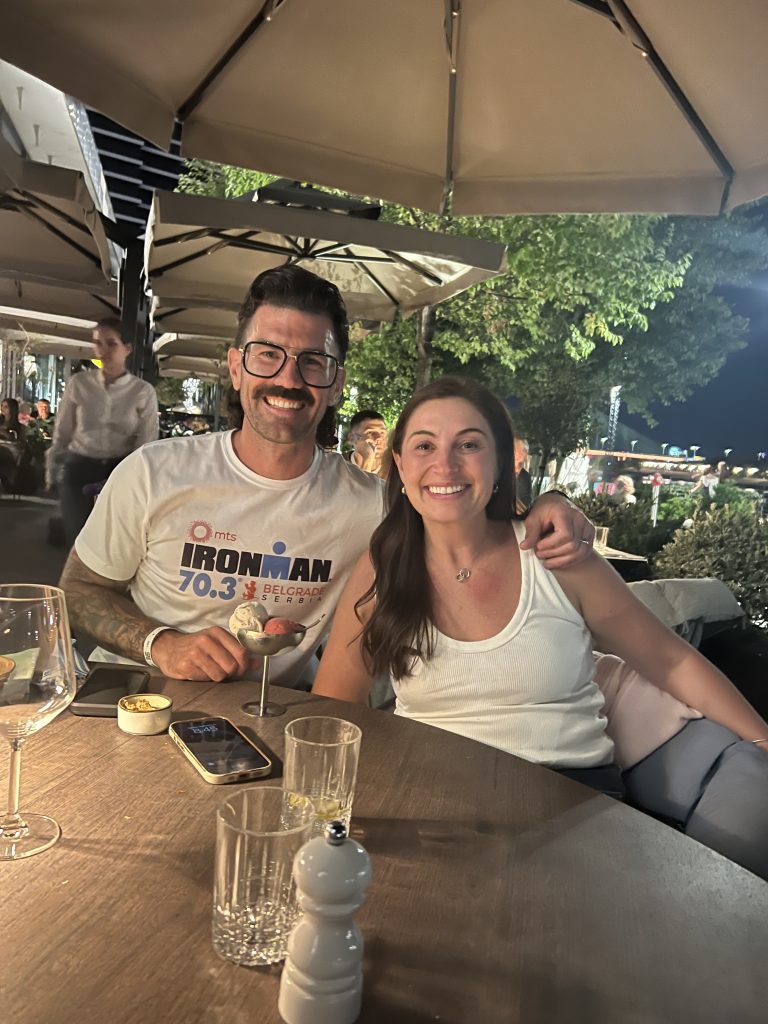
All of the above. I could not believe how well we were treated everywhere we went. We became good friends with a taxi driver, who was kind enough to pick me up very early in the morning on the day of the race. In the U.S., that could be very nerve-racking, depending on the city you are in, because Uber service can be unreliable.
When it comes to history, it is unmatched. This is the home of the second-largest number of Roman emperors, a bastion of Christianity, and a nation that has retained its soul through all its hardships. The Serbian spirit, hospitality, and energy resonate with me. Our values are similar. Serbia was the first place I have ever visited where I immediately felt “at home.”
Serbs and Americans: Different Paths, Different Lessons
As someone who has experienced both the American and Serbian way of life, even if briefly, what are the biggest differences you noticed between Serbs and Americans? What do you think Americans could learn from Serbs, and what could Serbs learn from Americans?
This question is very important. One thing I noticed is that everywhere we went, people had their children with them. Families were everywhere, including out at dinner at night. In the U.S., that is not as common anymore, even at weddings. There is always the question of whether “the kids can come,” and it always needs to be clarified.
As I said before, Serbians have retained their soul, culture, and identity, while many parts of Western Europe and the U.S. have abandoned theirs for hyperindividualism and consumption. Americans need to learn, now more than ever, how important community is.
America has also become highly politicized. Everyone is wrapped up in political identity, and that has caused some people to lose patriotism and hope. Yet in Serbia, I learned that many people are unhappy with their leadership as well, but they remain prouder than ever to be Serbian. More Americans need to be proud to be American, no matter who is president and despite some of our nation’s flaws.
The Serbian Diaspora in Chicago
You live and work in Chicago, which has a large Serbian community. How do you see the Serbian diaspora here in Chicago? Have you spent much time with Serbs in the city, and what has that experience been like?
To clarify, I live and work in Austin, Texas. However, many of my Serbian friends live in Chicago, and I love how strong the diaspora is there.
Recently, I was in Chicago because a fellow driver who is Serbian got into running after finding me on social media. I came up to meet him and his entire family, and we ran the Shamrock 8K together — his longest run to date. I also visited his Serbian Orthodox Church and met his priest.
Before I left, I told him that what he has in Chicago — a large family living close together and a thriving church community — is everything America needs now more than ever, and that he is beyond lucky to have it.
Plans to Return
Do you plan to visit Serbia again in the future? Do you already have any ideas — maybe another race, a longer private visit, or something else?
I will undoubtedly visit Serbia again in the future, and I would love any opportunity for a longer stay. I am planning to run the Banja Luka Marathon in Republika Srpska in October, and I will travel between Republika Srpska and Serbia.
Why Serbian History Matters to Him
In your podcasts and posts, you often talk about Serbian history, resilience, and even topics like Kosovo or the NATO bombing. Where does your interest in Serbian history come from, and why is it important to you to speak about it publicly?
My interest in history is very specific to me. Niche and lesser-known history, especially history that is not widely known in the U.S., fascinates me the most, because those lesser-known historical facts have often influenced the major events that most Americans do know about.
When it comes to NATO aggression in Yugoslavia, I believe that now, more than ever, we need to revisit this conversation. I grew weary of U.S. foreign policy after leaving the Marines in 2012 and listening to people like former Congressman Ron Paul. Learning about the U.S. military-industrial complex in the post-World War II era, and especially the post-JFK era, is difficult to process.
As I have come to learn, we were denied information and deceived about what was really going on in Yugoslavia in the 1990s. If Americans had been well informed about where our financial and military support was going, I believe the American people would have had second thoughts, especially considering President Clinton’s connections to Jeffrey Epstein. And as tensions with Iran escalate, it is important that we have these conversations, because our actions have consequences.
Message to Serbs in America and the Younger Generation
What message would you like to send to Serbs living in Chicago and across America who follow you? Do you have a special message for the younger generation in the Serbian diaspora?
To any and all Serbs here in the U.S. and abroad who have found me: I cannot thank you enough for the support. I never intended for any of this to happen. I created the content I have made recently because, as I learned more about the region, I felt compelled to express my opinions to my existing network of friends.
For years, I have combined history with fitness as a way not only to inspire people, but also to inform them — and somehow, you found me. The Serbian spirit, that inat, resonates with me very strongly, and who Serbs are as a people is something the U.S. needs more of.
For the younger generation: You are blessed. Because our family became so Americanized, none of my living relatives spoke any of their native languages to pass them down to us, and many traditions have faded. I will always be proud of my family, though, as they are a small part of trucking history from Waterbury, Connecticut.
But my message to you is this: tradition is not the worship of ashes, but the preservation of fire. And Serbs, since the Roman Empire, have fought through hell and back to preserve it.
Serbian Language, Orthodoxy, and Everyday Practice
Finally, have you adopted any Serbian habits, food, traditions, or customs that you now practice regularly here in America, even while living the trucker life on the road?
I am actually taking Serbian lessons now, as I have always wanted to learn another language. If I can run five marathons as a trucker, I figure it is time to put my brain to work as well.
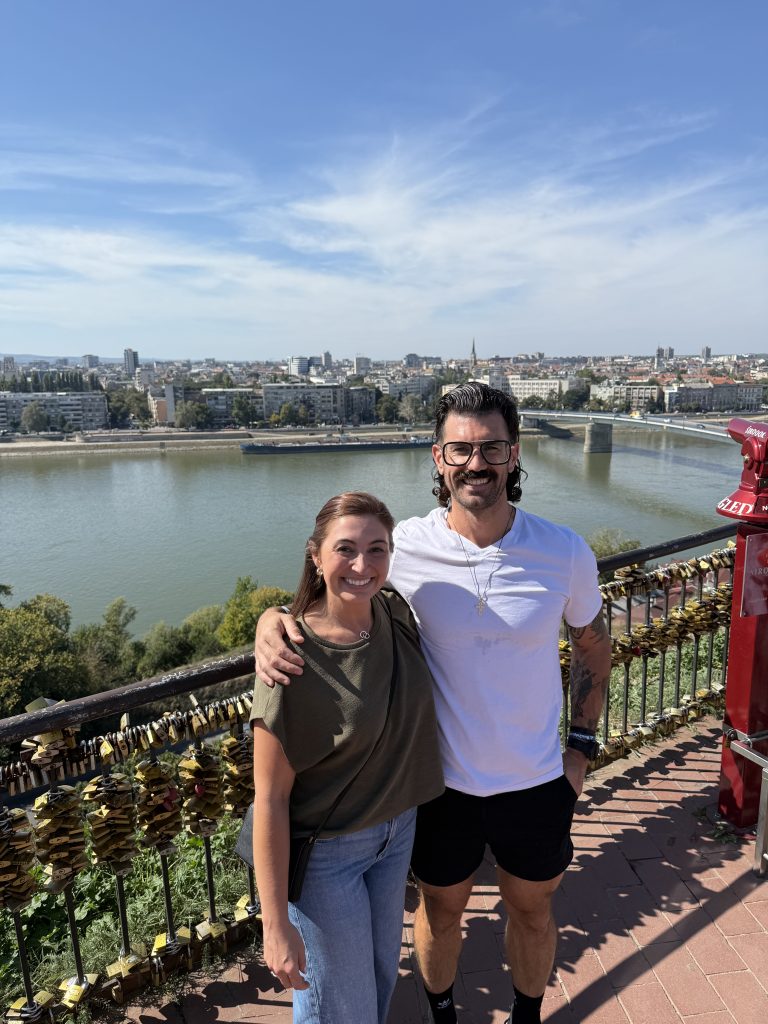
I have joined an Orthodox church, and I am in the process of becoming an Orthodox Christian. When the time comes, I hope to have our own family’s slava. You will also always see me proudly holding up a three-finger salute, which a tour guide in Novi Sad told us represents the Holy Trinity, and I find that very special.
Photos: Private archive