

As federal immigration agents continue aggressive operations in the Chicago area, the Chicago Police Department (CPD) finds itself at the center of a growing controversy. Community activists, aldermen, and immigrant-rights groups accuse local officers of violating the city’s long-standing Welcoming City Ordinance, Chicago’s flagship sanctuary policy, by assisting U.S. Immigration and Customs Enforcement (ICE) during raids and detentions. Police leaders deny systemic cooperation, insisting they were only maintaining public safety.
The tensions stem largely from Operation Midway Blitz, the Trump administration’s major immigration enforcement surge that began in September 2025 and targeted the Chicago region. Federal officials described the operation as focused on “criminal illegal aliens,” but data later showed that the majority of those detained had no serious criminal convictions. In the months that followed, residents in neighborhoods such as Brighton Park, West Lawn, and the South Loop reported seeing CPD officers set up perimeters around ICE actions, escort federal agents, coordinate parking for detention vehicles, and block protesters — actions they say crossed the line into prohibited assistance.
What the Welcoming City Ordinance Prohibits
Chicago’s Welcoming City Ordinance, first passed in 1985 and strengthened in 2017 and 2021, explicitly bars city employees, including police, from helping federal agents enforce civil immigration laws. The ordinance prohibits providing information about immigration status, setting up perimeters for ICE operations, escorting agents, or using city resources to support detentions unless a criminal warrant is involved or there is an immediate public-safety threat. Similar protections exist under Illinois state law. 
Dozens of Complaints, Heated Public Hearings
_b.jpg)
Since June 2025, the Civilian Office of Police Accountability (COPA) has received more than 28 formal complaints alleging CPD violations of the ordinance. At public hearings organized by the City Council’s Immigration Committee, residents described specific incidents: officers discussing logistics with ICE agents on how to move vehicles away from crowds, clearing paths for agents to remove detained individuals from buildings, and maintaining perimeters that prevented community members from observing or protesting arrests.
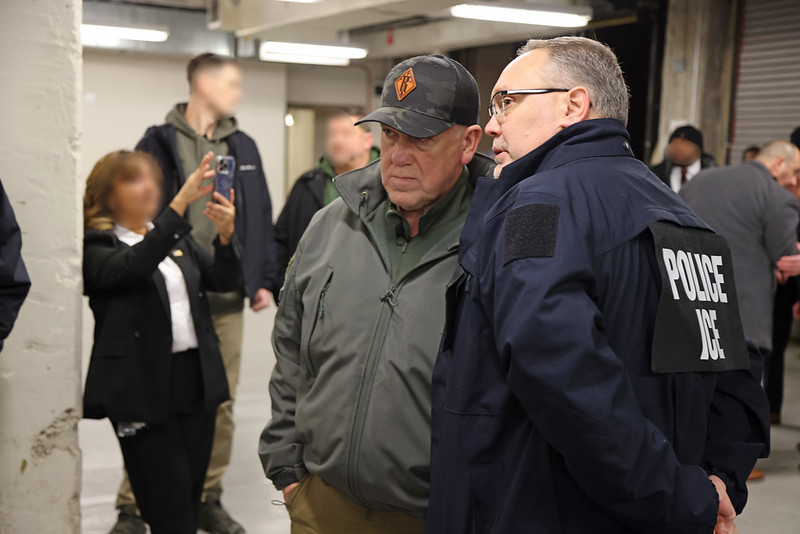
In one widely discussed case from June 4, 2025, in the South Loop, community members said CPD appeared to coordinate directly with ICE inside an ISAP office. Body-camera footage later reviewed by aldermen appeared to show police leadership advising federal agents on parking strategies to facilitate smoother operations.
City Response: Strengthening Oversight
Mayor Brandon Johnson has taken a strong stand against perceived federal overreach. On January 31, 2026, he signed the landmark “ICE On Notice” executive order (Executive Order 2026-01). The order directs CPD officers to document any suspected illegal conduct by federal immigration agents, including use of force, warrantless arrests, or actions near sensitive locations such as schools, preserve body-camera footage, identify supervisory federal officers on scene, and refer potential felony violations to the Cook County State’s Attorney for prosecution. Johnson described the move as making Chicago the first major city to create a formal framework for holding ICE and Border Patrol agents accountable.
In March 2026, the City Council passed an amendment to the Welcoming City Ordinance giving COPA explicit authority to investigate complaints against CPD officers for sanctuary-law violations. Ald. Jessie Fuentes (26th Ward) and Ald. Andre Vasquez (40th Ward), who led the effort, said the change was necessary because previous complaints had fallen into a jurisdictional gray area. Superintendent Larry Snelling has publicly supported the expanded oversight, stating that any individual officer found to have violated the ordinance will face discipline.
The city has also joined Illinois in a federal lawsuit against the Trump administration, accusing ICE and Customs and Border Protection of unconstitutional tactics, including warrantless arrests, use of tear gas near schools, and trespass on private property.
Police Union Pushback
The Fraternal Order of Police (FOP), which represents many Chicago officers, has sharply criticized the city’s sanctuary policies. Union leaders condemned reports that CPD commanders sometimes instructed officers not to assist ICE agents when they were surrounded by protesters, calling it a dangerous “stand-down” order that put federal agents and public safety at risk. FOP officials argue that sanctuary rules create unnecessary friction between local and federal law enforcement and undermine officer safety.
Superintendent Snelling has repeatedly denied any systematic collaboration, insisting that CPD’s role has been limited to crowd control and protecting public safety during often-chaotic protests. “We are not helping ICE enforce immigration law,” he has stated. “We are preventing violence and keeping the peace.”
Lingering Impact on Immigrant Communities
The controversy has had a chilling effect across Chicago’s Latino neighborhoods. Fears of raids contributed to the cancellation of the Cinco de Mayo parade in Little Village for the second year in a row. Many families report avoiding public spaces, schools, and even routine interactions with local government out of concern that any encounter could lead to federal scrutiny.
Immigrant-rights organizations say the alleged police-ICE coordination has eroded hard-won trust between communities and local law enforcement — the very trust that sanctuary policies were designed to protect.
Chicago Remains a National Flashpoint
As COPA begins its new investigations and federal operations continue at a lower but persistent level, Chicago remains a national flashpoint in the battle over sanctuary policies. City leaders say they will continue to defend the Welcoming City Ordinance, while federal officials maintain that local non-cooperation hinders public safety.
For now, the eyes of immigrant communities, police officers, and national policymakers remain fixed on how Chicago balances its progressive ideals with the realities of operating in a city that has become a focal point of the nation’s immigration enforcement debate.
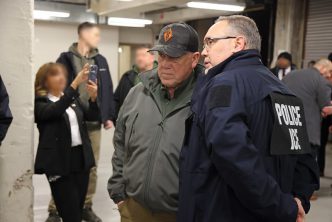
Photo: Photo Courtesy of ICE, Wikimedia