

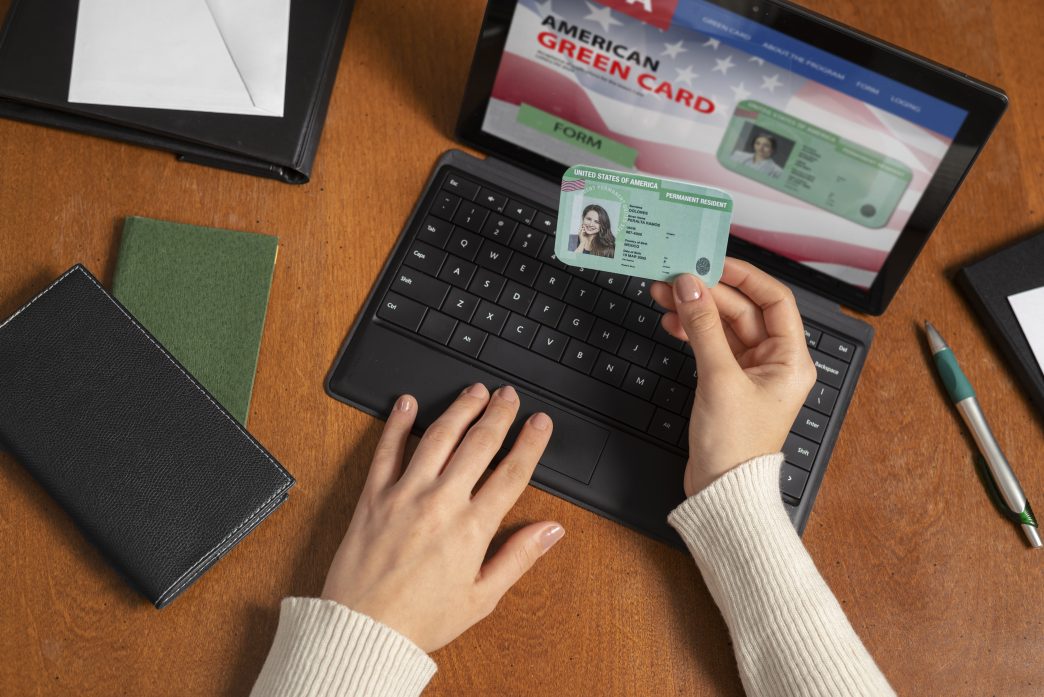
Securing a permanent immigrant visa or green card through marriage to a United States citizen is a grueling, multi-stage bureaucratic gauntlet that treats every applicant with a baseline of institutional skepticism. Unlike employment-based pathways that evaluate objective corporate data and academic degrees, family-based immigration forces couples to lay bare the most intimate corners of their personal lives.
U.S. Citizenship and Immigration Services operates under an aggressive anti-fraud mandate, treating every newly married couple as a potential sham arrangement designed to bypass federal immigration laws until proven otherwise. Navigating this framework successfully requires total precision across hundreds of pages of legal forms, strict adherence to rigid administrative deadlines, and the ability to absorb surging government filing fees.
The Two Distinct Procedural Tracks and the Strict Ninety-Day Rule
The entire operational blueprint of a marriage case is determined by the physical location of the foreign spouse at the exact moment the legal process begins. Each track utilizes completely different government agencies, forms, and statutory rules to achieve the same final result.
Consular Processing for Spouses Living Abroad
For a foreign spouse who is currently living outside the United States, the couple must undergo a process known as Consular Processing. This route begins when the U.S. citizen sponsor files Form I-130, the Petition for Alien Relative, with a domestic immigration service center. The sole legal purpose of this initial stage is to prove that a legally valid, legally binding marriage exists and that it was entered into in good faith.
Once the immigration service center approves this petition, they completely relinquish control of the file and transfer it to the National Visa Center, a branch of the U.S. Department of Labor and Department of State located in Portsmouth, New Hampshire. The National Visa Center acts as a financial clearinghouse, reviewing the sponsor’s domestic financial background and tax history before forwarding the physical file to the specific U.S. Embassy or Consulate in the foreign spouse’s home country for final processing.
Adjustment of Status and the Ninety-Day Rule
The second track is known as the Adjustment of Status, which applies exclusively when the foreign spouse is already physically located inside the United States on a valid, temporary non-immigrant visa, such as an F-1 student visa, a J-1 exchange visa, or an H-1B specialty occupation visa. In this scenario, the couple is permitted to file their entire application concurrently, submitting the Form I-130 alien relative petition and the Form I-485 application for permanent residency at the exact same time to a centralized domestic filing facility. This pathway is heavily governed by a strict legal concept known as the Ninety-Day Rule.
If a foreign national enters the United States on a temporary tourist visa or visa waiver program and marries a U.S. citizen and files for a green card within ninety days of crossing the border, federal regulations create a legal presumption of willful misrepresentation. The government legally presumes that the foreigner lied to the Customs and Border Protection officer at the airport about their true intent to visit temporarily. Overcoming this presumption is exceptionally difficult, and a failure to do so results in an immediate denial of the green card, the voiding of the temporary visa, and a lifetime ban from entering the United States for committing immigration fraud.
Chronological Breakdown of Processing Windows and Agency Delays
The journey through the marriage immigration system is a prolonged logistical marathon where processing times fluctuate wildly based on structural agency backlogs, regional service center caseloads, and the specific legal status of the sponsor.
The first major time hurdle is the adjudication of Form I-130. For the spouse of an immediate U.S. citizen, this initial step takes anywhere from ten to fourteen months under standard processing conditions. However, if the sponsor is a Lawful Permanent Resident rather than a full U.S. citizen, this wait time can lengthen significantly because these applications are subject to annual per-country and category caps controlled by the Department of State’s monthly Visa Bulletin, often adding an extra one to two years to the baseline wait.
What Happens If the Documents Are Incomplete
Once the initial petition is approved and transferred to the National Visa Center under the consular track, a new operational timeline begins. The couple must upload civil documents, birth certificates, police clearance records from every country where the foreign spouse has lived for more than six months since the age of sixteen, and comprehensive tax returns.
The National Visa Center takes roughly four to six weeks to audit these documents for completeness. If a single document is blurry, missing a certified translation, or lacks an official government seal, the center issues a formal rejection, which resets the review clock and adds another four weeks to the delay.
After the National Visa Center marks the case as documentarily qualified, the file enters a regional queue for an open interview slot at the designated U.S. Embassy or Consulate. The wait time for an embassy interview is highly dependent on local diplomatic backlogs. In low-volume consular posts, an interview may be scheduled within two months, whereas high-volume posts can feature backlogs stretching from six to eight months.
When all of these individual stages are combined, a foreign spouse living abroad can expect a total processing timeline of eighteen to twenty-four months from the initial date of filing until the moment they receive their physical passport back with an approved immigrant visa stamp. For couples adjusting status domestically, the timeline from concurrent filing to the final green card approval ranges from eight to fourteen months, depending on whether the local field office waives the requirement for an in-person interview.
Comprehensive Financial Cost Analysis of Filing Fees and Medical Expenses
The total financial cost of obtaining a marriage-based green card has dramatically increased following a major government fee restructuring designed to address massive backlogs and fund broader immigration operations. The system is entirely self-funded through these filing fees, meaning applicants bear the full financial weight of the administrative machinery.
For a couple pursuing Consular Processing from abroad, the first mandatory expense is the filing fee for Form I-130, which costs 625 dollars if submitted through the online portal, or 675 dollars if filed via traditional paper mail. Once the case moves to the National Visa Center, two distinct fees must be paid online before any documents can be uploaded: 120 dollars Affidavit of Support fee to review the sponsor’s financial stability, and 325 dollars Immigrant Visa Application fee for processing the foreign spouse.
What Should You Do Before an Interview?
Before the interview can take place, the foreign spouse must pay for a mandatory comprehensive medical examination conducted exclusively by a government-approved panel physician. These private clinics charge between 200 and 500 dollars for the exam, and the applicant must pay additional out-of-pocket fees for any missing mandatory vaccinations, such as the required MMR, varicella, and tetanus shots.
Finally, after the visa is approved but before boarding a flight to the United States, the applicant must pay an online USCIS Immigrant Fee of 235 dollars, which covers the administrative cost of printing and mailing the physical green card.
Costs for Couples Adjusting Status Inside the U.S.
For couples adjusting status within the United States, the financial requirements are even steeper. The couple must pay the initial 625-dollar online filing fee for the Form I-130 petition. Concurrently, they must submit Form I-485, which carries a flat filing fee of 1,440 dollars for any applicant between the ages of fourteen and seventy-nine. This fee now bundles the cost of biometric fingerprinting, which used to be billed as a separate item.
If the foreign spouse wishes to work legally or travel outside the United States while their green card application is pending over the course of the year, they must file Form I-765 for an Employment Authorization Document and Form I-131 for Advance Parole travel permission, which add an extra 260 dollars and 630 dollars respectively to the core cost.
The mandatory medical exam inside the U.S. must be completed on Form I-693 by a designated civil surgeon, costing an average of 360 dollars depending on the medical clinic. When incorporating postage, passport photos, and certified translations, the absolute minimum baseline government cost for a domestic adjustment of status stands at 2,360 dollars, excluding any private legal counsel fees.
Fraud Surveillance and the Invasiveness of the Stokes Interview
The most intense point of administrative scrutiny occurs during the evaluation of the marriage’s authenticity. The government requires couples to provide a substantial mountain of documentary evidence proving that their lives are genuinely intertwined, such as co-signed residential leases, joint federal bank statements showing daily transactional history, joint tax returns, utility bills listing both names, and comprehensive life and health insurance policies designating each other as beneficiaries.
What Happens During a Stokes Interview
If an adjusting officer or consular official notes inconsistencies in the written files, suspects a significant age or cultural gap, or believes the marriage was arranged primarily to secure legal status, they invoke a specialized, highly invasive interrogation known as the Stokes Interview. During this process, the husband and wife are immediately separated into isolated interrogation rooms and questioned individually by an immigration investigator. The officer asks a series of highly specific, mundane, and deeply personal questions about their shared daily routine, and then cross-references the answers line by line to see if they match perfectly.
The scope of a Stokes Interview covers the micro-details of a household. An officer will ask exactly what color the curtains are in the master bedroom, which spouse woke up first that morning, what specific food was eaten for dinner two nights prior, who takes out the trash, and what brand of soap is located in the shower. They may ask for a detailed description of the layout of the kitchen cabinets, the location of specific electrical outlets, or what gifts were exchanged during the recent holidays. If the answers diverge significantly, such as one spouse stating the bedroom floor is carpeted while the other states it is hardwood, the application faces immediate denial.
Consequences of a Marriage Fraud Finding
Legally, a finding of marriage fraud carries devastating consequences: the foreign spouse faces immediate deportation and a permanent, non-waivable lifetime ban from ever entering the United States again, while the U.S. citizen sponsor can be prosecuted for a federal felony carrying a maximum penalty of five years in a federal penitentiary and a criminal fine of up to 250,000 dollars.
Passing the initial interview and receiving approval does not mark the end of government oversight. The U.S. immigration system implements a structural probationary period to ensure that couples do not simply dissolve their relationship the moment the green card arrives in the mail.
What Happens After Green Card Approval
Under federal statute, if a couple has been married for less than two full years on the exact day the green card is officially approved, the foreign spouse is not granted a standard, ten-year permanent residency card. Instead, they receive a Conditional Green Card that is valid for a strict probationary period of exactly two years. This card cannot be extended or renewed under normal circumstances.
To maintain legal status, the couple must jointly file Form I-751, the Petition to Remove Conditions on Residence, within the rigid ninety-day window directly preceding the second anniversary of the card’s issuance. If the couple fails to file this form before the exact expiration date printed on the card, the foreign spouse’s legal status is automatically terminated by operation of law, making them instantly deportable.
The Form I-751 process requires the couple to submit an entirely new, even larger mountain of documentary evidence covering the entire two-year probationary period. They must prove that they have lived together continuously, filed joint taxes for both years, maintained shared bank accounts, and traveled together. If the marriage has collapsed into divorce during those two years, the foreign spouse can file a waiver of the joint filing requirement, but they bear the heavy legal burden of proving to a skeptical immigration officer that the marriage was completely genuine at its inception and was not entered into as a sham.
The current processing time for a Form I-751 petition is exceptionally long, frequently taking between eighteen and thirty-six months to resolve, during which time the foreign spouse’s status is extended in one-year increments while immigration service centers meticulously audit the continuity of the relationship.
Photo: Magnific