

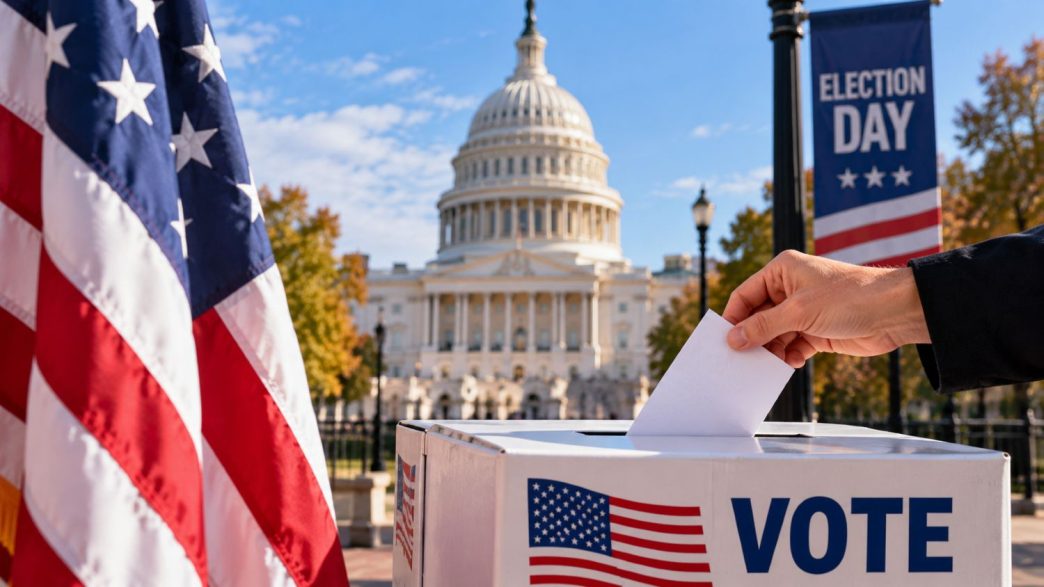
Americans will head to the polls on November 3, 2026, for the midterm elections, held halfway through a president’s four-year term, to elect a new Congress.
All 435 seats in the House of Representatives are up for election. House members serve two-year terms, with each congressional district electing one representative. Approximately one-third of the Senate’s 100 seats are also on the ballot.
Democrats and Republicans are competing separately for control of each chamber. The outcome will determine who controls the legislative agenda, federal spending, and congressional oversight of the White House.
Although Trump will remain president regardless of the outcome, these elections are crucial because, under the U.S. Constitution, the president cannot enact legislation without congressional approval. The results will determine whether he has the congressional support to advance his agenda or faces strong opposition.
On the topic of the U.S. midterms, Jovan Filipović of the Republican Party and Goran Davidovac of the Democratic Party share their perspectives with our outlet.
Jovan Filipović is an entrepreneur and founder of FIBLUS who became involved in U.S. politics in 2023 through professional training programs at the Leadership Institute, focusing on political marketing and campaign organizing.
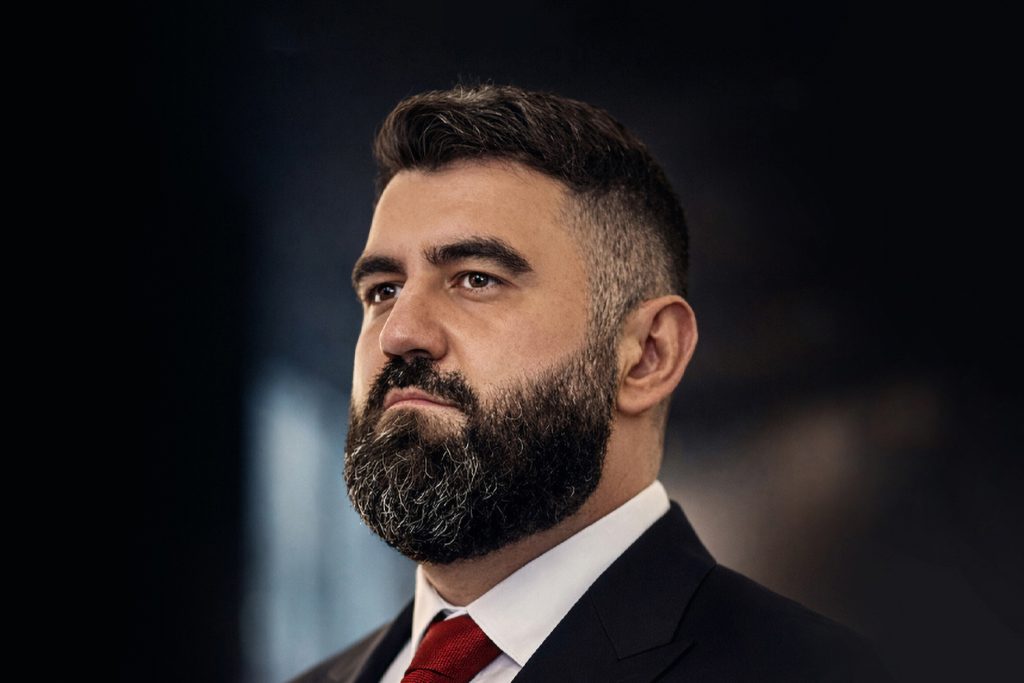
His political work centers on core conservative principles: free markets and entrepreneurship, limited and effective government, a strong national defense, and the preservation of traditional family values.
Jovan is also active in the Republican Party in Lake County, Indiana, where he participates in local party committee activities, helps strengthen the party’s organizational capacity, mobilizes voters, and promotes policies aimed at supporting the local community and economy.
Goran Davidovac is a Serbian-American community leader and political strategist based in Chicago, Illinois, with more than three decades of experience working with Serbian-American and broader Balkan communities through radio, media, and community organizations.

His political involvement focuses on economic opportunity, entrepreneurship, public safety, accountable government, and preserving cultural values. He is often described as a bridge between older and younger generations of Serbian Americans.
Active in local Democratic and broader political circles, Goran works on campaign strategy, political communications, coalition building, and voter outreach. He seeks to engage younger generations, strengthen community representation, and encourage greater participation in the American political process.
1. The cost of living is currently voters’ top concern. How does your party explain the high cost of food, gas, housing, and health insurance, and what specific measures does it propose to bring those costs down?
Jovan Filipović (Republican Party)
I think we first need to understand what everyday life is like for ordinary Americans. When someone works full time, pays the bills, and supports a family, yet has less and less money left at the end of each month, we know there is a serious problem. These are not just statistics. This is the daily reality for millions of Americans.
In my view, excessive government spending, regulatory burdens, and policies that drive up the cost of production and doing business are among the key problems. When the government consistently spends more than it can sustainably finance, that can contribute to inflationary pressures and a growing national debt. Prices are also affected by other factors, however, from energy markets and global supply chains to housing supply and demand.
That is why I support concrete solutions: greater fiscal responsibility, lower and simpler taxes, less unnecessary red tape, increased domestic energy production, and policies that make it easier to build more affordable housing. In health care, we need more competition, greater price transparency, and fewer administrative barriers.
As an entrepreneur, I know how important it is for people to have the opportunity to start a business, hire others, and build something through their own hard work. When we make it easier for small, family-owned businesses to operate, we create room for more jobs and better pay. I do not believe the answer is for the government to manage every aspect of the economy. I believe its role is to establish fair rules and give people greater freedom to make decisions about their own money and their future.
Goran Davidovac (Democratic Party)
I believe the cost of living is one of the biggest challenges facing American families. Inflation was driven by several factors, including pandemic-related disruptions, global energy prices, and domestic economic policies. No single party is responsible for everything.
From my perspective, our focus should be on practical solutions: making housing more affordable by increasing supply, lowering health care and prescription drug costs, providing targeted tax relief for working families, and helping small businesses compete.
At the same time, we must be fiscally responsible. Government spending should deliver measurable results, and we cannot solve every problem simply by spending more.
Ultimately, economic success is about whether working families can afford groceries, housing, health care, and still have money left at the end of the month.
2. Many polls show that President Trump’s approval rating has declined. How do you interpret that, and what do you think is the main reason?
Jovan Filipović (Republican Party)
I think we should be cautious when interpreting polls and election forecasts. For example, on Election Day in 2016, FiveThirtyEight gave Hillary Clinton a 71.4 percent chance of winning the presidency. Donald Trump nevertheless won the election. That illustrates why no forecast guarantees an election outcome. At the same time, it is important to distinguish between polls that measure voter sentiment and models that estimate a candidate’s probability of winning.
As for voter sentiment today, I believe economic uncertainty and the cost of living are among the most important factors. People do not vote solely on slogans and big promises. At the end of the month, they look at whether they can afford groceries, whether their jobs are secure, and whether they believe the country is heading in the right direction.
Personally, I support many of the principles the Republican Party stands for: economic freedom, limited government, national security, and people’s right to build a better life through their own work. But supporting a party does not mean we have to defend every decision it makes.
I think the biggest challenge for Republican candidates is to demonstrate that their policies deliver tangible results. People need more than messages about what went wrong in the past. They need a plan for the future and elected officials who are willing to take responsibility for their actions.
Goran Davidovac (Democratic Party)
I believe the decline in President Trump’s approval ratings reflects a growing gap between his campaign promises and the reality many Americans experience in their daily lives. Voters expected lower living costs, greater economic security, and decisive leadership. When those expectations are not met, frustration grows, especially among some of the people who supported him.
3. How do you assess your party’s chances of holding majorities in the House and Senate after these elections?
Jovan Filipović (Republican Party)
I expect a close election, and I do not think we should declare a winner in advance. The outcome will depend primarily on voter turnout, economic conditions, the quality of the candidates in individual states and congressional districts, and, of course, the president’s popularity.
It is particularly important to understand that voters do not always vote the same way in presidential and congressional elections. Someone may support the president but still be dissatisfied with their representative in Congress. Others may identify as Republicans but expect more from the party they vote for.
I believe candidates’ ability to offer specific solutions on the economy, public safety, and responsible government spending will be an important factor. Strong local organizing, disciplined campaigns, and an understanding of the problems facing local communities will also matter.
If Republicans retain their majorities, they would have more room to advance their legislative agenda. But a majority alone does not guarantee good results. What matters is what they do with that majority and whether people see improvements in their everyday lives.
Goran Davidovac (Democratic Party)
I believe the 2026 midterm elections present Democrats with an opportunity to regain control of Congress, particularly the House of Representatives, while the Senate remains a more competitive contest.
The outcome will largely depend, as I mentioned previously, on whether voters believe the current administration is delivering on the economy, the cost of living, and other issues that affect their daily lives.
We have to offer credible solutions and demonstrate that we are prepared to govern responsibly.
I believe our focus should be on winning the confidence of independent voters and disaffected citizens by emphasizing affordability, fiscal responsibility, and practical results rather than partisan division.
Voters are looking for leadership that addresses their concerns, not simply a change in who holds power.
4. Immigration remains a major issue. How does your party view the current situation at the border and immigration enforcement within the United States? What would change if your party wins a majority in Congress, particularly regarding border security and deportations? How could that affect Serbs living here without legal status?
Jovan Filipović (Republican Party)
I believe any country must know who is entering its territory and under what conditions. Border control is not a matter of hostility toward foreigners. It is a matter of the rule of law, national security, and public confidence in our institutions.
America was built and developed by people who came from different parts of the world. Immigrants have made enormous contributions to the American economy, science, culture, and entrepreneurship. That is why I believe we can support legal immigration while also insisting that the law be respected.
Republicans generally favor tighter border security and more consistent enforcement of immigration laws. If they retain their congressional majorities, they could seek additional funding for border security, strengthen the capacity of the relevant agencies, and amend certain provisions of immigration law. However, the specific changes would depend on legislation, executive actions, and court proceedings.
As for Serbs living in America without legal status, I want to be clear: I believe America needs clear, enforceable laws, along with a legal immigration system that is functional, fair, and predictable. People who want to work, raise families, and contribute to society need clear legal pathways. Part of America’s strength is its ability to uphold the rule of law while offering people an opportunity for a fresh start.
Goran Davidovac (Democratic Party)
I believe we need a fair immigration system and a focus on public safety while respecting the rule of law.
I support stronger efforts to combat human trafficking and prioritizing the removal of individuals who pose a genuine threat to public safety. At the same time, enforcement should be conducted fairly, humanely, and with appropriate legal protections.
If Democrats gain a majority in Congress, I would expect efforts to reform immigration enforcement, improve the asylum process, and pursue legislative solutions for certain long-term undocumented residents.
However, a Democratic majority would not automatically end deportations or provide legal status to everyone living here without documentation.
For Serbs living in the United States without legal status, my advice is practical: do not panic, but do not assume you are safe from deportation either. If you or a family member are undocumented, have an expired visa, have received an immigration court notice, or have a prior deportation order, consult a QUALIFIED immigration attorney to review your specific circumstances. Ask whether you may qualify for relief through a family relationship, a legitimate asylum claim, or another existing legal provision.
Keep copies of your immigration documents and any court notices, know your legal rights, and do NOT rely on promises from unlicensed immigration consultants or anyone claiming they can guarantee legal status. Just remember, everyone’s case is different.
Ultimately, we need an immigration policy that respects the law, treats people with dignity, and provides realistic legal pathways where appropriate.
5. What could your party’s victory in these elections mean for U.S.–Serbia relations?
Jovan Filipović (Republican Party)
I believe relations between the United States and Serbia have improved significantly over the past ten years, and there is now room for an even stronger partnership. In my view, Donald Trump’s policies, particularly his emphasis on pragmatism, economic cooperation, and direct dialogue in international affairs, have helped create new opportunities. Diplomatic efforts and engagement by Serbia’s leadership have also played an important role in developing relations with Washington.
There are concrete examples of that progress. In September 2024, the United States and Serbia signed an agreement on strategic cooperation in energy, creating opportunities for new investment and the participation of American companies in energy projects. The first round of the U.S.–Serbia Strategic Dialogue took place in July 2026. Memoranda were also signed on academic exchanges through the Fulbright Program and on energy infrastructure and regional energy security. These are concrete steps toward institutional cooperation and a lasting relationship between the two countries.
A strong Republican showing in the elections could provide additional political support for continuing in this direction and create opportunities for new agreements in areas of mutual interest. I see potential for American investment in energy and infrastructure, cooperation in advanced technologies, expanded trade, and closer security and diplomatic ties. Of course, specific outcomes will depend on the priorities of the U.S. administration and Congress, as well as negotiations between the two countries.
I also believe foreign policy should be assessed in terms of its practical benefits for Americans. When an American company wins a new contract, exports increase, jobs are created, and the United States builds stable partnerships with countries that occupy strategically important positions in their regions, that delivers tangible benefits for the American economy and our national interests.
Goran Davidovac (Democratic Party)
My most sincere answer to this is I simply don’t know.
As we all know, Democratic presidents have pursued policies that many Serbs regard as deeply damaging, particularly the 1999 bombing and recognition of Kosovo. Those are deep wounds that some will never heal from. Even if they do heal to some degree, the scar remains forever.
One thing is very clear: the Democratic Party is fully aware of the Serbian community’s strength at the polls, especially in the last decade in states such as Ohio, Pennsylvania, Wisconsin, and Michigan. Serbian voter turnout has increased and they could ultimately be the deciding factor in any close election race. In Illinois alone there are more Serbian-Americans actively involved in the political landscape than there have been in the last 30 years. That in itself is a huge accomplishment for the Serbian community.
6. Who should Serbs vote for in these elections, and why?
Jovan Filipović (Republican Party)
My personal view is that voters who believe in free enterprise, limited government, personal responsibility, security, and traditional values should seriously consider Republican candidates. These are the principles I support and the reasons I became involved in politics in Lake County, Indiana.
As an entrepreneur, I believe people should have the opportunity to build a better life through their own work, without unnecessary obstacles or excessive government interference. I also believe the government has a duty to protect its citizens, enforce the law, and ensure that the same rules apply to everyone.
Still, I think it is important for everyone to decide for themselves what matters most and to examine what individual candidates actually offer. People should not vote for someone simply because they have a Republican or Democratic label. They should consider a candidate’s character, record, integrity, and willingness to serve the people who have placed their trust in them.
I would like to see our community become more involved in American public life: following what happens in our cities and counties, speaking with elected representatives, and voting. Our strength lies not only in our numbers, but also in how well we organize, how willing we are to take responsibility, and how much we contribute to the society we live in.
Goran Davidovac (Democratic Party)
My position is simple: vote for the person you believe will do the best job, protect our freedoms, strengthen our communities, and leave a better future for the next generation.
Being a Democrat does not mean agreeing with every Democratic policy, just as being a Republican should not mean accepting every Republican position.
We should look beyond party labels, political personalities, and campaign rhetoric. We should examine each candidate’s record, character, policies, and commitment to the people they represent.
Photo: Private Archive, ChatGPT