

I Do Not Share the Student List’s Views on Key National and Foreign Policy Issues
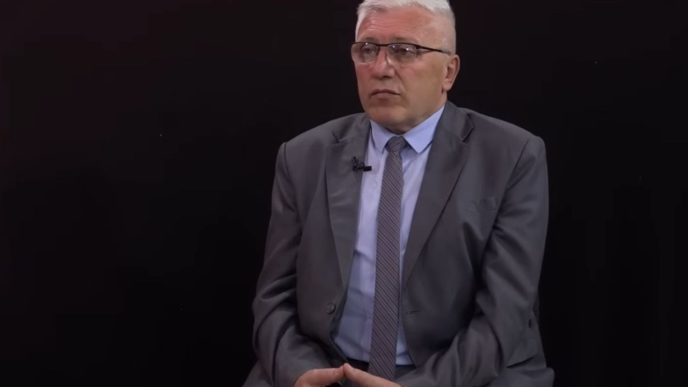
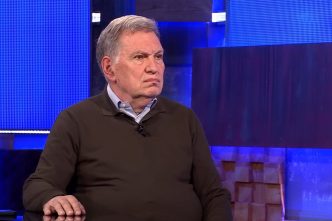
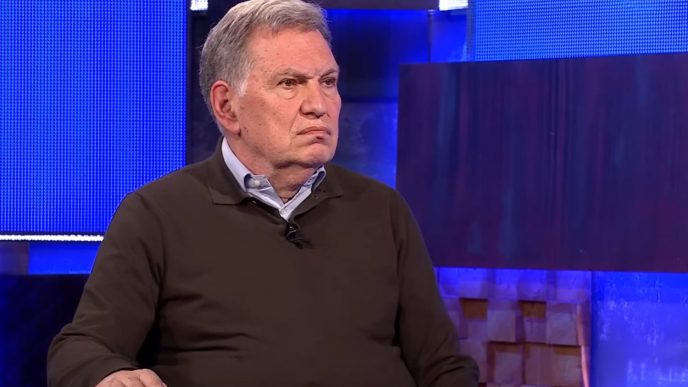
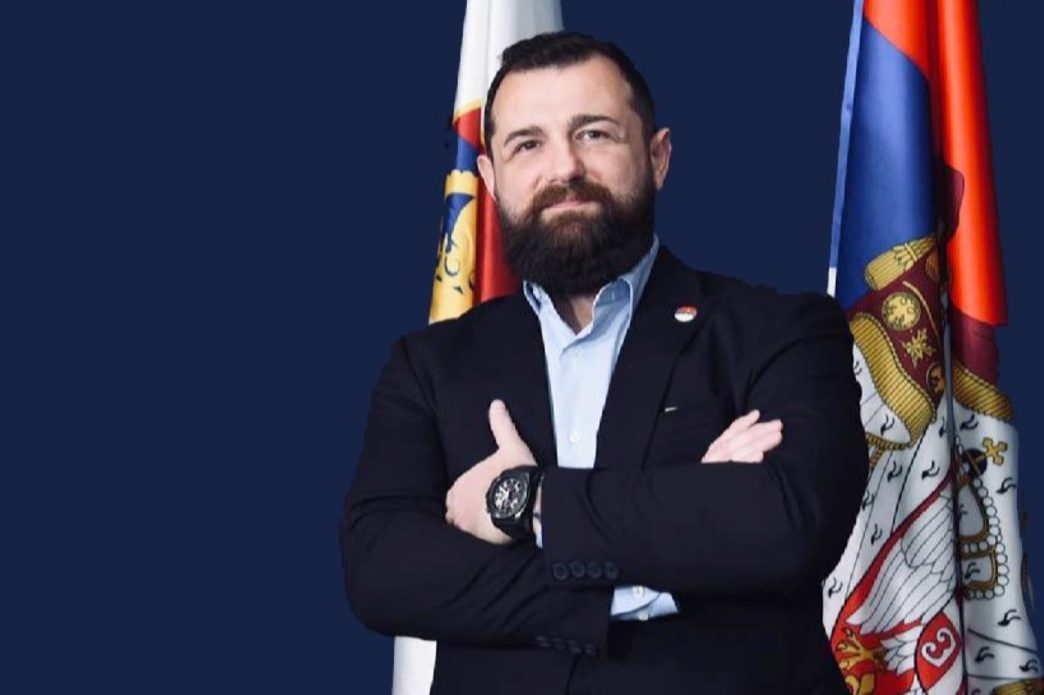
Vladimir Đorđević, Deputy President of the Movement for the Restoration of the Kingdom of Serbia (POKS) and a member of Serbia’s National Assembly, was born in Belgrade in 1973. A film producer, author, and martial arts instructor, he spent part of his career in the United States. He served as president of the Serbian National Defense organization in Chicago and president of the Serbian National League of America.
In the National Assembly, he serves on the Foreign Affairs Committee and the Culture and Information Committee, and is a member of Serbia’s delegation to the Parliamentary Assembly of the Council of Europe. In March 2026, he was elected vice-chair of its Sub-Committee on Migrant Smuggling and Trafficking in Human Beings.
Although POKS has officially endorsed the Student List, Đorđević distances himself in this interview with Chicago na dlanu from its decision-making process, candidate selection, and some of its positions. How firmly, then, does POKS stand behind those it has endorsed, and what political ground do they share beyond their determination to remove the current government?
1. As a monarchist, what exactly do you support about decision-making through plenary assemblies? Where does such a system provide for political accountability, publicly identifiable leaders, and clearly defined authority?
Nothing. My name is Vladimir Đorđević. I am a monarchist, and I am not an advocate of plenary rule. I support removing this government, a free press, fair elections, and accountability for corruption, crime, and abuses of power. But turning that into a new system in which everyone makes decisions and no one is in charge? Absolutely not. Serbia needs functioning institutions and individuals who are personally accountable for their decisions. I advocate a parliamentary monarchy, not a political version of a residents’ association meeting where no one takes responsibility when things go wrong.
2. How do you respond to criticism that plenary assemblies and direct decision-making have more in common with revolutionary and communist models than with the parliamentary monarchy you advocate? What part of that is compatible with the POKS platform?
There is little common ground to be found there. Collectivism, vaguely defined powers, and the avoidance of personal responsibility are not my political philosophy. I will not label every student a communist simply for attending a plenary assembly, but neither will I pretend that politics conducted through plenary assemblies is the same as a constitutional parliamentary monarchy.
POKS has its own platform. We have clear positions on the system of government, national interests, and government accountability. We will not change or rewrite them to accommodate someone else’s passing political fashion. Quite the opposite.
3. Who specifically are you speaking with on the student side? Who authorized them to negotiate, and whom do their agreements bind?
The students represent themselves. POKS is represented by its governing bodies and authorized representatives. Those are two different things.
I will not name people involved in discussions or discuss informal arrangements or negotiating mandates that have not been publicly confirmed. When there is a concrete agreement, it should be clear who reached it, what it says, and whom it binds. Politics is not a guessing game.
4. How many different political currents do you see within the movement you support? What do they agree on beyond opposition to the Serbian Progressive Party, SNS, and where do they differ?
There are people on the left, liberals, centrists, perhaps people on the right, and others who do not wish to identify with any political camp. It seems to me that we do not share the same views on Kosovo and Metohija, the European Union, NATO, Russia, national sovereignty, or even Serbia’s future system of government.
However, the common denominator is dissatisfaction with the current government and a demand for political change. That is enough to cooperate toward a specific goal, but it is not enough to turn people with different views into a single ideological movement. Anyone claiming otherwise either does not understand politics or is trying to sell a story that will not hold up for long.
5. Do you know the full roster of candidates on the electoral list you support and how they were selected? If so, whose political positions can you personally endorse? If not, on what grounds are you offering your support?
POKS did not draw up that list, and I will not take responsibility for the selection of every individual candidate. We support a shared political objective. That does not mean we agree with every position held by everyone on the list—far from it.
No one should confuse those things. Our support is not a blank check. Anyone who thinks our endorsement means we have abandoned our own platform has misunderstood both us and politics.
6. What specific document sets out the direction in which they intend to take Serbia? Please identify their positions on Ratko Mladić, Kosovo and Metohija, Republika Srpska, the EU, NATO, and relations with Russia and China, providing a document or a link to a social media statement.
I will not attribute positions to the Student List without a verifiable document, and I am not their spokesperson. If they have an official platform addressing these questions, it should be published and examined. If they do not, no one should expect me to speculate about what others think. That is their responsibility, not mine or POKS’s.
My own positions are no secret. Kosovo and Metohija are part of Serbia. I oppose any form of recognition of independence, whether explicit or disguised, and insist on adherence to Serbia’s Constitution and UN Security Council Resolution 1244. I do not support sanctions against Russia. We should cooperate with Russia and China, as well as with European countries, but Serbia must make decisions in its own interests, not at someone else’s direction. The European Union is no excuse for surrendering our sovereignty, and NATO membership cannot be discussed as though Serbia’s historical experience did not exist. The rights of Republika Srpska and of Serbs throughout the region must always be protected, whatever the cost.
As for Ratko Mladić, there are international court judgments, and their existence is a legal fact. They are the court’s judgments, however, not mine, and I disagree with the ruling. My position on Srebrenica is well known: a crime, yes; genocide, no. I disagree with what I regard as a politically dictated characterization of genocide, and I have the right to do so. I do not dispute judgments against individuals, but only insofar as they are judgments against those individuals.
Those are my positions. I will not hide them, but neither will I attribute them to others.
7. If their policy on any of these issues turns out to conflict with the POKS platform, which takes precedence: your principles or preserving a united front against SNS?
Principles. That is nonnegotiable.
We can cooperate to remove the government, but I will not support recognition of Kosovo, sanctions against Russia, or the imposition of collective guilt on the Serbian people to preserve a political alliance. I did not enter politics to please everyone, nor do I need anyone’s permission to be a monarchist.
Removing the government is a political objective. Ideology defines who you are. Anyone who cannot distinguish between the two should find something else to do.
8. Do you unequivocally condemn incursions into newsrooms, intimidation of journalists, and pressure on people because of their political affiliations, including when such actions are carried out by supporters of the movement you endorse? Would such conduct be grounds for withdrawing your support?
Yes. Without exception. Journalists must not be attacked for asking uncomfortable questions, and people must not be intimidated because of their political views. That applies to supporters of both the government and the opposition, including those politically close to us.
If a movement we support were to organize violence, justify attacks on journalists, or intimidate people, that would seriously call our support into question. Something cannot be unacceptable today and acceptable tomorrow simply because “one of our own” did it. That kind of moral inconsistency is unacceptable.
9. As a monarchist who opposes historical political persecution and confiscation of property, where do you draw the line between establishing accountability through the courts and political retribution?
It is simple: evidence, the law, and individual responsibility. If someone has stolen, abused public office, or acquired assets illegally, they should be held accountable under the law. Investigate the sources of their wealth, open the archives, and establish the facts.
But no one should have their property confiscated simply for belonging to the wrong party or holding the wrong political opinion. I do not want one privileged circle to replace another while the public is told to accept it as justice. Serbia needs the rule of law, not a communist campaign of vengeance—whether in 1945, today, or tomorrow.
10. Would you publicly challenge your political allies if they threatened people with imprisonment before trial or the confiscation of lawfully acquired property? Do you apply the same standard to opponents and allies?
I would. If a political ally of mine passes judgment on people in advance, they can do so without my support. Prison is not a campaign slogan, and lawfully acquired property must not become the spoils of an election victory.
Of course, a lawful investigation and action by the competent authorities are not the same as political revenge. I understand the distinction, and so should you. The same standard applies to everyone, whether they are my friend, a political opponent, or a member of POKS.
11. Is membership in SNS alone sufficient grounds for excluding someone from public life, or do you insist on proven individual responsibility? Will you defend that position even if your allies demand otherwise?
Membership in SNS is not, in itself, proof of guilt. If someone has participated in corruption, coercion, theft, beatings, or abuse of office, establish what they did and initiate the appropriate proceedings. But I do not accept collective punishment based on party membership.
And yes, I will defend that position even when my allies dislike it. I do not change legal principles to suit an election result or the needs of a new government.
12. POKS has stated that its cooperation with the students is not about political dealmaking. Have there been discussions about cabinet posts, public appointments, or roles for your party members in a future government? With whom, and about what?
POKS’s public position is that support for political change is not a trade for government posts. I will not invent the substance of discussions, the names of participants, or agreements that never happened but are nevertheless being reported in the media.
If concrete negotiations on a future government take place, the question will not simply be who gets which position. What matters more is what that government intends to do, which platform it will implement, and whether Serbia will actually change. Passing government posts from one group to another does not amount to a change in policy.
13. Do you expect POKS members to join a new government? Would you offer the same support if you knew in advance that POKS would receive no positions at all?
POKS has the right to participate in political life and to work to implement its platform. But support for change must not depend on whether someone gets a cabinet post.
I would support democratic change even without positions for POKS, provided it led to a freer and better-governed Serbia. That does not mean, however, that I would support any future government whose platform conflicts with POKS’s platform and positions. We do not need a new government merely to put new people in the same old positions. I have fought against that, and my position this time is equally clear.
14. What exactly would have to happen for you to say, “We no longer support this”? If such a line exists, why not state it publicly before asking citizens to trust you?
That line exists, and I do not have to wait for someone to cross it before making it clear. Recognition of Kosovo, sanctions against Russia, the imposition of collective guilt on the Serbian people, political violence, intimidation of the media, and revenge disguised as justice would all be grounds for seriously reconsidering our support. Nor will I accept monarchist principles, faith, tradition, and national interests being treated as things we should be ashamed of.
We did not offer our support so that we would then remain silent whenever we disagreed. If we are asked to abandon our own platform, our answer will be clear. If I have to choose between a government post and my principles, the post will remain vacant.
15. Are there independent media outlets in Serbia? What is your view of the media?
My impression, after years in politics and the media, is that Serbia has too little truly independent journalism and too many outlets serving their own interests. Some are close to the government; others oppose it and favor Brussels. Citizens are often left to work out for themselves what has been withheld and who is behind a particular story. Informer, Kurir, Alo, and RTS are not identical to N1, Nova, and Danas in every respect, but opposing the government does not automatically make an outlet independent. Far from it.
I also speak from personal experience. I have had my words presented in ways that differed from what I actually said, seen information published without adequate verification, and had my position misrepresented. I am not asking the media to praise me. I am asking them to check the facts, quote me accurately, and provide an opportunity to respond or issue a rebuttal when necessary.
RTS has a particular obligation because it is a public broadcaster funded by all citizens, not just those who support the government. We need transparent media ownership, clear rules for allocating public funds, fair access to broadcasting frequencies, and public broadcasters that are not subject to the wishes of any political party. Attacks on journalists must also be condemned, regardless of the outlet they work for.
A free media outlet is not simply one that opposes the government. It is one that is beholden to no one: neither the government nor the opposition, neither an embassy nor a political party—including POKS. Serbia has no independent media, only outlets serving vested interests: those of the regime, Brussels, embassies, and tycoons. POKS wants media that serve Serbia’s citizens, whether they are on the left, on the right, or apolitical. That does not exist today.
Closing Statement
I am Vladimir Đorđević, Deputy President of POKS. I am not a student. I am not an advocate of plenary rule. I am not a political turncoat. I am a monarchist, an anti-communist, and a Serb.
Kosovo and Metohija are not for sale. I oppose sanctions against Russia. I will not accept collective guilt being imposed on the Serbian people.
I will not abandon my convictions to win anyone’s approval. Nor will I remain silent about national interests to preserve a political alliance. Replacing one government with another that behaves in exactly the same way is not the change Serbia deserves, and I will not allow it.
Serbia does not need new masters. It needs accountable leaders, a free press, and a state that does not bargain away its own interests.
Removing the government is a political objective. Principles are not for sale. Serbia is no one’s prize to seize.
No retreat. No surrender.
SERBIA FOR THE SERBS. NO ONE IS ABOVE THE LAW.
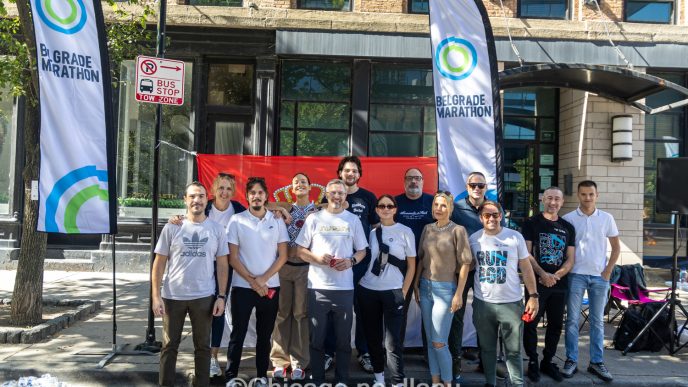
Photo: Private Archive