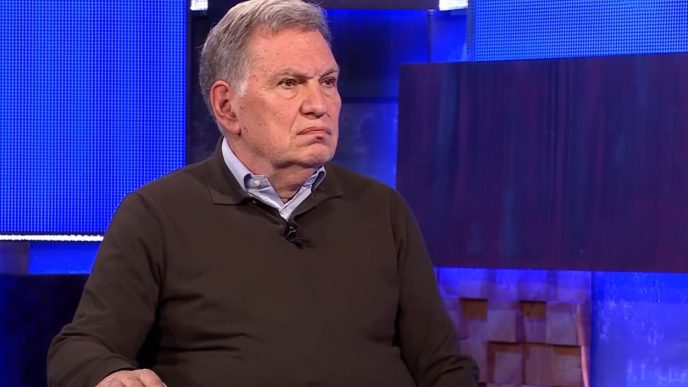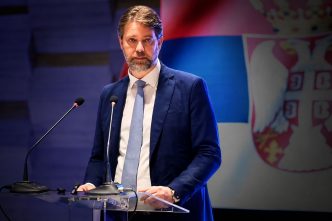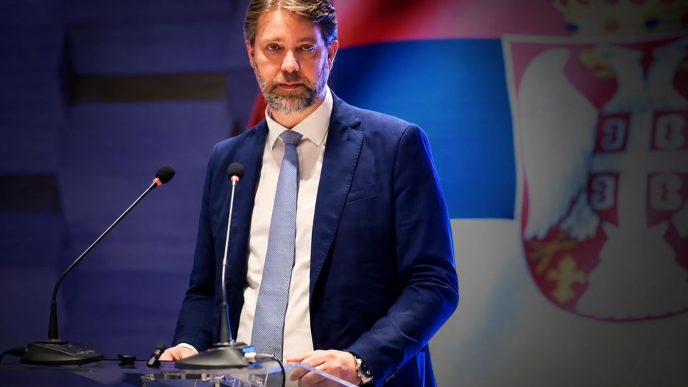


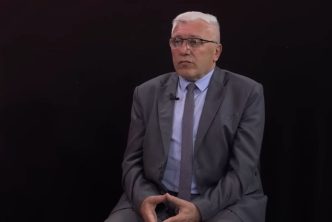
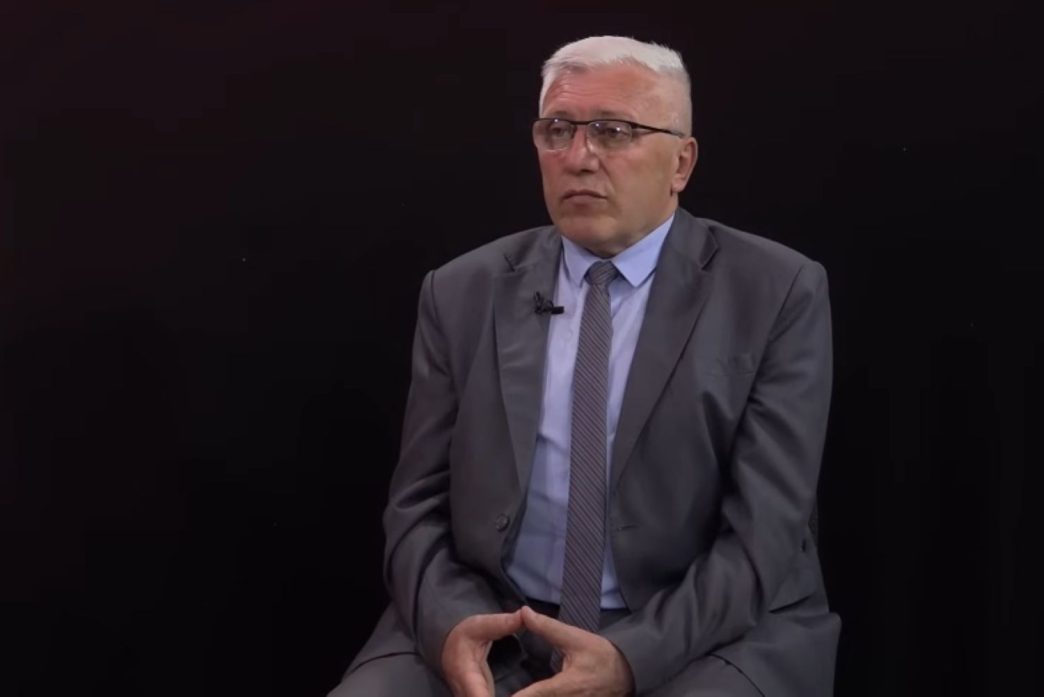
Ljubinko Đurković is a retired Serbian colonel and a hero of the Battle of Košare. He graduated from the Military Academy and the General Staff School in Belgrade. He began his military career in the Yugoslav People’s Army in 1985.
As a lieutenant colonel, he commanded the 2nd Battalion of the 125th Motorized Brigade of the Priština Corps and was one of the principal commanders in the defense of Košare. His unit successfully defended border positions against attacks by the terrorist organization known as the so-called Kosovo Liberation Army, the regular Albanian army, and NATO support.
After retiring, he took up a struggle on a different front. He became actively involved in politics and is now vice president of the Movement for the Restoration of the Kingdom of Serbia (Pokret obnove Kraljevine Srbije, POKS) and a member of Serbia’s National Assembly.
He publicly and consistently opposes Serbia’s accession to NATO and works to ensure that the memory of Košare does not fade.
He lives in his native village of Pocesje, near Raška. He is married and has three daughters.
Speaking to Chicago na dlanu, Đurković discusses where the battle for Kosovo and Metohija is fought today — on the battlefield or at the negotiating table — whether he would make the same decisions on the battlefield in hindsight, and Serbia’s readiness for another Košare.
Košare is often compared to Thermopylae. Which Serbian battle would you personally compare Košare to, and why?
Košare was an unexpected encounter that rightly earned glory. Its combat, heroism and soldiers’ feats are comparable to the Battle of Kumanovo. As at Kumanovo, officers, noncommissioned officers, and soldiers charged and died side by side, especially early on, before the clash became a defensive battle.
There are also similarities with the Battle of Kolubara: neither had a line of retreat or reserve positions, only one imperative — victory, summed up in the order: “No retreat, no surrender!”
Historically, it is also comparable to the feat of the Second Battalion of the Second Proletarian Brigade at Vilića guvno during the Battle of the Neretva, when the fighters halted the enemy in fierce combat and enabled others to withdraw. It is the same Serbian warrior. Although that battle was part of the Partisan campaign, we must remember that the first anti-fascist movement in this region was the Ravna Gora movement — the Jugoslovenska vojska u otadžbini (Yugoslav Army in the Homeland) under General Dragoljub Mihailović.
Is the Battle of Košare studied in military schools in Serbia and abroad today in the same way as the battles of Cer and Kolubara?
Unfortunately, the Battle of Košare is mentioned only in passing at Serbian military schools, without in-depth historical or military-theoretical analysis. Yet the enemy had a 15-to-1 advantage in manpower and was as much as 600 times superior in military equipment.
It was also fought in harsh mountain weather, with the terrain’s tactical advantages favoring the enemy. Thus, Russian and NATO militaries pay more attention to Košare. They discuss Serbian military achievements and tactics more than the alliance’s own operations. The alliance failed to carry out the ground operation it had planned, either along this axis or later at Paštrik, and thereby suffered a clear defeat.
This battle should be remembered not only for courage but as a textbook example of a particular methodology, tactics, and training for operations under extreme conditions. Despite changes in modern technology and warfare, such as those seen in Ukraine or the Middle East, this form of combat remains permanently applicable.
Do you believe other nations, particularly those in our region, could demonstrate the same level of sacrifice and heroism shown by the defenders of Košare under similar circumstances?
I believe no other nation or combat formation could show the self-sacrifice demonstrated by the defenders of Košare. They knew exactly what they were defending: their own lives, their families, their faith, their homeland, and sacred Kosovo and Metohija — the freedom that younger generations should inherit. They followed the enduring Kosovo principle that one’s homeland is defended not according to the strength of the force attacking it, but according to the sacred things one is protecting.
Few possess such a military tradition and spirit of freedom. Yet it was not only Serbs at Košare. Hungarians, Roma, and even a few Croats stood shoulder to shoulder; people of Orthodox, Catholic, and Muslim faiths. All defended their common homeland, Serbia.
While other nations generally show courage with great-power backing, whether Western or Eastern, our people are unique in being willing to make the ultimate sacrifice solely for freedom and fundamental human values.
Looking back now, would you make the same decisions you made during the Battle of Košare?
Looking back, I would do the same, in command and tactics. Today, of course, the enemy would use more advanced weapons: above all, combat and reconnaissance unmanned aerial vehicles, kamikaze drones, and more modern missile systems. Yet their missile technology has not fundamentally changed; they have remained with systems of previous generations, without moving to a sixth generation offering a decisive advantage against a target.
Through camouflage, protection, and maneuvering forces across the front’s width and depth, we avoided direct strikes by their main weapons, whether from the air or by missiles fired from the sea. We would therefore use the same defensive concept today, but with the support of the modern combat systems now available to the Serbian Armed Forces.
They say courage does not mean being unafraid, but being afraid and refusing to give up. Do you agree?
In the turmoil of war, in extraordinary circumstances — since war is unnatural and imposed — people cannot always consciously control themselves or be entirely fearless. Yet our fighters’ determination to defend homeland, faith, family, and freedom was so strong that it overcame every fear at critical moments.
Uncertainty and apprehension usually exist before combat begins. But once battle begins and that threshold is crossed, fear fades day by day. Awareness of the mission, patriotic upbringing, and combat training take over.
Fear then gives way to reason and concentration on overcoming obstacles and protecting one’s own life and fellow soldiers’ lives. Commanders, for their part, protected their men through measured, clear, and composed leadership. Victory at any cost, with massive losses, is not the goal; a true officer preserves the personnel of his unit in defense of the homeland through timely decisions and protective measures.
Do you think the Serbian state has adequately repaid those who died at Košare, those who survived, and their families?
In 2016, I was among the first to raise the issue of Košare: what actually happened there, how long the battle lasted, and what it meant. Thanks to the then-minister for veterans’ affairs, the state stood behind us and made it possible to discuss it publicly and affirmatively. We finally received public and state recognition for those sacrifices: a documentary was filmed, memorials were erected, streets were named after the fallen, and the beginning and end of the battle, from April 9 to June 14, 1999, are commemorated at the highest state level. Disabled war veterans received a degree of legal protection, although the grief of their families remains beyond compensation.
Yet permanent healthcare and financial support for survivors remain unresolved. Many have lost their ability to work because of deteriorating physical and mental health but have not obtained adequate disability status that would guarantee them a dignified life. They have been pushed to the brink of poverty and, unfortunately, are now treated as welfare cases.
We now fight to move these people from the welfare category to the ranks of honored citizens. We seek no privileges, only what they have earned: the conditions for a dignified life in the homeland for which they were prepared to give their own lives.
What can we, as citizens, actually do for surviving veterans and the families of those who died?
Citizens already do much of that. They honor veterans everywhere, and when needed — especially when help is needed for basic survival, food, or medicine — they willingly step forward, either through veterans’ associations or on their own initiative.
Solidarity crosses Serbia’s borders. Montenegro’s Karađorđe association is an example, which has provided seaside vacations for ten families for years in Bijela, Igalo, and Meljine. I especially recognize Peđa Vojinović, our host Babić from Igalo, and Milivoje Brčić from Bijela, who provide lodging, full board, and tours across Boka Kotorska.
Help has also come from the diaspora. Miško Mihajlović, a Belgrade native, has helped dozens of veterans through his friends in Canada, responding to every call I made and every personal hardship he heard about. Individuals from the United States, especially Chicago, have also helped. Civic solidarity and a willingness to assist with medical treatment or basic bills certainly exist and are at an impressive level.
However, caring for people who sacrificed their health for their homeland must not depend solely on individual goodwill. Both Serbia and Montenegro lack adequate legislation to provide Košare veterans with the lasting social, healthcare, and financial security they have earned through their sacrifice.
Is Serbia ready for another Košare today, if it should become necessary? I do not mean only the military and its equipment, but also whether you believe young people today are prepared to sacrifice themselves for their homeland.
Serbia certainly is ready for another Košare, although we should hope that it never comes to that. Still, we must maximize the combat readiness of our security forces, both the military and the police. This means acquiring modern equipment, training personnel, and increasing troop numbers, to deter potential aggressors. The best guardian of peace is a well-equipped, coordinated, and standardized army. As a pillar of stability in the Balkans, Serbia must have strong armed forces while improving soldiers’ living and professional standards. Investment in the military is by far the least expensive option because it protects peace and freedom, safeguards economic progress, and strengthens the country’s international and diplomatic standing.
Doubts that today’s youth would ignore their homeland’s call — because they see surviving heroes and the families of the fallen living on the brink of poverty — are unfounded. That is not decisive. Our people possess a deeply rooted defensive spirit that unfailingly awakens the moment their land, sacred places, freedom, and families are threatened. No one has the right to doubt the young. If the state takes all necessary political, diplomatic, and defensive steps in time, a strong military will be the best means of preventing conflict, and our young people will always be ready to defend their country resolutely.
Which battle do you consider more important today — the one fought on the battlefield or the one fought at the political negotiating table? Where are we losing and where are we gaining?
Diplomacy and politics have always been decisive, because war is nothing other than the continuation of politics by other, armed means. Conducting war involves several interconnected elements: armed combat, psychological and propaganda operations, economic measures, and intelligence and security work. Wisdom, diplomacy, and economic strength are therefore essential to preventing wartime devastation.
However, when armed conflict becomes inevitable, there is no turning back. Everything must then be subordinated to the knowledge and determination of wartime commanders, to defeat the enemy quickly and compel peace, thereby bringing the process back to the negotiating table.
Though politics and diplomacy are intellectually demanding and can seriously damage one’s health, it cannot be compared with the battlefield, where the greatest sacrifice is made and lives are lost. We should not compare their importance. Armed conflict calls for a special kind of person, prepared for the harsh realities of war, but diplomacy is equally important. It requires wisdom, strategic patience, and great endurance to preserve what that struggle has achieved.
Are Serbs better warriors or better politicians?
Hard to say, especially as I have been both soldier and politician, serving two terms in Serbia’s National Assembly. Neither role is easy, but it is obvious that Serbs are better warriors. That genetic code and the skill of the Serbian soldier have developed over centuries because we have continually defended our sacred places, freedom, and homeland. We have become skilled at it, and families teach children early to honor defenders of home and freedom.
Politics, however, suits us less. Politics certainly requires honor, knowledge, and wisdom, but here the Western political model has prevailed, often resting on ambiguity and a willingness to reinterpret one’s word — as in the old saying, “The Latins are old tricksters.” In the West, one thing is often said while something else is done to suit the moment. Our mentality is different: a promise must be kept, even to one’s own detriment. When politics becomes the “art of the impossible,” in which integrity and the value of one’s word are lost, it becomes fundamentally alien to us.
If international politics were honorable and respected mutual interests, morality, and the sincerity with which we approach it, it would suit us. But as long as agreements are interpreted between the lines and broken when convenient, we do not navigate such games easily. I therefore favor our warrior spirit — history since time immemorial clearly shows that chivalry and heroism come more naturally to us than political maneuvering when freedom must be defended and preserved.
In the music video for Danica Crnogorčević’s song ‘Za život Srpske,’ the spirit of a fallen soldier tells his mother, ‘It was worth it.’ Do you think the soldiers who died at Košare would have sent a similar message to their loved ones?
I do not merely think so — they sent such messages. There are numerous letters addressed to parents in which they describe the true hell of Košare. Fighting took place every day, from dawn until late evening, in harsh weather and on inaccessible mountain terrain. Food and ammunition were carried for kilometers by hand because vehicles could not reach the positions, not even pack animals. A meal arrived once a day, and every wounded man had to be carried through the wilderness to save his life.
Those were impossible conditions, even for wartime. Yet from that hell, soldiers wrote to their families that this country was worth dying for, comforting one another with the thought that after such suffering they would surely go to heaven. Even those home when war was declared rejected their parents’ pleas to remain safe — they returned to their units, among their comrades.
The heroism displayed at Košare, as well as in other clashes throughout Kosovo and Metohija, reflects the character of our entire people. The same self-sacrifice was shown by peaceful residents of Aleksinac and Niš, who died under bombs with their heads held high, guided by the saying, “One does not weep for a hero.” Those soldiers knew exactly what they were defending; they left their loved ones and their homeland a clear pledge that they were prepared to lay down their lives for freedom and faith — and they made that sacrifice.
One of your colleagues estimated that Kosovo and Metohija could be returned to Serbian control in just two days. Do you share that assessment, and how do you view the military possibilities of doing so under today’s circumstances?
Yes, certainly. Not to overstate it — not two days, but seven to ten, Kosovo and Metohija could have been brought back under the control of our forces, under certain conditions.
Two years ago, when there were approximately 3,000 KFOR personnel and 2,000 members of the so-called Kosovo Security Forces there, I publicly proposed that the existing military and police forces, numbering between 10,000 and 20,000 personnel, immediately occupy the positions envisaged by Resolution 1244 and the Kumanovo Agreement.
This would have involved up to 999 of our personnel securing Serbian enclaves. The proposal was to submit a formal request to KFOR but not wait for a response, instead immediately deploying personnel to Gnjilane, Peć, Prizren, Gračanica and Kosovsko Pomoravlje, while taking control of the border crossings.
If KFOR refused later, diplomatic negotiations would follow: the main body of forces would withdraw, while the designated 999 personnel would remain on the ground with political support from major powers, primarily Russia.
Today, both NATO forces and Kosovo formations have grown to more than 5,000 personnel each, with weapons they did not possess at the time.
A different strategy is now needed: declare Kosovo and Metohija to be under temporary occupation, as Patriarch Pavle advocated; declare all agreements that have not been honored null and void; further develop the military’s capabilities; and, through diplomacy backed by military strength, reintegrate the province and restore Serbia’s full sovereignty.
Photo: Printscreen