


There is hardly a family in Serbia in which at least one member did not suffer, whether fighting with the Partisans or at the hands of the Partisans, whether fighting with the Chetniks or at the hands of the Chetniks. Everyone, in one way or another, chose a side, either willingly or under pressure. There was no neutrality. The question of “who is to blame” is still debated today, even though more than eighty years have passed since World War II.
Can we reconcile with ourselves, and at what price?
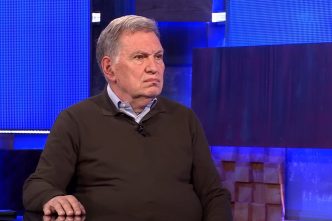
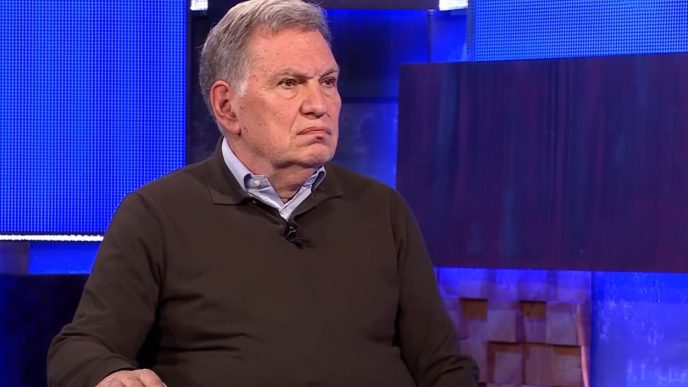
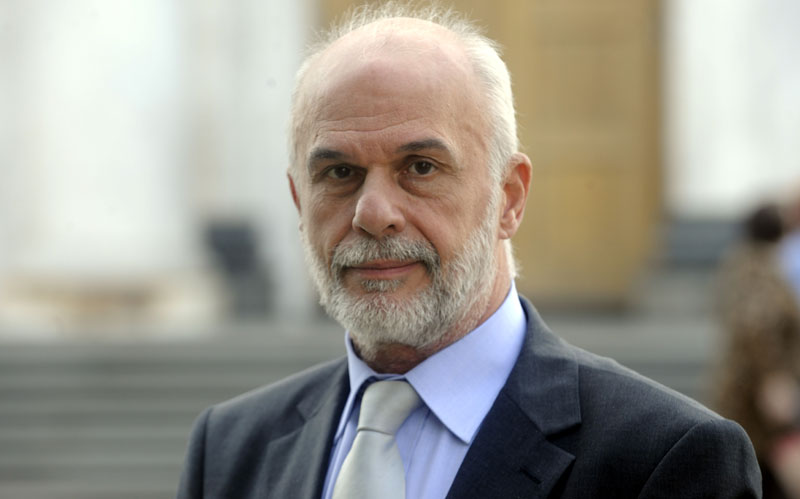
Our guest today is Vojislav Mihailović, the grandson of General Dragoljub Draža Mihailović, commander of the Yugoslav Army in the Homeland, the man who was the first in occupied Europe to raise an uprising against Nazi Germany. The son of Branko Mihailović, a former prisoner of the Goli Otok prison camp. A lawyer. A father. An opposition figure. And a man who has spent his entire life carrying a surname that, among the Serbian people, represents not only a family inheritance, but also a symbol of loyalty to the King, the Fatherland, and freedom.
The Burden of a Surname and Family Legacy
Mr. Mihailović, was being the grandson of General Draža Mihailović and the son of Branko Mihailović, who was imprisoned on Goli Otok, too heavy a burden for you and your family while you were growing up? Did that burden become lighter after the rehabilitation of General Draža in 2015?
I have said several times that for me it was never a burden. It is possible that I was subjective, because I was born and raised in such a family, but I always saw the Mihailović surname as an obligation for a man to live honorably and to be careful not to cast a shadow on his ancestors through any of his actions. It is true that my father and my late brother, who was older than I, certainly felt greater pressure than I did. I was born in 1951, and by the 1960s the harshest pressure on the families of members of the Yugoslav Army in the Homeland in Belgrade had already begun to ease. But in the rest of Serbia outside Belgrade, that fear, that coercion, and that division lasted much longer.
Still, there was no hatred in our house. There was dignity. We were raised to preserve our honor and not to be ashamed of the truth, regardless of the cost. When I later entered politics, perhaps those pressures became more visible again, but even those are, in a way, burdens that also carry a sense of honor, because they constantly remind you that you must be worthy of a great name.
My grandfather was not only the commander of a movement. He was a symbol of resistance, honor, and loyalty to the oath given to the King and the Fatherland. And that is precisely why many tried to diminish him, slander him, and erase him from national memory. The rehabilitation in 2015 did not change the truth; it only legally confirmed what the Serbian people had long known deep within themselves. But after that decision, many people were able for the first time to openly show respect for General Draža Mihailović, without fear and whispering.
Those who wrote false history for decades, unfortunately, did not give up their ideological delusions even after the rehabilitation. But time slowly places everyone where they belong. The truth cannot remain hidden forever.
Did you protect your daughters from the “burden” of the Mihailović surname, or did you teach them from an early age to carry it with pride?
It is difficult for a parent to speak objectively about that. But I think children are not raised with big words, but by example. If there is respect in the house for family, ancestors, faith, and the state, then children naturally absorb that. You cannot teach children one thing and live in the opposite way.
My daughters grew up in an atmosphere in which we were never ashamed of our surname, nor of our family’s history. But at the same time, we did not live in hatred toward anyone. The most important thing is for a person to remain honorable. If he preserves his honor, he has preserved both the family and the surname.
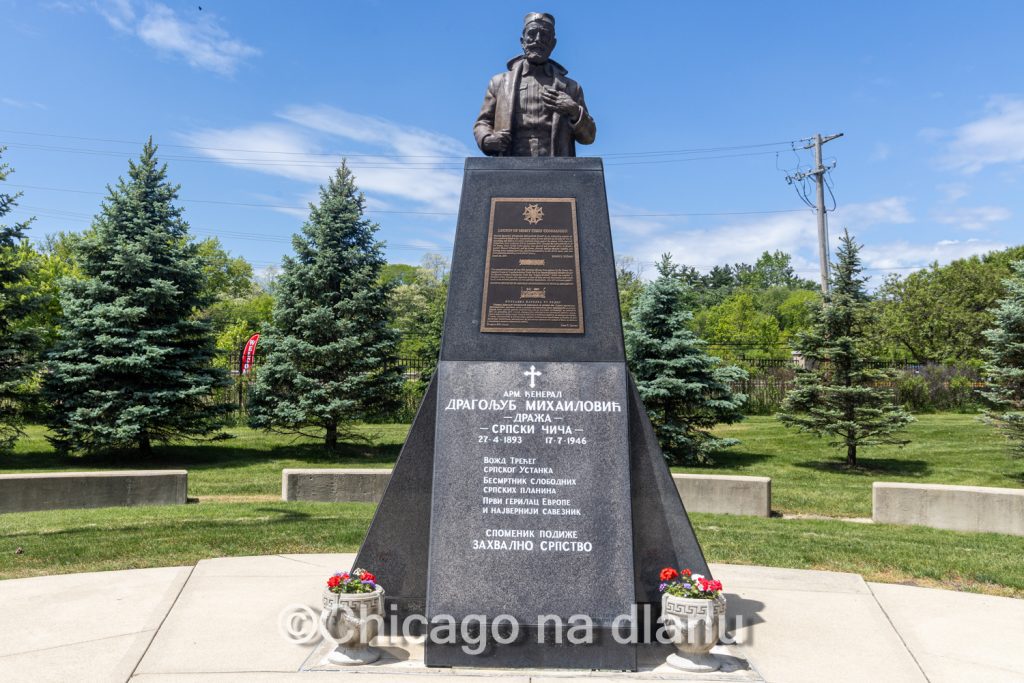
Family Experience, History, and Personal Lessons
Looking at the lives of your grandfather and father, what is the lesson you learned?
It is difficult, from this historical distance, to give simple answers to such great life questions. Both life and history are much more complex than we often want to present them today. But if I had to single out one thing, it would be that a person must be ready to bear the burden of his convictions, especially when they are honorable and when they are not to the liking of the current system or ideology.
My grandfather remained faithful to his oath until the end. He did not agree to humiliation, and he did not leave his people even when he could have. And my father later, like many other Goli Otok prisoners, paid the price of a great historical delusion.
Let us remember how difficult it was in times when the whole world was falling before Nazism, while one Serbian officer was raising an uprising in occupied Europe. That is why I think every true success, and even human greatness, is measured in the end by the amount of sacrifice you were ready to bear for what you believe in.
If you had been in the place of your father, Branko, or your grandfather, General Draža, would you have done some things differently?
It is easy today to judge people who lived in a time of occupation, revolution, and civil war. In our house, those matters were never discussed with hatred, but they were discussed with sorrow. My aunt and my father were, toward the very end of the war, part of that Serbian youth that was, whether they wanted it or not, pushed into the whirlwind of revolution.
Many young people at that time did not have a real choice. They were trapped by circumstances, fear, and the time in which they lived. My aunt miraculously survived the Srem Front. She carried those wounds for the rest of her life. And my father, although as a young man he believed in ideals of justice and equality, later ended up on Goli Otok.
That says enough about how those generations were deceived and sacrificed. I do not think it is our place to judge our ancestors lightly today. Our role is to understand the weight of their decisions and never again allow Serbia to become a place where Serbs wage war against one another.
Do you think Serbian society sometimes relies too much on the past, and how can a balance be found between responsibility toward ancestors and duty toward future generations?
I think a people who lose their memory lose their future as well. George Orwell long ago said that whoever controls the past controls the future. There is a great deal of truth in that. The past must not be a place of new divisions, but it must be a place of truth. Because if you erase a people’s ancestors, heroes, tradition, and moral values, then you can very easily turn that people into a mass without identity.
For decades in Serbia, it was desirable to renounce one’s own great figures. Pupin, Dučić, and many others were pushed aside simply because they were too Serbian, too free, and too great. The problem is not only in history. The problem is in the break in the moral continuity of a people.
A state cannot be built only on laws, institutions, and formal rules. It must rest on a system of values, on honor, trust, family, faith, and responsibility toward the Fatherland. When those values were cast aside after the war, Serbia began to lose both itself and its self-confidence. That is why I believe Serbia’s future is not in forgetting, but in returning to itself, its truth, its tradition, and its moral foundations.
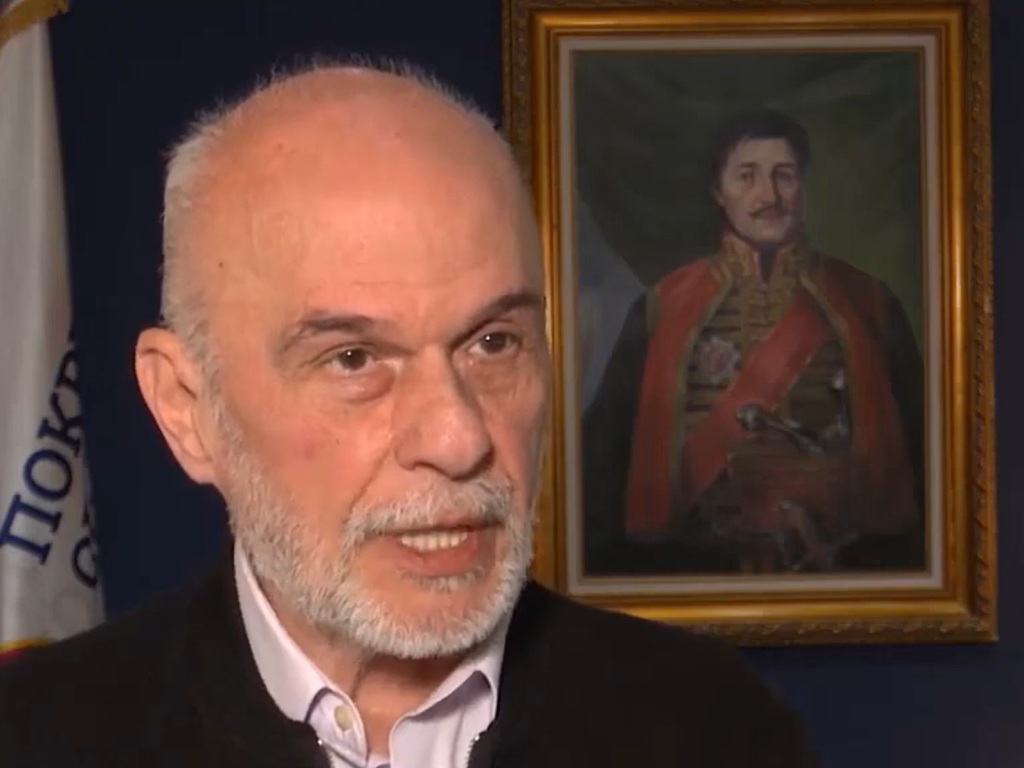
Freedom, Opposition, and Moral Responsibility
Members of your family suffered because they rebelled against the authorities, each in his own way. How important was it then to be in opposition and think differently, and how important is it now?
If we are talking about General Draža Mihailović, then we must be precise: he was not an opposition figure in the classical sense of the word. He was an officer of the Kingdom of Yugoslavia who remained faithful to his oath, the King, and the Fatherland.
At a time when many European states capitulated, when many bowed their heads before Nazism, one Serbian officer raised the banner of freedom. That required not only courage, but faith in freedom and a deep sense of duty toward his own people. My grandfather did not fight for power, but for the freedom of Serbia and the restoration of the lawful state. And even when, at the end of the war, he had the opportunity to leave the country, he refused. He remained with his people. And I think his words best describe his life:
“A man cannot carry his homeland on the soles of his shoes.”
That was not just a sentence. It was the essence of his character. As for my father and many Goli Otok prisoners, their tragedy was different. These were young people who believed in justice, equality, and a better world, and ended up in a system that suspended freedom and human dignity.
Many of them were seduced by the “red fogs” of ideology. Dragi Vasić called it that. It was a wave that swept across all of Europe. But when the time of sobering up came, the price was terrible. That is why Serbia today must learn to respect people who think differently. Because without a free man, there is no free state.
What would you ask your grandfather, if you had had the chance to meet him?
I would probably ask him where such courage came from.
How one man, in those times, could believe that it was possible to oppose such a force as Nazi Germany, at a moment when many great states had already been defeated. But that is precisely where the greatness of General Draža Mihailović lies.
He did not think about what was easier, but about what was right. Later I read about guerrilla warfare and realized how deeply he understood that kind of struggle. But it is not only military skill that inspires admiration in him. It is the moral strength of a man who refused to bow his head. He preserved the flame of freedom when it seemed that everything was lost. And that flame was important not only for Serbia, but for all of occupied Europe.
When you look at your life and work so far, do you think your grandfather would be proud of you today?
It is difficult to speak about oneself. Throughout my life, the most important thing for me was not to disgrace the surname I carry. And if I succeeded in that, then I think I fulfilled my most important task.

We cannot compare ourselves with figures such as General Draža Mihailović, Mihajlo Pupin, Miloš Crnjanski, or Jovan Dučić. These are people who left a mark on the history of the Serbian people. But if we managed to preserve the thread that connects our ancestors with future generations, if we managed to preserve faith, honor, and the awareness of who we are — then we have done a lot.
Every age carries its own struggle. Our struggle today is not only political. It is the struggle for Serbia to once again become a state that is not ashamed of its ancestors, its tradition, and its history.
Truth, Forgiveness, and Serbia’s Future
Your father Branko was on Goli Otok, and your grandfather Draža was killed. Both processes, like many others, were staged, and the verdict was known before the trials even began. Have you forgiven those who inflicted injustice upon your ancestors, and indirectly upon you?
I do not think that I am the one who has the right to forgive on behalf of all innocently suffering people. But I believe Serbia must speak the truth. Without truth there is neither reconciliation nor healing of the nation.
My grandfather was sentenced in a staged political process. And Goli Otok prisoners often did not even have that. People were taken away without trial, without rights, without evidence; suspicion, one sentence, or one wrong thought was enough. These are deep wounds of our people.
I remember that the director of the Archives of Serbia once showed me a photograph from Krupanj from 1941, in which members of the Yugoslav Army in the Homeland and Partisans were standing together after the liberation of the town. After the war, that photograph was cut so that only the Partisans remained.
That, in fact, is the symbol of an entire era, an era in which history was reshaped by the scissors of ideology. But the greatest danger is not only in the crime. The greatest danger is in the lie that becomes official truth after the crime.
A state cannot survive long if it is built on fear, falsifications, and the blood of innocent people. Such a state is like a house built on sand. And that is why truth is important for Serbia not because of revenge, but because of the future.
If you ever believed that your father and grandfather were guilty of anything, have you forgiven them?
No, because I never looked at them in that way. I grew up in a patriarchal family in which honor, one’s word, and trust meant more than anything. We had deep respect for parents and ancestors, because those generations lived what they spoke.
Lies were never tolerated in our home. And that is why we accepted their stories, both family and life stories, with trust. Not because we were blind, but because we knew what kind of people they were. My ancestors were not sinless — such people do not exist — but they were people who believed in Serbia, in the King, in freedom, and in duty toward their people. Those are the values on which I was raised.
And that is precisely why I believe that Serbia can once again become a serious and dignified state when it returns to itself, its truth, its tradition, and its moral foundations. Because the future is not built by peoples who are ashamed of their ancestors, but by those who are worthy of their sacrifice.
Photos: POKS, Printscrееn, Milan Brašanac