

We believe there are many patriotic and historical stories that must not remain untold.
What remains of a life when the person who provided its foundation is gone? How long can questions remain unanswered? And can returning to a city after three decades uncover a truth that time has not managed to erase?
Three decades after the war, the past is still not over for one woman. Questions surrounding the fate of her father, who was killed during the wartime events in Sarajevo, remain unanswered. Her search for the truth brings her back to the city where she once lived, among the traces of a life cut short and memories of a time that forever marked her family.
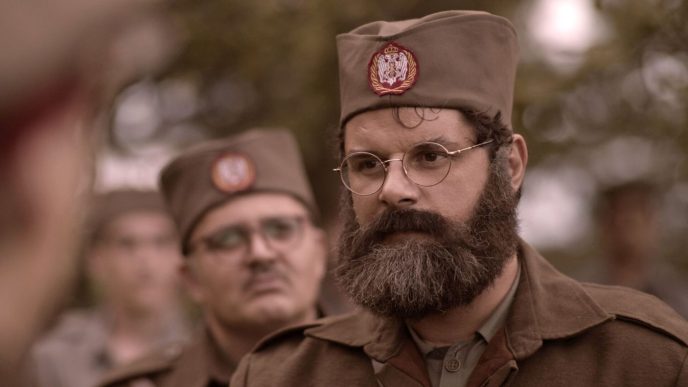
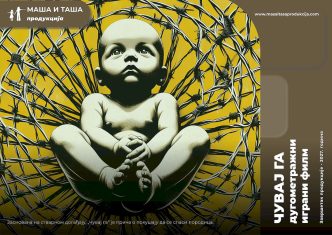
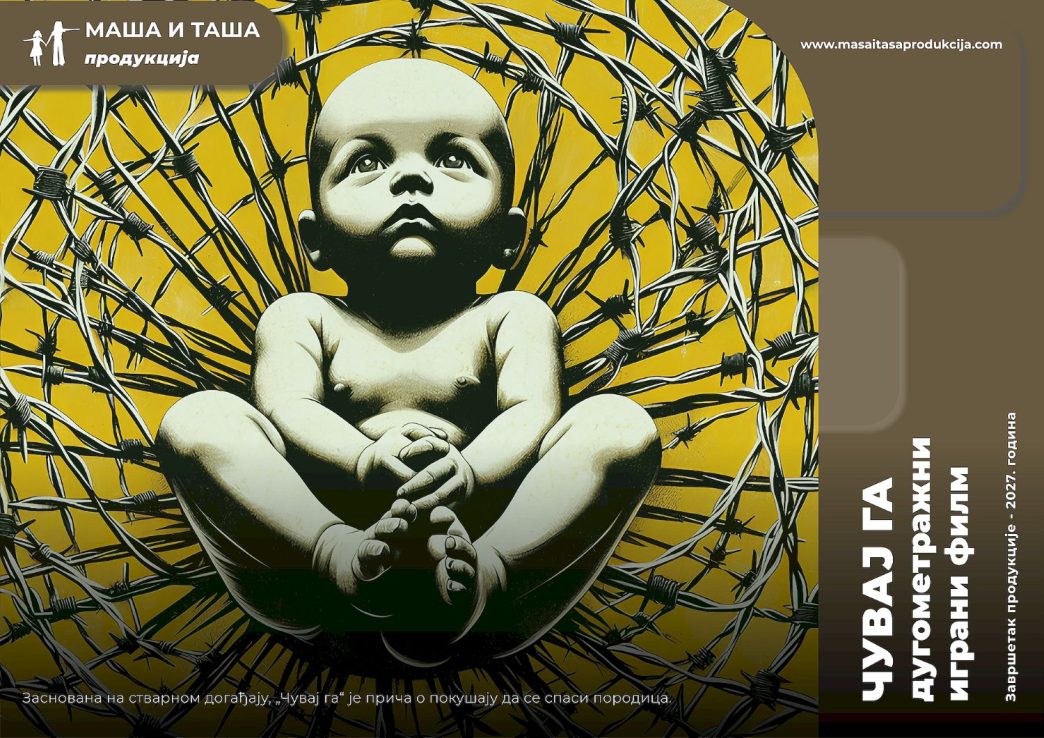
This search forms the basis of the feature film “Čuvaj ga,” directed by Siniša Grabež and inspired by real events and the suffering of Serbian families in Sarajevo during the Defense and Homeland War.
The Stories of Serbs Who Remained in Sarajevo
However, the story does not remain confined to a single family tragedy. It also examines the lives of numerous Serbs whose families had lived in Sarajevo for generations and who faced tragic choices, losses, and uncertainty during the war. Their suffering is part of a historical experience that still awaits fuller examination and the place it deserves in collective memory. The film grows out of a desire to preserve the memory of suffering, family, and a period that left a deep mark on our people.
The director believes it is important to address this subject through a feature film. In this way, we shed light on a lesser-known yet deeply painful aspect of Sarajevo’s tragedy. It is essential to speak about these events and to give the stories of people who remained in the city, where their families had lived and grown up for generations, the recognition they deserve.
From a Newspaper Article to a Film Story
Siniša Grabež said he found inspiration while reading a series of newspaper articles written by a journalist from Sarajevo who, as it happened, was not Serbian but was committed to finding the truth. As he read the journalist’s accounts of wartime events, Grabež became increasingly interested in the fate of Serbs who had remained in Sarajevo. This process of research and creative exploration gave rise to the idea for the film.
That starting point adds another dimension to the project. One journalistic account opened the door to broader research, which in turn created a need to tell, through film, the stories of people whose lives could not be fully captured by wartime reports.
The importance of the subject is also reflected in a figure cited in connection with Sarajevo Serbs who were taken from their homes: the fate of 260 of the 800 Serbs reported missing after being taken from their apartments during the war remains unresolved to this day.
Can there, then, be only one side to the story of the suffering of Sarajevo’s citizens? Can human lives be viewed through selective remembrance, or does every victim deserve recognition?
Speaking about what motivated him to work on the film, Grabež particularly emphasizes the right of every victim to be acknowledged:
“Every victim in this world has the right to be recognized and not become a statistic.”
This statement perhaps best captures the essence of the film. Behind historical numbers are people, families, lives cut short, and questions that sometimes remain unanswered for decades.
Why Is “Čuvaj ga” More Than Another War Film?
The film does not set out simply to repeat familiar historical facts, but to bring one tragic fate closer to the audience through a personal story. At its center is a woman who returns to Sarajevo after thirty years and tries to discover the truth about her murdered father. Through her search, the tragic fate of a family and the events that left deep consequences are gradually revealed. The film is inspired by a true event and real human experiences.

The title “Čuvaj ga” carries powerful emotional symbolism. These two words can be spoken at life’s most difficult moments, as a plea, a message, a vow, or an expression of love. They can also express the need to protect a person, a family, and the memory of those who are no longer with us.
This is precisely why the story extends beyond the boundaries of a single historical event. It speaks to universal human experiences, but from the perspective of a Serbian family whose fate was marked by the war in Sarajevo.
The First Feature Film on a National Theme Developed Primarily with Republika Srpska’s Own Resources
“Čuvaj ga” also has particular significance for the local film industry. Based on its national subject matter, place of origin, and production development model, it is described as the first feature-length film of its kind to originate in Republika Srpska and be developed primarily with its own resources, from the initial idea and screenplay to production planning and preparations for filming.
Earlier film projects dealing with national themes were generally developed in cooperation with production and financing partners from Serbia. This time, the initiative comes from Republika Srpska, with the local production company “Maša i Taša” serving as its principal production partner.
This gives the project significance beyond the film’s story itself. It demonstrates that Republika Srpska has the creative potential, knowledge, and initiative needed to launch demanding feature-length productions, as well as a willingness to transform its own historical experience into a cinematic work.
It is particularly important that such projects be viewed not only as production undertakings, but also as part of the development of a local film industry and the preservation of cultural and historical memory.
Filming is planned at several locations across Republika Srpska. Production is scheduled to begin in April 2027.
When the Weapons Fall Silent, Life Can Be Heard!
Perhaps this sentence contains the most important message of “Čuvaj ga.” When wartime reports come to an end and the weapons fall silent, people remain, along with their fates and the need to learn the truth. Families continue to remember, while new generations have yet to discover what happened.
A film cannot change the past, but it can help prevent that past from being forgotten. It can restore one family’s place in collective memory and allow the story of the suffering of Serbs in Sarajevo to reach audiences far beyond the borders where it originated.
“Čuvaj ga,” therefore, is not merely a film awaiting production. It is our film, belonging not only to its creators but to all of us. Telling this story has become a shared need and a collective undertaking.
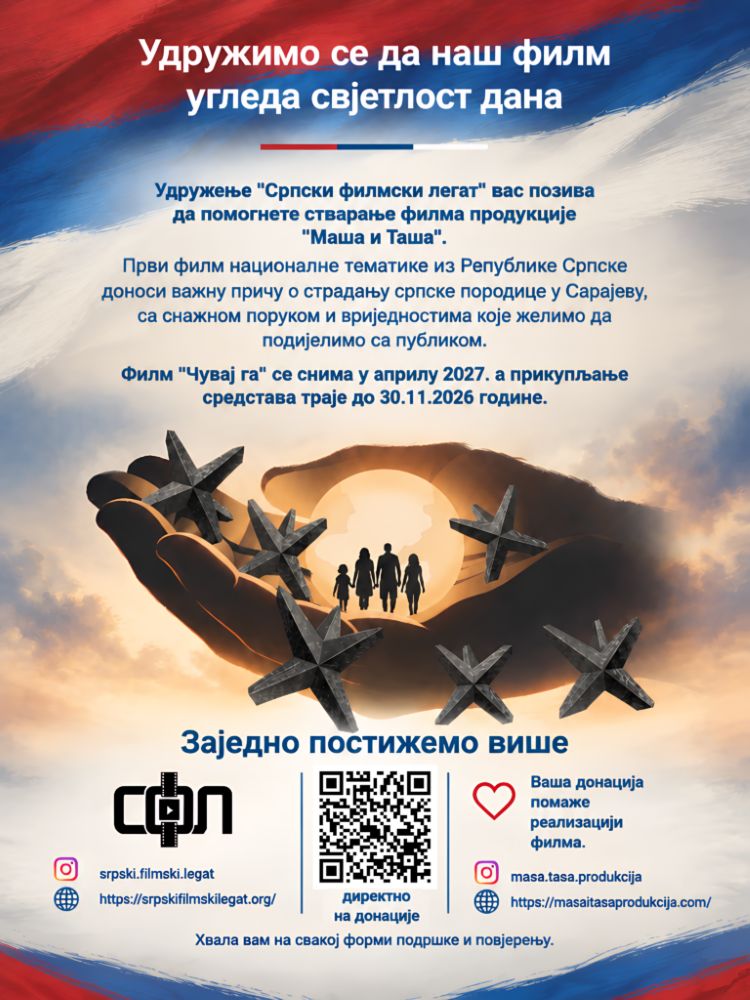
Supporting the Film’s Production
A great deal of work remains before filming can begin. A feature-length film requires actors, a directing and technical crew, numerous collaborators, location preparations, and substantial financial resources.
For this reason, alongside production preparations, an initiative has been launched to collect voluntary contributions to help bring the film to completion.
Individuals, business owners, associations, institutions, and members of the Serbian diaspora can all take part in this undertaking. Support from people living outside Republika Srpska and Serbia is especially important, particularly from those who understand the need to preserve stories about their own history and pass them on to future generations.
Support for the film does not have to be large to be meaningful. Some people will contribute financially, others will share information with friends and organizations, and still others will connect the production team with people who can help make the project a reality. Every such contribution, even one that may seem small, brings the project closer to its goal.
SUPPORT THE MAKING OF “ČUVAJ GA”
Anyone who wishes to support the film, whether through a contribution or by sharing information about the project, can find further details on the Serbian Film Legacy website.
Donations:
More about the film: