


For millions of international travelers, landing at a major U.S. airport is only the beginning of the journey. At airports such as John F. Kennedy International Airport (JFK), Los Angeles International Airport (LAX), Chicago O’Hare, or Miami International Airport, the most exhausting part often comes after leaving the aircraft: waiting in immigration lines that can stretch for one or even two hours during peak arrival periods.
While hundreds of passengers slowly move through passport control, another group walks past the crowds, approaches a dedicated kiosk, has their identity verified in seconds, and leaves the inspection area almost immediately.
Their advantage comes from Global Entry, the U.S. government’s premier Trusted Traveler Program administered by U.S. Customs and Border Protection (CBP). Created for pre-approved, low-risk travelers, the program has transformed the arrival experience at U.S. airports by replacing lengthy immigration procedures with biometric identity verification. Yet behind its convenience lies one of the most comprehensive pre-screening systems used for civilian international travel.
Border Control Before You Even Board
Global Entry fundamentally changes where border security takes place.
Instead of conducting extensive inspections after a traveler lands, U.S. authorities perform most of the security assessment long before the passenger ever boards a flight. Applicants undergo detailed background checks, allowing border officers to focus primarily on identity verification upon arrival.
At many airports, the latest generation of Global Entry kiosks requires little more than a facial scan. Using biometric facial recognition, the system compares the traveler’s live image with government databases and confirms their identity within seconds. At many modern terminals, travelers no longer need to scan their passport or submit fingerprints during the arrival process, although officers may still request documents when necessary.
The result is a process that often takes less than a minute instead of an hour.
More Than Faster Immigration
Global Entry offers benefits well beyond international arrivals.
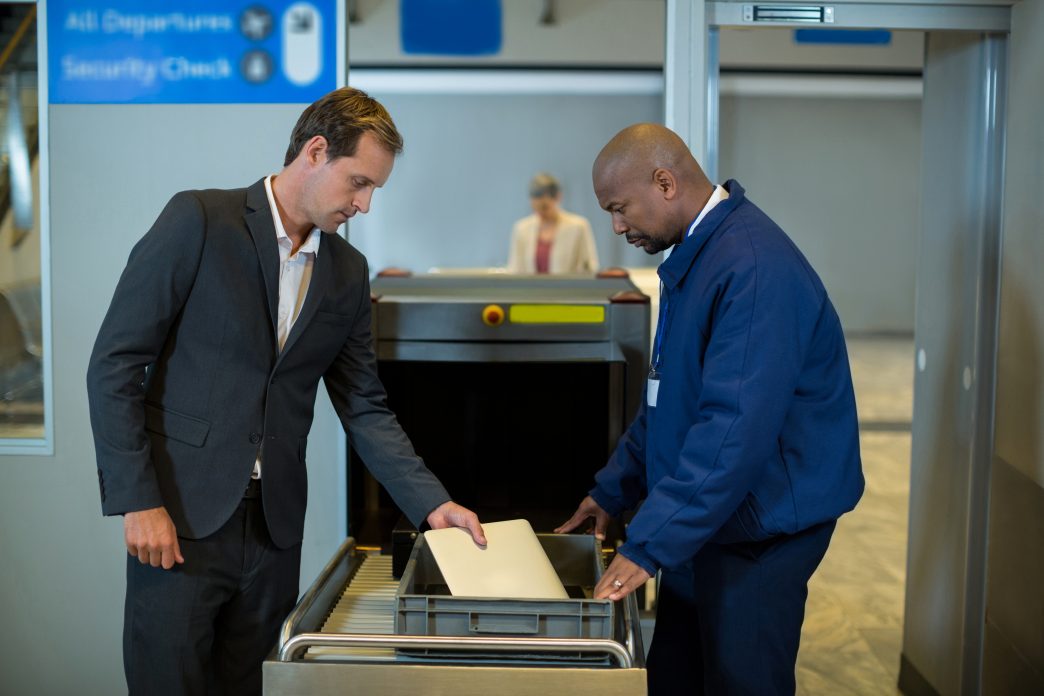
Every approved member also receives TSA PreCheck benefits, allowing access to expedited security screening for domestic departures within the United States.
Travelers typically keep their shoes, belts and light jackets on, leave laptops and compliant liquids inside their carry-on bags, and move through dedicated security lanes that are generally much faster than standard checkpoints.
For frequent travelers, the combined time savings can amount to dozens of hours over the five-year membership period.
Eligibility Depends on International Agreements
Although Global Entry is often viewed as a premium travel convenience, access to the program is determined less by wealth than by international security cooperation.
The program is automatically available to U.S. citizens and lawful permanent residents (Green Card holders). Foreign nationals may apply only if their country has signed reciprocal information-sharing agreements with the United States that satisfy CBP’s security requirements.
Among European countries, citizens of Germany, the Netherlands, Switzerland, the United Kingdom, and, more recently, Croatia, are eligible to apply using their national passports. Croatia officially joined the program in 2025 after completing the necessary security arrangements with the United States.
For much of the Western Balkans, however, the situation remains different.
Citizens of Serbia, Bosnia and Herzegovina, Montenegro, and North Macedonia are currently not eligible to apply solely on the basis of their national passports because their governments do not yet participate in the required bilateral Global Entry arrangements with the United States.
In practice, travelers from these countries have two realistic paths to membership: becoming a U.S. lawful permanent resident (Green Card holder), or holding dual citizenship with a country that is eligible for Global Entry, for example, a Serbian citizen who also possesses Croatian or German citizenship.
A Thorough Background Investigation
Joining Global Entry is far more involved than purchasing a premium airport service.
Applicants must complete an extensive online application through the Trusted Traveler Programs portal, providing detailed information about their employment history, residential addresses, previous international travel, immigration history, and other personal data covering approximately the previous five years.
Federal agencies then conduct comprehensive background checks using criminal, immigration, customs, and national security databases. Any customs violations, immigration issues, or significant criminal history may result in denial. Providing inaccurate or incomplete information can also lead to rejection.
The Final Step: Meeting a CBP Officer
Applicants who pass the initial screening receive conditional approval, but membership is not granted until they complete an interview with a CBP officer.
Traditionally, applicants schedule appointments at one of the Global Entry Enrollment Centers, where officers verify identity documents, collect fingerprints when required, and review the application.
An increasingly popular alternative is Enrollment on Arrival, which allows conditionally approved travelers to complete the interview immediately after landing in the United States at participating airports, eliminating the need for a separate appointment.
Is It Worth the Cost?
As of 2025, the Global Entry application fee is $120 for a five-year membership. The fee is non-refundable, even if the application is denied. Since October 2024, children under 18 may apply without paying the fee if a parent or legal guardian is already enrolled or applies simultaneously.
For travelers who regularly fly internationally, the economics are straightforward. At roughly $24 per year, the program can eliminate countless hours spent waiting at immigration and security checkpoints.
Ultimately, Global Entry represents a broader shift in modern border management. Rather than relying on lengthy inspections at the airport, the United States increasingly performs security screening through advance data analysis and biometric identity verification. For those who qualify, one of international travel’s most frustrating experiences has become little more than a brief stop between the aircraft and the baggage carousel.
Photo: Getty Images, Magnific