

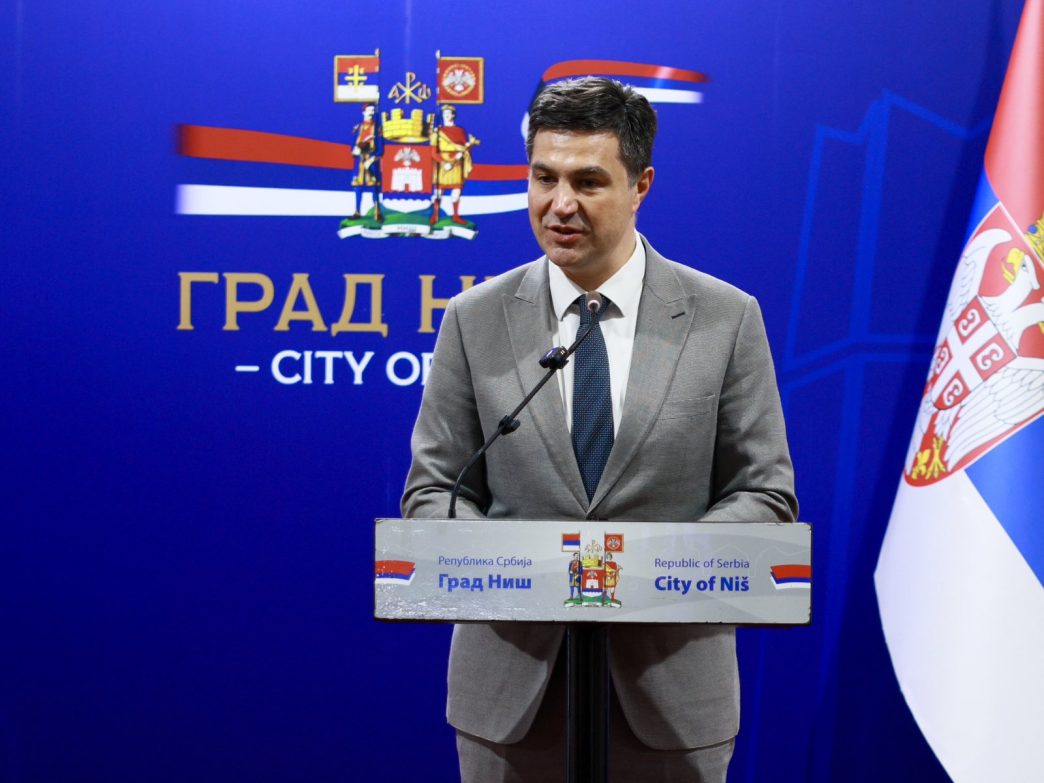
Dragoslav Pavlović has served as mayor of Niš since 2025. An engineer by profession, he took office as the leader of Serbia’s third-largest city at a time when Niš is facing numerous challenges—from attracting new investments and developing its high-tech sector to strengthening cooperation with the Serbian diaspora around the world.
One of his first major international visits was to Chicago, a city that is home to one of the largest communities of people of Serbian origin. His conversations with members of our community in the United States were the reason for this interview.
In his conversation with the Chicago na dlanu news portal, Pavlović discusses the impressions he brought back from Chicago, the messages he received from people from Niš and other parts of southern Serbia who have lived in the United States for decades, and the role he believes the diaspora can play in the city’s future development. 
The interview also covered Niš’s investment potential, plans to attract companies from the United States, cooperation with the Science and Technology Park, opportunities to connect universities, and ideas for strengthening cultural, tourism, and business ties between Niš and Chicago.
Chicago is one of the largest and most dynamic cities in the United States. What were your impressions after the visit, and what left the strongest impression on you?
Chicago is a city that first overwhelms you with its size and then surprises you with how organized it is. Everyone expects those skyscrapers along the lake, and they truly are impressive. However, as an engineer and as someone responsible for running a city, I was more interested in the things people do not photograph: how traffic is managed, how public transportation functions, and how the city works with businesses.
The strongest impression, however, was not made by the buildings. It was the people. I sat with business owners who had left our region with nothing, built companies that operate throughout the United States, and who, even after 30 years, still speak about Niš, Leskovac, or Vranje as “back home.” That is something you cannot measure through any economic indicator, yet it is worth more than any investment catalog.
I left with one thought that has continued to return to me ever since: our people succeeded there, in the most competitive economy in the world. That means the problem was never within us. The problem was the system that did not give them an opportunity. My job is to create that opportunity in Niš.
It seems to me that this is exactly how people in America feel as well, because I heard them commenting in restaurants, on the street, and whenever we met that they are of Serbian origin, but they acknowledge that America gave them a chance. That is why they now regard the United States as their second homeland.
Did you have an opportunity to meet people from Niš who have lived in the United States for a long time, and what did they tell you? What were the most important impressions you brought back from your conversations with our people living in America?
Yes, I did, and that was the most valuable part of the trip. They told me three things, all three of them very directly—our people in America do not waste words.
First: stop calling us only when you need something. For years, the relationship with the diaspora has been such that people contact them for a donation to a church or for assistance after a flood, and then there is silence in between. That is a fair criticism, and I accept it.
Second: we want to know exactly what awaits us. None of them complained that things are difficult in Serbia. They complained that things are unpredictable. A person who is accustomed to procedures being the same in Illinois and Texas does not understand why the answer here depends on whom you know.
Third, and this affected me the most: their children no longer speak Serbian as well as they would like. Among people who are completely financially secure, that was the only subject that carried a sense of sadness.
The impression I brought back is this: the diaspora is not a source of money. These are people with experience, contacts, and standards that we still need to reach here. If we ask them only for money, we are asking for the least valuable thing they have to offer.
What are Niš’s greatest investment advantages today?
Let me begin with something that cannot be replicated in other cities—geography. Niš is a hub. Corridor 10 branches here toward Sofia and Skopje. We have Constantine the Great Airport, which is Serbia’s second-busiest airport by passenger traffic. Nearly 400,000 passengers passed through it in 2025, 10 percent more than the year before, while cargo traffic set a record that year with almost 3,000 tons of goods. That is not a small regional airport; it is infrastructure.
People are another major advantage. Every year, generations of engineers, doctors, economists, and other professionals graduate from the University of Niš. Around 400 researchers work in the city, including approximately 300 who hold doctoral degrees. For an investor coming in search of knowledge rather than cheap labor, that is a key piece of information.
Then there is our Science and Technology Park. Fifty companies employing more than 500 people operate in the existing building. The second building is nearing completion, the first users will move in this fall, and once it is fully occupied, the complex will employ more than 1,000 people working in more than 80 companies. For the first time, we are also opening space for scientific research organizations, which is something Niš objectively lacks.
For someone coming from far away, another advantage is that Niš is a city where everything can be reached on foot or within a 10-minute drive. The airport is four kilometers from the city center. That is an operational advantage that major cities do not have.
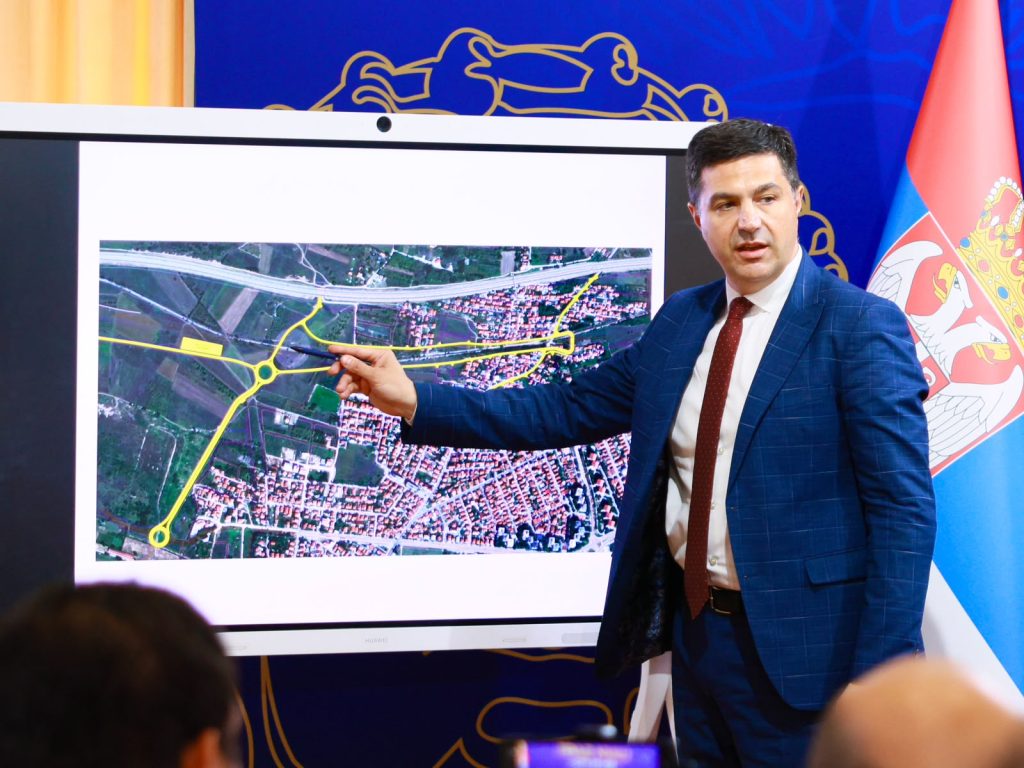
How does the City of Niš plan to involve the diaspora more strongly in the city’s development?
By putting an end to improvisation.
Until now, cooperation with the diaspora has largely depended on personal contacts and individual initiatives. Sometimes it worked, sometimes it did not, and it always depended on who happened to hold a particular position that month. That is not a system.
What Niš needs is a single point of contact at City Hall that can answer every question from someone calling from Chicago or Toronto: “Where is the available land?” “How long does the permit process take?” “What is the tax rate?” “Who do I speak with?” There should be no passing people back and forth between departments and no “call us again in a month.”
Second—a database. Not a list of donors, but a record of people originally from Niš who are doing something that could benefit the city: business owners, doctors, professors, engineers, and people serving in the management of major companies. We do not have such a database, and without it, we start from the beginning every time.
And third, a regular schedule. Once a year in Niš, there should be a meeting between the city and the diaspora with a specific agenda, not merely socializing and speeches. Someone traveling from America should know that over the course of two days, they will be able to attend five meetings that would otherwise take six months of correspondence to arrange.
None of this is expensive. It requires organization and consistency.
Are there specific projects in which people from Niš living in Chicago could participate as investors, partners, or donors? How do you plan to make opportunities to invest in their home region easier and more accessible?
I would divide that into three parts, because investing and donating are not the same thing.
For investors, the most concrete opportunity is the Science and Technology Park. The second building will open soon, and the call for new users has already been issued. Priority will be given to the development centers of companies creating new products. This is an opportunity for someone who owns a company in the United States and is considering establishing a development team in Europe. In addition, our conversations in Chicago showed that logistics and dispatch centers serving the transportation industry, as well as jobs in advanced telecommunications, are realistic possibilities. These are export-oriented sectors that employ highly educated people.
For partners—tourism and hospitality, Niška Banja, food processing, and other fields where the initial investment is smaller and local knowledge is crucial.
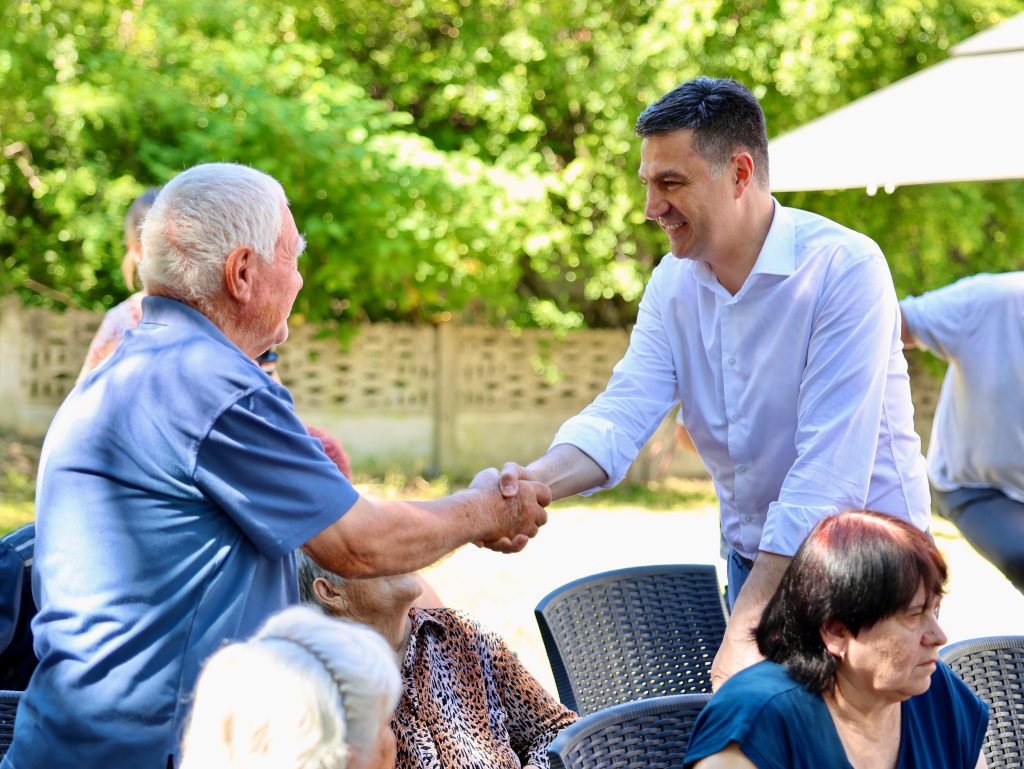
For donors—and here I must be precise. The city is not asking for money to cover operating expenses. If someone wants to invest in their home region, it should be something named and visible: equipment for a specific department at the University Clinical Center, a scholarship bearing the family’s name, or the renovation of a school in the village the person left. It should be clear what was given and what resulted from it.
As for making the process easier, that is our obligation, not theirs. One person to speak with, one telephone number, clear deadlines, and an answer even when that answer is “no.” Someone who does business in America can accept rejection, but cannot accept silence from the administration.
Which sectors do you see as the most attractive for potential investors from the United States?
Two sectors emerged from the conversations in Chicago and Illinois, and they were not my choices but theirs.
The first is transportation and logistics—specifically, logistics and dispatch centers for companies operating throughout the United States. That may sound unexpected until you look at how it works in practice: these are jobs that can be performed remotely and that require people who speak English well, IT support, and adequate infrastructure. Niš has all of that.
The second sector is advanced technology—more broadly, everything that belongs in the Science and Technology Park: software, electronics, biotechnology, and other fields.
I would also add two sectors that are ours but are not being promoted enough: medical and spa tourism, because Niška Banja has a tradition and facilities waiting for a serious partner, and the food industry of southern Serbia, which has products but lacks access to the American market.

What all of this has in common, and I said this there as well, is that we are not interested in investments that seek only cheap labor. We are interested in investments that bring technology, corporate culture, and a salary that allows a young person to live in Niš. Those are the investments that bring people back. The others bring no one back.
Does the City of Niš plan to create a unified platform that would bring together people from Niš living abroad and connect them with domestic companies and institutions interested in cooperation?
Yes, and it is a priority for me precisely because it is the least expensive initiative with the greatest potential impact.
I imagine it being very simple and unpretentious. One place containing information about what Niš offers—locations, incentives, procedures, and deadlines; who the people in the diaspora are who are willing to connect and in what fields; and which domestic companies and institutions are looking for partners. It would also include a calendar so that someone in Chicago knows, for example, that something worth traveling for is happening in Niš in September.
Two things are essential if it is not to become yet another dead website.
First, there must be no politics. There must not be a single party-political word on that platform. If there is, half of the diaspora will not even open it, and they will be right.
Second, someone must respond. A platform without a person who reads messages and responds within two days is a postcard, not a tool.
To be honest, this idea is not new. People were discussing it in Niš 10 years ago. The difference is that today the technical capability exists and, I believe, so does the will. Judge me by whether you actually see the platform, not by the fact that I announced it.
Chicago has strong educational institutions, just like Niš. Do you see opportunities for cooperation between the universities and educational institutions of the two cities?

I do, and this is an area where results can be achieved without major investment.
I would like to clarify one point here: university cooperation is not under the mayor’s authority. The University of Niš is an autonomous institution and signs its own agreements. What the City can do—and what I believe is its responsibility—is open doors, connect people, and support whatever is agreed upon. That is what I will do.
The greatest opportunities exist in areas where Niš already has something to offer rather than merely something to request. The Faculty of Electronic Engineering and the IT sector surrounding the Science and Technology Park provide a realistic foundation for joint projects. The Faculty of Medicine and the University Clinical Center do as well, and it is important to know that a remarkably large number of doctors of Serbian origin work in Chicago and the wider metropolitan area. That network already exists; no one has simply activated it systematically.
The fastest results, however, could be achieved through student exchanges and summer schools. One semester for a young person from Niš in Chicago, or vice versa, changes that person’s perspective permanently. And the first step costs no more than a single meeting.
My message to professors and our people working at universities in Illinois is simple: contact us. The City will provide everything within its authority.
Are there plans to organize joint cultural events or youth exchanges between the City of Niš and the Serbian community in Chicago?
Niš has what is most important for this type of cooperation: existing programs that have real significance. Nišville is a jazz festival with an international reputation. The Film Encounters festival is the oldest acting festival in this part of Europe.
The most logical step would be to give the Serbian community in Chicago a place within those programs—not merely as audience members, but as participants, performers, filmmakers, and young people coming to work at the festival. In the other direction, something from Niš should be presented there at a time when the Serbian community in Chicago is already gathering.
When it comes to youth exchange, I consider that a more serious matter than cultural guest appearances. The children of our people in America are Americans. Serbia is a story they heard from their grandfather. Bring them here for 10 days to spend time with their peers, and they will begin speaking Serbian faster than they would in any course, while Niš will become a real place to them rather than an abstract idea.
To be open, programs like these require a partner on the other side. The City can provide accommodation, a program, and hosts. We cannot organize the Chicago side ourselves. Through this interview, I am inviting associations, Serbian Orthodox Church communities, and Serbian-language schools in Chicago to contact us. If even one of them responds, we will have a program in place by next summer.
How important is the Serbian diaspora in Chicago as a partner in promoting Niš as a tourist destination, and is the City planning specific activities aimed at the American market?
It is critically important, for one very simple reason.
Niš does not have a budget for advertising in the American market, and you would not believe me if I told you otherwise. But we have something that cannot be bought: tens of thousands of people who know Niš from the inside and whose recommendations are trusted. One family that brings relatives and friends is worth more than any advertisement.
Moreover, the first step is not tourism in the traditional sense. It is our own people, and their children, traveling to their home region. Those trips are already happening, but no one is counting them and no one is providing services specifically for them. The City can do a great deal in that area: information in one place, a program for guests from the diaspora, benefits at city institutions, and an events calendar published in advance so people can plan their vacations.
As for the destination itself, Niš has a story that Americans understand better than many Europeans do: it is the birthplace of Emperor Constantine, the man who changed the history of Christianity. Together with Mediana, the Fortress, the Skull Tower, and the thermal springs of Niška Banja, that creates a package that can be presented to the market.
What we can realistically do in the foreseeable future is create quality English-language content, attend Serbian events in Chicago, and establish partnerships with travel agencies that already bring groups from the United States. Without grand declarations—just one verifiable step at a time.