

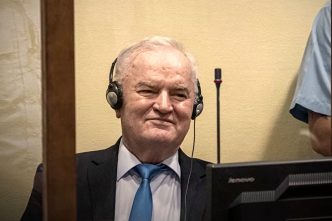
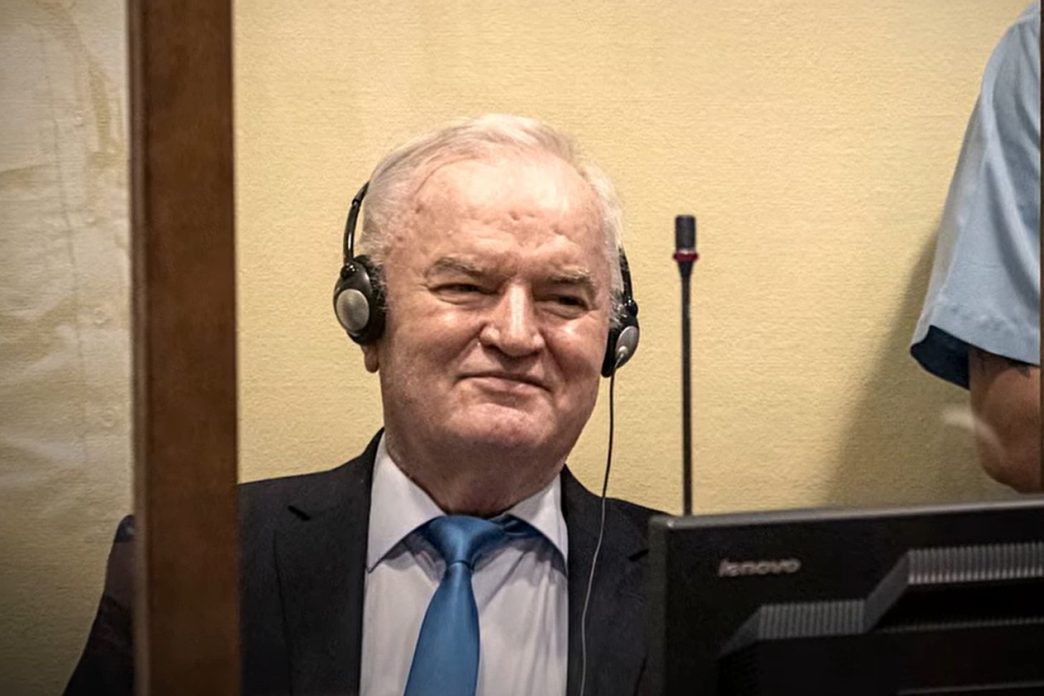
The health of General Ratko Mladić, who is serving a life sentence at the United Nations Detention Unit in The Hague, has deteriorated again, with his family suspecting that he suffered another stroke last week.
His son, Darko Mladić, said the family is awaiting an examination by a cardiologist from Serbia, while also seeking answers about the treatment Mladić is currently receiving. According to his son, the family has not been told exactly what changes have been made to his treatment or why.
The family’s most serious allegations concern information they say they received from a United Nations medical officer. According to Darko Mladić, the family was told that doctors believe his father may have only a few weeks left to live and that part of his treatment has been discontinued because it was deemed no longer medically beneficial.
Family Seeks Answers About His Treatment
Darko Mladić also claims that the family has received no answers as to which treatment was discontinued, who made that decision, which doctors were involved in making it, or whether Ratko Mladić himself consented to the change.
If these claims are accurate, this is no longer simply a matter of a family seeking the release of a convicted prisoner. It raises a more fundamental question: how should a man be treated when, according to his family, doctors believe he may have only weeks left to live?
Mladić’s defense sought his temporary or early release on humanitarian grounds as early as April, arguing that he was suffering from severe and irreversible deterioration in his health. Following a serious medical incident, the court also ordered an independent assessment of his condition and life expectancy.
Ratko Mladić is 84 years old and has suffered from serious health problems for years. In April, he was hospitalized again following a medical incident that his family suspected was a stroke. His deteriorating health, therefore, is not a new development that emerged overnight.
Hague Mechanism’s Conduct Faces Growing Scrutiny
It is precisely for this reason that the conduct of the International Residual Mechanism for Criminal Tribunals – IRMCT deserves serious scrutiny.
The Hague Mechanism’s decision to keep the seriously ill 84-year-old Mladić in detention, despite months of dramatic deterioration in his health and requests that he be allowed to receive treatment in Serbia, is becoming increasingly difficult to defend on legal grounds. In May, a request for his release on humanitarian grounds was denied, even though the Mechanism itself had access to medical assessments documenting the seriousness of his condition.
Today, the situation is even more severe. According to his son, Mladić is now barely able to speak, his condition has deteriorated again, and the family has been told that he may have only a few weeks left to live. Under such circumstances, refusing to allow him to spend the final stage of his life with his family no longer appears to be a matter of necessity in carrying out his sentence. Instead, it appears to be a decision by an institution that has placed formal insistence on keeping Mladić under its control until his final day above considerations of humanity.
The family’s claims that it has not been given complete information about his treatment are particularly troubling. If a decision has indeed been made to discontinue part of his treatment because it is considered to have no further medical benefit, the public has a right to know on whose medical assessment that decision was based, while the family and the doctors it has engaged must be given the medical records necessary to evaluate that decision professionally.
New Request for Release Denied
Graciela Gatti Santana, president of the International Residual Mechanism for Criminal Tribunals, rejected a new request by Mladić’s defense for early, temporary, or conditional release on humanitarian grounds. His lawyers filed the request on April 23, arguing that his health had deteriorated irreversibly and that he was approaching the end of his life.
The decision acknowledges that Mladić’s condition is “very serious,” continues to deteriorate, and that he is approaching death. However, it states that his condition results from multiple chronic illnesses rather than an acute disease rapidly progressing toward death. According to the Mechanism’s president, the medical care available to Mladić in the detention facility provides an appropriate level of treatment, and no additional therapies are available outside the Netherlands that he cannot already receive there.
The Mechanism also cited Mladić’s visitation arrangements in rejecting the request. The decision states that he benefits from an exceptional visitation regime that allows frequent contact with family and friends and that family members will be able to be with him during his final moments.
His defense, however, argues that Mladić suffers from chronic heart and kidney failure, diabetes, and the effects of multiple strokes, and that he can no longer communicate normally. His lawyers maintain that he requires round-the-clock medical supervision that cannot be adequately provided in the detention unit’s palliative care setting.
A Question of Humanity in the Final Weeks of Life
The central issue is no longer what anyone thinks about Ratko Mladić, the war in Bosnia and Herzegovina, or the judgments of the Hague Tribunal. The question is much simpler: must an institution established to administer international law also respect basic standards of humane treatment toward a man who remains entirely under its control?
If the estimates that Mladić has only weeks left to live are accurate, it is difficult to see what is achieved by requiring a seriously ill 84-year-old man to spend his final days in detention in The Hague.
The sentence has been imposed. The judgment is final. Nearly fifteen years after his transfer to The Hague, Mladić remains there.
If he truly has only a few weeks left to live, the question is no longer whether his sentence will be carried out. The question is whether The Hague will show a minimum of humanity and allow him to die surrounded by his family or insist that his final day be spent behind the doors of the United Nations Detention Unit.