

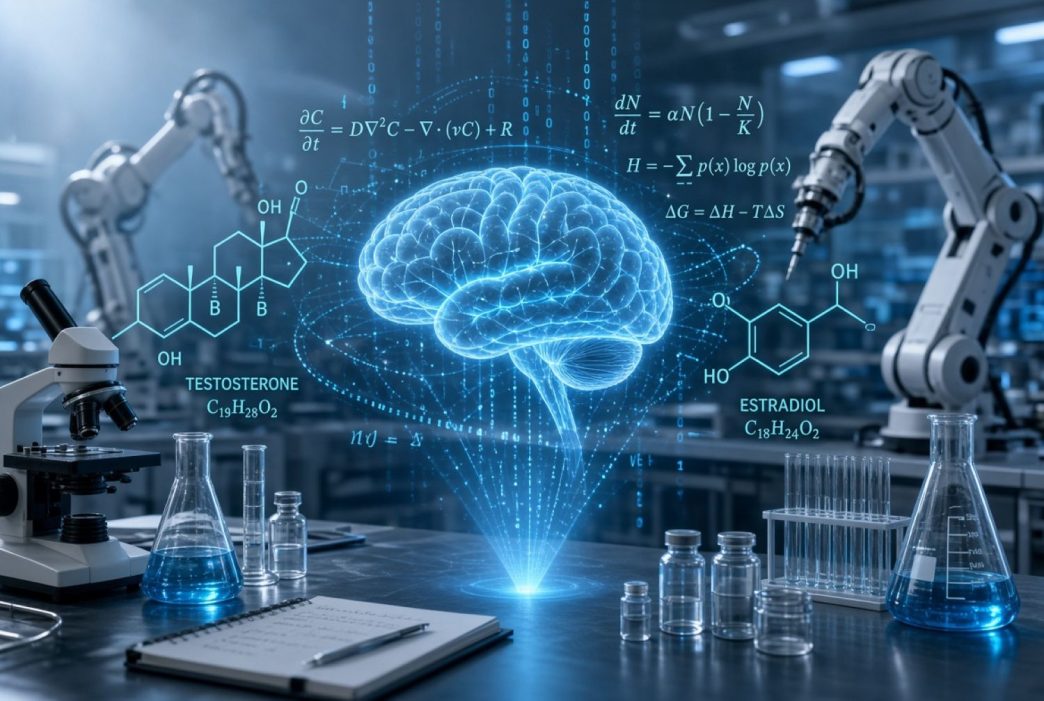
A software module developed at Samara National Research University, named after Sergei Korolev, changes a language model’s behavior during a conversation and has sparked a new debate in generative artificial intelligence. Called the “Emotion Laboratory,” the system assesses user requests and modifies the model’s internal parameters in real time.
These changes directly shape its language register, tone, and level of cooperation in each subsequent response. Although its creators have given these parameters biochemical labels, such as “digital hormones and neurotransmitters,” the computing architecture has no biological basis whatsoever: these are purely mathematical variables and weighting coefficients used in code to simulate the digital interlocutor’s current “emotional” state.
When a Machine Was Just a Machine
In the early stages of their use, digital interlocutors had a strictly deterministic role, limited to a straightforward exchange of information: receiving a query, identifying the user’s intent (intent recognition), searching a knowledge base, and delivering the correct answer.
In that context, tone and style had no operational value. Whether used for technical support, customer service, or document searches, a chatbot served simply as an intermediary between the user and a database. The only measures of success were response speed, information accuracy, and the percentage of requests successfully resolved. The interlocutor on the other side of the screen had no distinctive personal touch, let alone a character.
How System Rules Shape Model Behavior
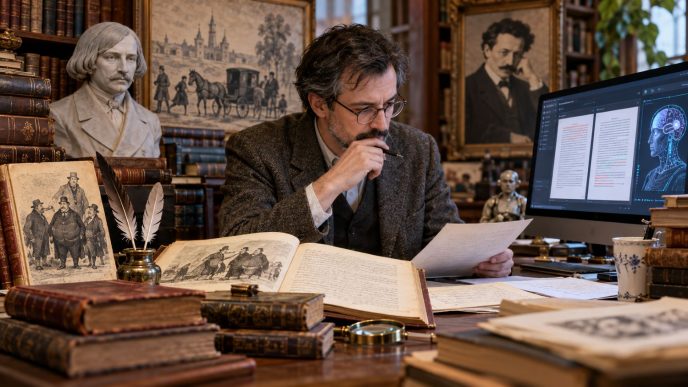
The development of prompt engineering made it possible to define a model’s style, language register, and consistent persona. This is achieved primarily through the system prompt and the information “fed” to the model—a set of rules and supporting documentation that governs word choice, response length and formality, its attitude toward the user, the permitted degree of humor or irony, and its behavior when information is missing from the knowledge base.
Creating digital replicas of living people and historical figures involves considerably greater engineering and ethical challenges. Simply renaming a model and putting biographical information about someone’s life into its context window is not enough.
In public discourse, the term “digital twin” is often mistakenly equated with a complete simulation of someone’s personality. In actual software development, it involves selectively modeling particular views, a body of specialist knowledge, and recognizable patterns of expression, with clear boundaries governing what the model may generate independently.
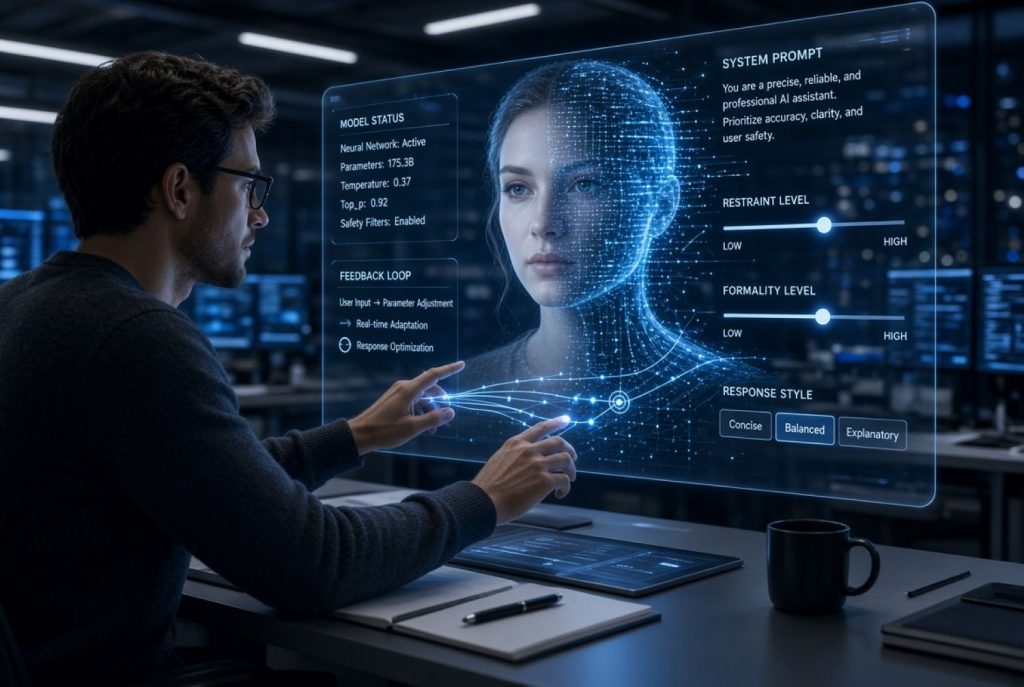
In standard configurations with a single system prompt, the defined character remains unchanged. Whatever course the conversation takes, the model keeps returning to its initially prescribed style. The Samara project attempts to move from a static character to a variable, context-dependent state.
The distinction is fundamental: fixing an agent’s behavioral rules through a prompt is one thing; introducing a feedback loop that dynamically changes its reserve, helpfulness, or response length during a conversation is quite another. In this setup, the user’s input is no longer merely a query to be answered. It becomes an input variable that actively changes the agent’s internal parameters before it composes its next response.
What “Digital Hormones” Are and How They Work
According to the available technical description of the prototype, the module operates as an intermediary layer through a connected sequence of operations. The process begins by assessing the meaning and tone of the incoming message, analyzing the text to measure how provocative, unpleasant, formal, or cooperative the user is.
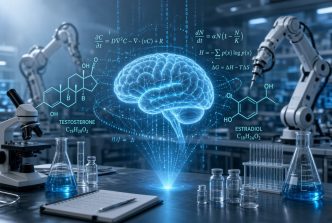
Based on these readings, the software recalculates internal numerical values. The authors named the parameter that steers the model toward stubbornness, reserve, and shorter responses “testosterone,” while the variable responsible for adaptability, accommodation, and more detailed explanations was named “estradiol.” These variables then act as a dynamic filter that guides generation, adjusting the probabilities of subsequent word choices and the overall stylistic register of the response.
To maintain continuity, the system relies on a hysteresis mechanism, meaning that its current state depends not just on the latest message but on the entire course of the conversation. If a series of harsh remarks raises the model’s level of reserve, a passing apology will not immediately reset its parameters. Instead, its tone relaxes gradually over several successive exchanges.
Despite demonstrating the prototype, the authors have not disclosed key technical details. Information is missing about the exact model used for sentiment analysis, the weighting functions governing changes in state, and how these coefficients are integrated into the language model’s attention mechanism.
An Old Idea in a New Form
The use of synthetic hormones in computing is not new. Back in 2006, H. Van Dyke Parunak and colleagues presented mathematical models of hormonal cascades in autonomous agents in their paper A Model of Emotions for Situated Agents. In those models, parameters rose in response to external stimuli and declined when the stimuli ceased. Even then, the distinction was clear: the system’s outward behavior was being modeled, with no claim that the machine actually “experienced” anything.
The novelty of the Samara prototype lies in its attempt to incorporate this concept as a modular add-on to modern language models.
Nevertheless, the absence of a peer-reviewed paper, comparative benchmarks, or publicly available code calls for caution. So far, there is no tangible evidence that this arrangement produces better or more reliable results than advanced step-by-step model prompting (chain-of-thought) and tracking the conversation within the context window itself. Furthermore, reducing persistence to a “male” principle and compromise to a “female” one is an engineering oversimplification with no grounding in cognitive science.
How Machine “Moods” Could Affect Business
Introducing a variable state serves a clear purpose in specialized simulations. In training programs, such as negotiation exercises, crisis management scenarios, or diplomatic discussions, an interlocutor that remembers trainees’ mistakes and gradually responds to them creates a considerably more realistic environment than a bot that begins every response with a “cool head.” For the same reason, this approach also makes sense in video games, where it could support more complex non-player characters (NPCs).
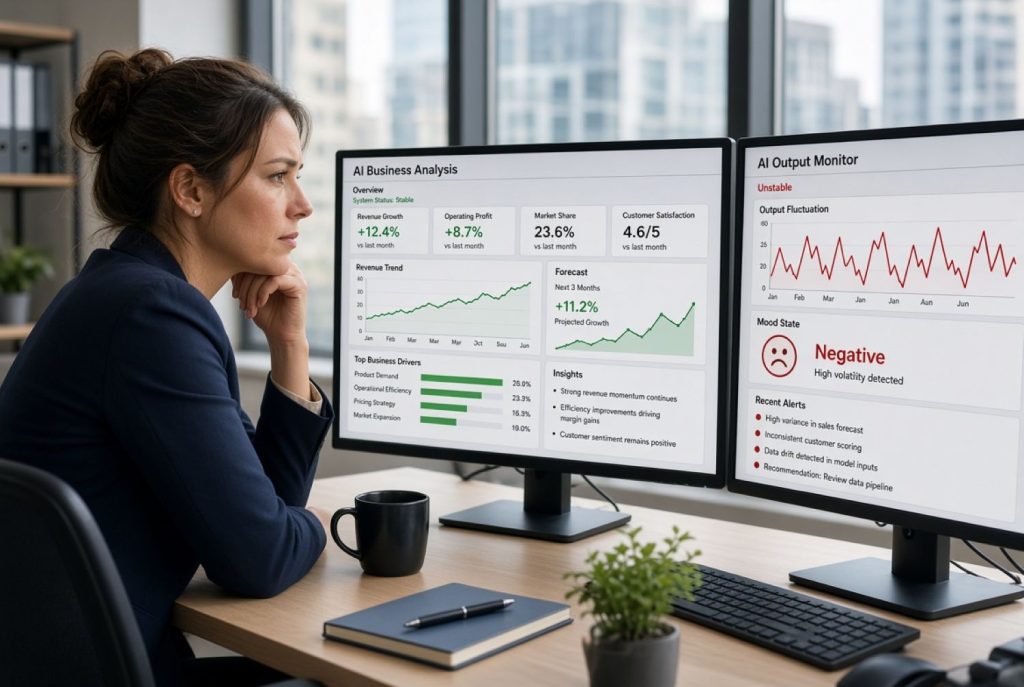
In everyday business use, however, a “variable mood” creates a problem of unpredictability. Most analytical, engineering, and business tasks require a language model to deliver consistent quality, stability, and objectivity. If its responses begin to depend on a simulated “affective state” induced during the conversation, the system’s reliability as a work tool is directly compromised.
Source: It Network Photos: Grok