

Political upheaval and a change of government in the Republic of Serbia have raised a series of crucial questions about the future of Serbian national identity. As a new government led by the Student List takes shape in Belgrade, alongside the growing influence of structures associated with the former Democratic Party, two strategic issues are coming to the forefront of public attention: what will happen to the idea of a unified and indivisible Serbian people—known as the “Serbian World”—and what challenges lie ahead for the Serbian Orthodox Church, which is facing unprecedented media and social pressure.
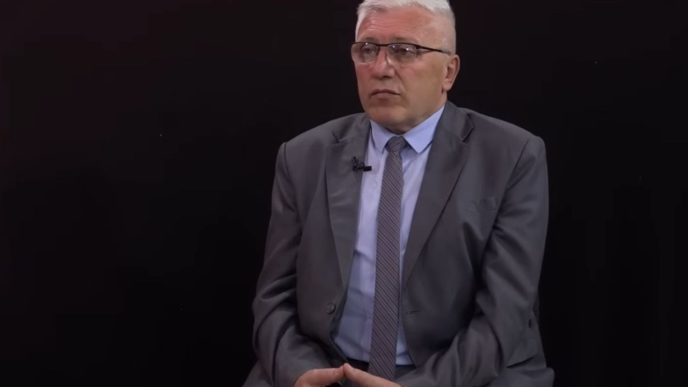
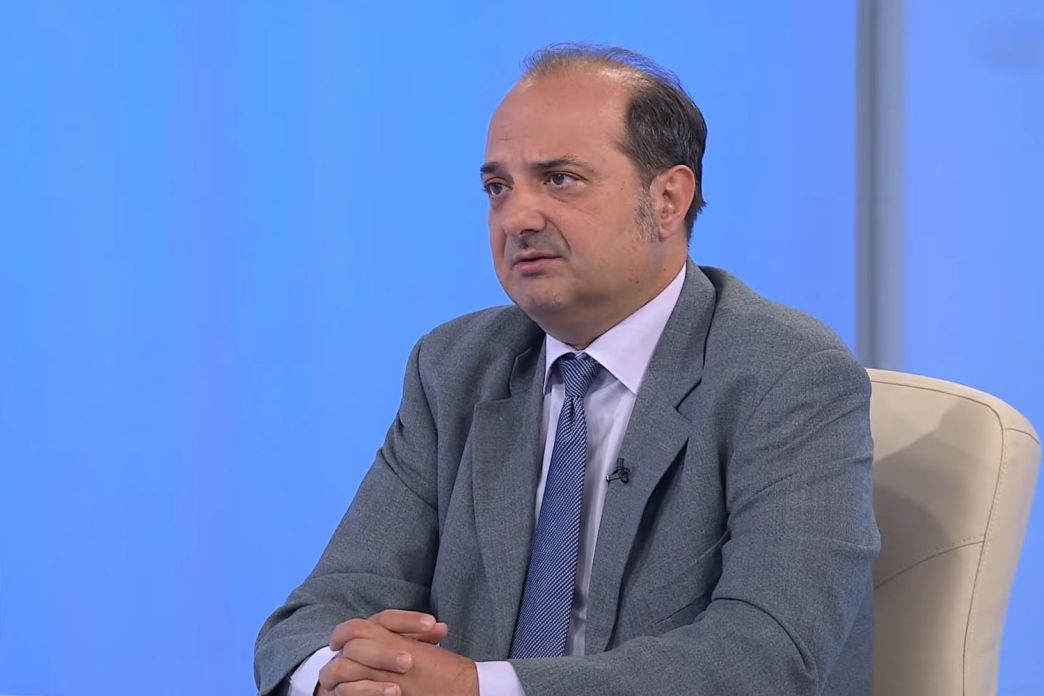
In an exclusive interview with Chicago na dlanu, historian Dr. Aleksandar Raković, a senior research adviser at the Institute for Recent History of Serbia and a leading theorist of the “Serbian World” concept, discusses whether the election results have permanently weakened prospects for closer ties among Serbia, Republika Srpska, and Serbs in Montenegro. He also addresses what he views as coordinated attacks on Patriarch Porfirije and whether religious processions similar to those previously held in Montenegro could once again be organized to defend Orthodox holy sites.
Dr. Raković analyzes what he considers the geopolitical reasons behind the previous government’s fall, with particular attention to Serbia’s refusal to impose sanctions on Russia. He warns against the potential harm of proposed lustration measures and political retaliation, and discusses what Serbs in Serbia and the wider region might expect in the coming months.
Have the results of these elections moved us further away from the idea of the “Serbian World” and the aspiration for all Serbs to live in one state?
Answer: Unfortunately, the election results have moved us further away from the idea of the “Serbian World” and the aspiration for Serbia, Republika Srpska, and Montenegro to form a single state. It is clear that the people involved in the new government in the Republic of Serbia will not be interested in the concept of a unified and indivisible Serbian people, as had been the case in the political mainstream over the previous several years.
From the time of the religious processions in Montenegro until just a few weeks ago, there was a sense of Serbian unity surrounding efforts to strengthen connections among Serbia, Republika Srpska, and Serbs in Montenegro. However, a problem had already existed over the previous two years, because demonstrators in our streets gave no indication whatsoever that such a concept fit into their plans for taking power. There was not even a verbal attempt, or any other effort, to emphasize that Serbs constitute a unified and indivisible people.
I also understand this in the context of their cooperation with political structures from Novi Pazar and other municipalities with Bosniak majorities. Any specifically Serbian concept would probably have moved them further away from their objective of bringing together all possible actors to overthrow Aleksandar Vučić’s government. Ultimately, in an article by Aleksandar Marševelski published in Danas, we see that even Milo Lompar is considered an obstacle because he would supposedly cost them votes from national minorities that they needed in order to remove Vučić from power. It is obvious that those who devised the model for overthrowing the government did not have a broader Serbian national framework in mind. How they will behave once they assume power remains to be seen, but I am not optimistic.
We are witnessing attacks and pressure on the Serbian Orthodox Church, both from individuals and institutions in countries across the region and from the Student List in the Republic of Serbia. Can the Serbian Orthodox Church withstand the attacks and challenges it faces?
Answer: The Serbian Orthodox Church has faced much more difficult situations than it does today, but never before has hatred toward the Church’s leadership and Patriarch Porfirije been channeled through social media on this scale. Not even during the communist period—from 1952 onward, when the communists believed they had pushed the Church to the margins of society—were there such vehement public attacks on the head of the Serbian Orthodox Church.
This is no coincidence. If we look at the media outlets associated with the protest blockades, one of their main targets has been the leadership of the Serbian Orthodox Church, headed by the patriarch. He has done nothing to deserve this. He has led and continues to lead the Church with dignity from the throne of Saint Sava, responded to attacks with restraint, and proven himself to be a true spiritual father of the Serbian people. He did not provoke these attacks. Rather, they stem from the agenda of those seeking to destabilize our state, society, and the Church itself. Given that the pressure has not subsided, the objective is clearly to further undermine the unity of the Serbian Orthodox Church. Those who shape the public and media landscape persistently create the impression of universal agreement in condemning Patriarch Porfirije’s role.
Do we need new religious processions? Can the Serbian people in Serbia demonstrate the same determination and perseverance shown by Serbs in Montenegro when they defended Orthodoxy?
Answer: Religious processions could certainly be organized if the new authorities openly express an intention to interfere in personnel appointments within the Serbian Orthodox Church. In that case, a situation similar to the one in Montenegro before the fall of the Democratic Party of Socialists (DPS) would arise. For now, the question of whether new processions are needed remains hypothetical. However, if the Serbian Orthodox Church truly comes under threat, the defense of holy sites will inevitably be organized in Serbia as well, following Montenegro’s example.
Is the willingness to defend Serbian national interests stronger today in Republika Srpska and Montenegro than in Serbia?
Answer: I believe the willingness to defend Serbian national interests is equally present everywhere. The election results in Serbia are the consequence of a combination of domestic and global geopolitical circumstances. One of the key reasons the government fell was the fact that Serbia had not imposed sanctions on the Russian Federation. Foreign centers of power operating behind the scenes did not forgive Serbia and its former leadership for that.
You have said that the Student List is controlled by the deep structures of the Democratic Party. Is the party returning to the political scene openly or through the back door? How much influence did it have on the election results and the current political situation? What role did former Democratic Party members who joined the Serbian Progressive Party play, and should the SNS leadership have reassessed their influence within the party earlier?
Answer: As far as the Democratic Party is concerned, its offshoots and organizational structures are inevitably returning, and their reunification is also possible. These are people who have experience running the country, which is certainly preferable to having complete beginners govern the state. What their domestic and foreign policies will look like remains to be seen.
I do not believe that former Democratic Party officials who joined the SNS played a role in these events. The Serbian Progressive Party adopted an all-encompassing model of bringing together a wide variety of social groups in order to remain in power, which is why it never developed a firm party ideology. Now may be an opportunity to define one, and that will depend primarily on Aleksandar Vučić.
I am not sure the SNS will move toward an explicitly Serbian national ideology, because its leaders probably believe that doing so would limit their ability to bring different segments of society together again. Nevertheless, we must not forget that the Serbian national idea experienced a major resurgence during their time in power. Although many officials did not act in a nationally oriented manner, Vučić himself enabled and encouraged that development, while certain ministers served as its direct advocates. Among those now coming to power, I currently see no one who would champion the Serbian national idea, although I would welcome being proven wrong.
Who prevented the “October 6” scenario, and was it merely postponed until October 26 of this year? Were arrests, lustration measures, and intrusions into institutions being prepared then, as they are today? Were pressure, threats, and blackmail also being planned to force the resignations of officials whom the new government considered “unacceptable”? Is that how a state governed by the rule of law should function?
Answer: The new authorities will have to moderate their rhetoric and stop making verbal and written threats against former government representatives. Wherever there is evidence that someone broke the law or engaged in theft, that person should certainly be prosecuted and convicted. However, advocating lustration against people simply because they were part of the government and conscientiously performed their duties is completely senseless and harmful. It creates a vicious cycle of political retaliation that undermines the cohesion of the Serbian people.
Under the new circumstances, the European Union-oriented approach will certainly become more prominent than the previous policy direction, because that is how the citizens voted. It is up to us to see how, within that framework, we can deepen ties among Serbia, Republika Srpska, and Serbs in Montenegro and the wider region. Many uncertainties lie ahead. We do not know whether sanctions will be imposed on Russia or what form they might take (in my opinion, they will be introduced in some form), nor do we know what position the government will take on Kosovo and Metohija.
It is certain that the government will not recognize the unilaterally declared independence, but the question remains what the West will demand of it and what it will have to fulfill. Questions also remain about relations with Republika Srpska, Serbs in Montenegro, and issues such as Srebrenica. Since we still do not know the composition of the new government or how the heterogeneous Student List will function, we will only be able to provide the first concrete answers in a few months.
Photo: Printscreen