

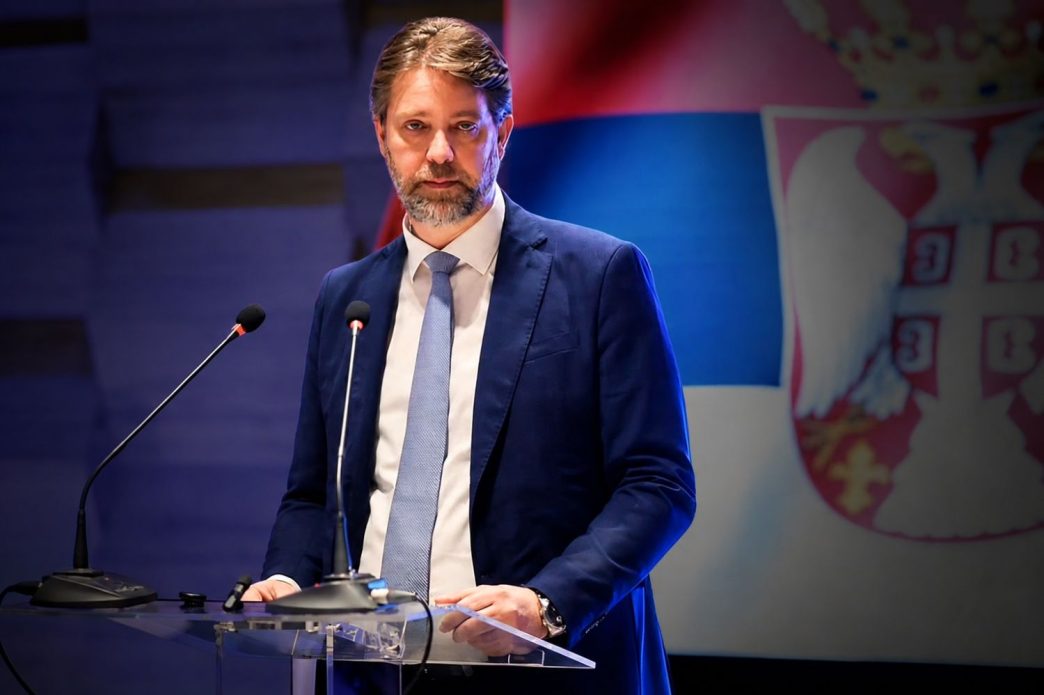
In the second part of his interview with Chicago na dlanu, Kragujevac Mayor Nikola Dašić discusses relations with Milwaukee, specific areas of cooperation and the role of the Serbian community in the United States as a link between the two cities. After infrastructure, industry, new technologies and development projects took center stage in the first part of the conversation, the focus now shifts to international partnerships, U.S. investment and plans for the next two years.
Dašić explains how the sister-city initiative between Kragujevac and Milwaukee began, which areas of cooperation have already been opened and what role the diaspora can play in building connections with American companies, universities and institutions. He also discusses the sectors he believes offer the greatest opportunities for U.S. investment and the projects expected to shape the remainder of his current term.
6. Kragujevac and Milwaukee became sister cities in 2024. How did the initiative to connect the two cities begin, and what do they have in common despite the considerable distance between them?
The initiative was launched from Milwaukee in 2023, and from the beginning we saw it as an opportunity for substantive cooperation, not merely a ceremonial relationship. Following an exchange of letters of intent, the Milwaukee Common Council supported the establishment of cooperation on September 28, 2023, and the Government of the Republic of Serbia gave its approval on December 7 of the same year. The sister-city agreement was signed on January 26, 2024. 
Although geographically distant, Kragujevac and Milwaukee have a great deal in common. Both cities have strong industrial traditions, university and research potential, and the ambition to base their development on new technologies, knowledge and stronger connections between business and education.
That is why, from the beginning, we identified the economy, advanced technologies, healthcare, education and culture as the most important areas of cooperation. That breadth gives the sister-city relationship real substance and creates the possibility for concrete projects to develop from what might otherwise remain a formal relationship.
7. In which areas are Kragujevac and Milwaukee cooperating today, and are there plans to expand that cooperation in the coming period?
The first concrete steps have been taken in the areas of business, advanced technologies, healthcare and university cooperation. During our visit to Milwaukee, direct channels of communication were opened with Johnson Controls, GE Healthcare and Ingeteam Inc, and the discussions focused on opportunities for technological, industrial and healthcare cooperation.
Another important direction is connecting the University of Kragujevac with the University of Wisconsin–Milwaukee and the Medical College of Wisconsin. The initiative was launched during our visit, and the University of Kragujevac is working to further develop those contacts.
Our goal is to expand this cooperation and make it continuous. By establishing a department for international cooperation, the City has clearly demonstrated that we want to develop relations with sister cities, including Milwaukee, in a systematic way – through new business contacts, academic and professional exchanges, healthcare, culture and other projects of mutual interest.
8. The United States is home to a large Serbian community. How can the diaspora contribute to connecting Kragujevac with American business leaders, universities and cultural institutions?
Our experience in Milwaukee showed us how important a bridge the diaspora can be between Kragujevac and the United States. Representatives of the Serbian community helped organize meetings during our visit with numerous successful companies and institutions – from Milwaukee Tool, GE Healthcare and Johnson Controls to the University of Wisconsin–Milwaukee, the Medical College of Wisconsin and other partners. Thanks to that involvement, the visit was not merely ceremonial, but above all a working visit.
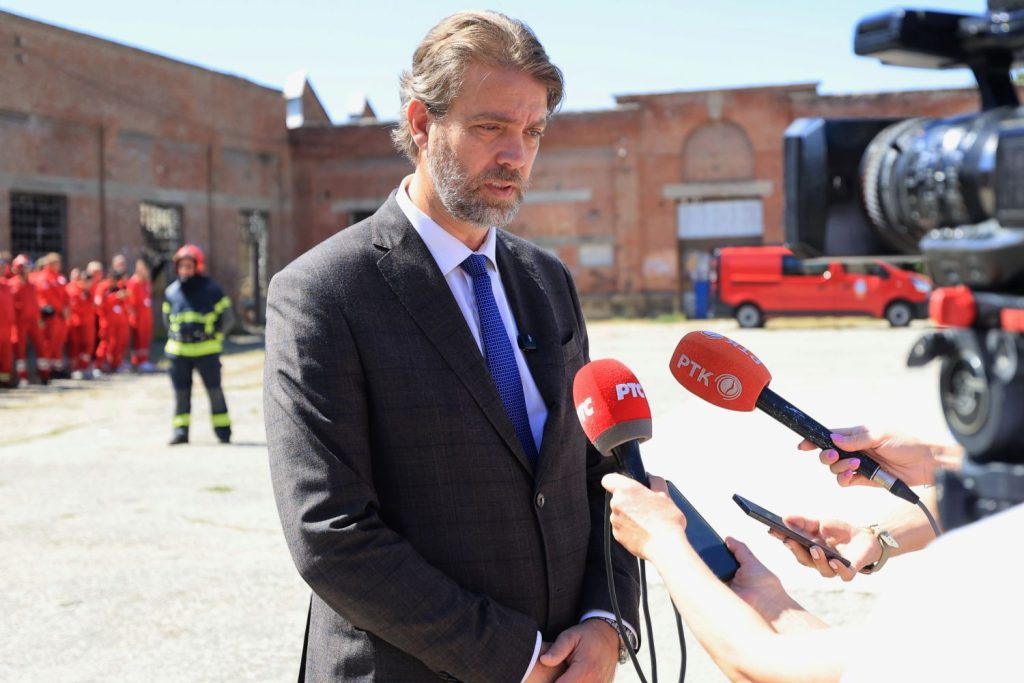
People who live and work in the United States understand both the American business environment and Serbia, and they have contacts and the trust of both sides. They can therefore recognize the potential for cooperation, connect the right people and institutions, and help turn contacts into concrete projects more quickly.
I am not referring only to investment. There is room for student and faculty exchanges, joint research, cooperation between healthcare and cultural institutions, and business partnerships. We do not want to view the diaspora merely as a connection to the homeland, but as an active partner in Kragujevac’s development.
9. How can Kragujevac attract investors from the United States, and which sectors offer the greatest opportunities for American investment?
Investors today are not looking only for a favorable location or land. They are looking for infrastructure, skilled people, a stable business environment, strong connectivity and the ability to combine production, development and knowledge in one place. That is precisely where I see Kragujevac’s greatest advantage.
We have a strong industrial base, the University, the State Data Center and technology infrastructure that is being further developed through the Innovation District. The Northern Bypass and new industrial zones will further improve the city’s logistics and investment position.
I see the greatest opportunities for American investment in the automotive industry and electric mobility, IT and artificial intelligence, cybersecurity, healthcare technologies, research and development, and advanced manufacturing technologies. These are areas in which Kragujevac is already building capacity and where there is natural room for cooperation with American companies.
The contacts established through our cooperation with Milwaukee show that interest exists. Our task is to turn that interest into concrete projects. We want Kragujevac to be recognized not only as a good location for manufacturing, but as a city where companies can develop new products and technologies, work with the University and researchers, and find skilled people for the jobs of the future.
10. Which projects and investments will define the next two years, and what can Kragujevac residents expect by the end of your current term?
The next two years will be a period in which a large number of projects already underway will take their final form and begin to deliver their full effects.
We will continue construction of the Northern Bypass, development of the Innovation District and the technology ecosystem around the State Data Center. At the same time, we will continue gasification and investment in roads, water and sewage networks, as well as improvements in urban, suburban and rural communities.
Another important project is the revitalization of the Military-Technical Institute complex, particularly the Machine Workshop, which has the potential to become a new center for cultural, educational, innovative and social activities.
I would like Kragujevac, by the end of this term, to be recognized as a city that has succeeded in connecting its great industrial tradition with the most advanced technologies – a city that offers people jobs, education and a high quality of life. Our goal is not simply to follow developed cities, but to set standards in certain areas.
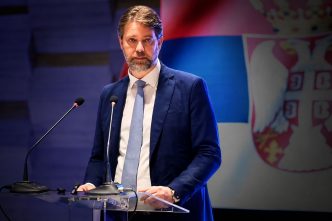
Photo: Secretariat for Communications – Kragujevac