

Over the past six years, Kragujevac has launched a series of major projects, from construction of the Northern Bypass and the Innovation District to expansion of the gas, water and sewage networks. The start of electric vehicle production, development of the State Data Center and plans to establish a new faculty are expected to further strengthen the city’s economy and create new jobs.
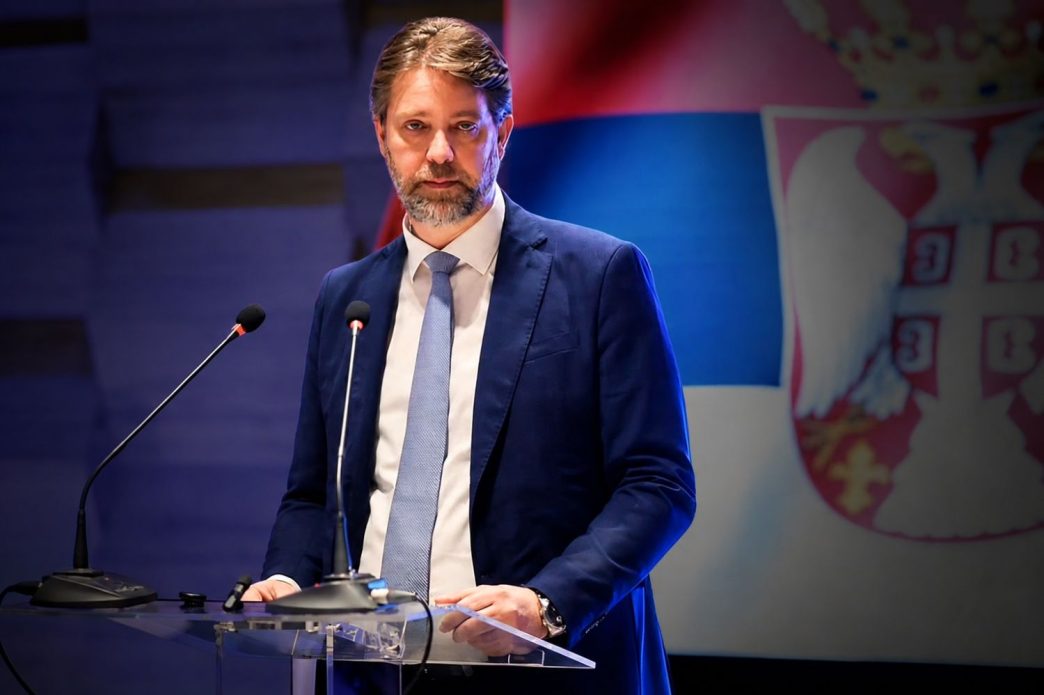
Kragujevac Mayor Nikola Dašić speaks to Chicago na dlanu about the results achieved so far and plans for the next two years, as well as cooperation with Milwaukee, opportunities for American investment and the role of the Serbian diaspora in connecting Kragujevac with companies, universities and institutions in the United States.
1. In August, it marked six years since you were first elected mayor of Kragujevac. Looking back on that period, what has changed the most in the city, and which results are you particularly proud of?
Looking back on the previous six years, I would say that the biggest change is not any single project, but the fact that Kragujevac has once again gained strong development momentum and a clear vision for the future. 
Residents can see that change most clearly in their everyday lives. Over six years, we paved or rehabilitated 405 streets, built two new kindergartens for more than 400 children, renovated schools and gymnasiums, reconstructed the city swimming pools, built apartments for members of the Ministry of Internal Affairs, renovated Vojvoda Radomir Putnik Square and reconstructed the City Market. We also built a new children’s resort at Bešnjaja. At the same time, we launched projects that will shape the city’s development for decades to come – the Northern Bypass, the Innovation District, gasification of suburban and rural communities, and the “Clean Serbia” project.
Still, what I am most proud of is that the city’s prospects have changed. Kragujevac is no longer a city waiting for better times – Kragujevac is creating them today.
2. Your term has been marked by significant investment in roads, water and sewage networks, public facilities and urban improvements. Which projects, in your view, have done the most to improve the everyday lives of Kragujevac residents?
People most often measure quality of life by what surrounds them every day – the road they take home, whether they have water, sewage, gas, a good school and kindergarten, and a well-maintained neighborhood. That is why, alongside major capital projects, we have invested significantly in municipal infrastructure.
One of the largest undertakings is the gasification of the Kragujevac area, an investment worth about €50 million financed by the public company Srbijagas, with logistical support from the City. A total of 850 kilometers of network is planned by 2029; more than 200 kilometers have already been built, and we expect around 400 kilometers by the end of the year. Residents in areas where the work is underway have also been offered connections at a price 20 percent lower.
Investment in the water supply is also very important. Despite the long, dry summer, Kragujevac had no restrictions or problems with its water supply. Through investment in the Morava system and revitalization of the Ranney wells, the capacity of this source has increased from about 35 to approximately 100 liters per second, and by the end of the year we expect around 180 liters. In this way, we use less water from Gruža and preserve reserves for dry periods.
The Northern Bypass Will Transform the City
The Northern Bypass, on the other hand, is a project that will fundamentally change how the entire city functions. It is an investment worth about €270 million and a roadway approximately 22 kilometers long. The first section, from Jovanovac to Petrovac, has been completed, and once the entire bypass is finished, a large share of transit and heavy freight traffic will be moved out of the city center. That means less congestion, noise and pollution, safer streets and better connections between Kragujevac and the most important transportation routes.
For me, the major projects that change the city’s position are just as important as investments in roads, water, sewage and gas, because those investments directly improve the quality of everyday life.
3. The start of electric vehicle production opened a new chapter in the development of Kragujevac’s industry. What does that mean for the city’s economy, the creation of new jobs and attracting new companies?
For Kragujevac, the start of electric vehicle production was much more than a new model at the factory. It is confirmation that a city with a long industrial tradition can keep pace with the latest technologies and be part of a new cycle in the European automotive industry.
Stellantis already plays an extremely important role in Kragujevac’s economy and exports, and the transition to electric vehicles further strengthens the city’s position and creates room for new suppliers, companies and jobs.
Economic indicators show that the foundation for this kind of development is much stronger today. The city budget has grown from around eight billion dinars in 2020 to more than 14 billion, while debt has been reduced from about €24 million to approximately €3 million. The number of unemployed people has fallen to 8,318, an all-time low.
It is also important that the economic structure is expanding. In addition to Stellantis, there are Mind Park, Siemens and numerous other companies, while at the same time we are developing the IT, innovation and high-tech sectors. Our goal is a strong and diversified economy, because the real meaning of growth is not in statistics, but in new jobs, higher wages and a better quality of life for residents.
4. The University, the State Data Center and the technology sector represent important development opportunities for Kragujevac. How can the city use them to attract new investment and give young professionals a reason to stay or return to Kragujevac after completing their education?
The key is not to view the University, the State Data Center and the technology sector separately, but as parts of a single development ecosystem. That is exactly what we are building in Kragujevac today – a combination of education, science, cutting-edge infrastructure, and domestic and international companies.
The State Data Center has already placed Kragujevac on the technology map of this part of Europe. New modules and a second supercomputer became operational in April, while a third is expected in early 2027. The National Artificial Intelligence Platform is available to universities, scientific institutes and domestic startups, giving young people access to technologies that, until recently, were available only to large systems.
The next step is the Innovation District, a complex of nearly 62,000 square meters that will connect IT companies, startups, the University and the research community. The fact that there is genuine interest from major investors is also demonstrated by preliminary agreements for space in the complex with Oracle, Honeywell and Palo Alto. We are therefore no longer offering investors only a good location and favorable business conditions, but infrastructure, knowledge and skilled professionals.
At the same time, we received approval to establish a new faculty within the University of Kragujevac, focused on artificial intelligence, robotics and cybersecurity. The goal is to enable young people to study here, gain practical experience, develop their own ideas and work for domestic and international companies without having to leave Kragujevac in pursuit of a good career.
We want Kragujevac to be a city where people not only stay, but also return – a city where education and science lead to startups, investment and well-paid jobs.
5. Kragujevac holds a special place in Serbia’s history and has a rich cultural heritage. What steps is the city taking to better present these values to domestic and international audiences and attract more visitors?
Kragujevac has something that cannot be built through investment – a strong and authentic identity. The modern Serbian state was created here, its first institutions were established here, and Serbia’s industrialization began here.
Our goal is not merely to preserve that heritage as testimony to the past, but to make it alive, visible and appealing to new generations and visitors. A particularly important role in this is played by the revitalization of the Military-Technical Institute complex and the Machine Workshop, a place where modern industrial Serbia was being created and which can be given new life through cultural, educational, creative and innovative content.
It is precisely in this connection between the past and the future that I see one of Kragujevac’s strongest stories – a city where modern Serbia was created and where new technologies are being developed today. That is the identity we want to present more clearly to both domestic and international audiences.
Photo: Secretariat for Communications – Kragujevac