

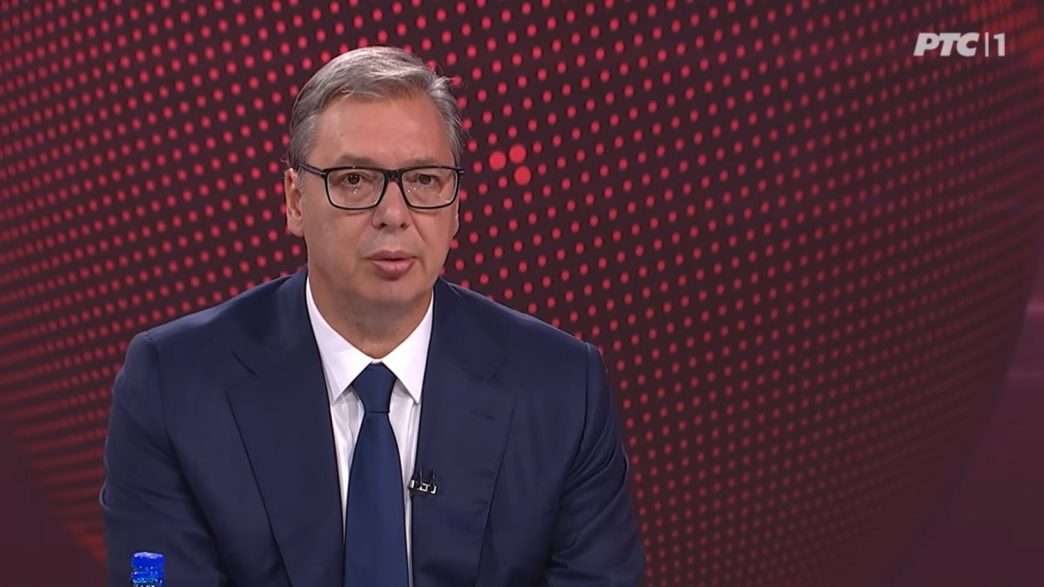
Serbian President Aleksandar Vučić has for the first time named two specific dates for early parliamentary elections. Appearing on Radio Television of Serbia’s main evening news program on August 20, Vučić said voters would most likely head to the polls on October 18 or 25, with the final date expected to be confirmed within the next few days.
“Parliamentary elections in Serbia, as things currently stand, will be held either on October 18 or October 25, and we will know which date within the next few days,” Vučić told RTS.
The statement significantly narrows the timeframe Vučić had outlined in recent days. He had previously said elections would be held in October or November, but has now narrowed the choice to two possible dates.
The elections have not yet been formally called, meaning October 18 and October 25 remain proposed dates rather than officially confirmed election dates.
The Goal: At Least 126 Seats
Speaking about the upcoming election, Vučić said the electoral list he will support will seek to secure a parliamentary majority. He identified 126 seats as the threshold required for a majority in Serbia’s 250-seat National Assembly.
“We know that we will not have a majority unless we have 126 seats,” Vučić said.
Several days earlier, commenting on the Socialist Party of Serbia’s decision to run independently, Vučić said the Serbian Progressive Party would need to secure a majority if it wanted to continue leading the government. At the time, he estimated that winning more than 125 seats would require approximately 46 percent of the vote.
During his RTS appearance, Vučić again addressed the SPS decision. Asked about the potential configuration of electoral lists in the upcoming election, he said:
“There will be elections. On one list, you will have the Serbian Progressive Party with its list, and on the other, all the other political options.”
He added that he would not dispute anyone’s right to stand for election and that, as president of the Republic, he did not want to use the occasion to discuss party matters.
Speaking about his expectations ahead of the vote, Vučić said that as the election approaches, “many are beginning to understand that the results will not be what they had led themselves, and the public, to believe.”
Vučić Presents Citizenship Figures
Another topic discussed during the interview was the number of people who have been granted Serbian citizenship over the years.
Vučić presented figures covering several different periods. According to the numbers he cited, 95,000 people were entered into Serbia’s citizenship records in 2000, followed by 111,852 in 2001, 109,427 in 2002 and 69,007 in 2008.
For 2026, he cited a figure of 4,168 new citizens. According to Vučić, the highest annual number recorded during the SNS-led government was in 2022, when approximately 29,000 people were granted citizenship.
Vučić said that a total of 713,739 people were granted Serbian citizenship between 2000 and 2012, compared with approximately 292,000 during the period in which SNS has been in power.
He also said that not all of those 292,000 people are eligible to vote in Serbia, adding that approximately 80,000 of them are registered on the electoral roll.
New Voting Booths and ODIHR Recommendations
Vučić also addressed proposed changes to voting booths at polling stations, an issue that has attracted public attention in recent days.
Serbia’s Republic Electoral Commission has considered a proposal under which voting areas would be enclosed on four sides, with a curtain at the entrance. A decision was postponed to allow the issue to be considered further.
Vučić said the proposed changes were connected to recommendations made by the OSCE Office for Democratic Institutions and Human Rights (ODIHR).
“Now that we have started implementing the ODIHR recommendations, they say, ‘This is how you are going to rig the elections,’” Vučić said, referring to criticism of the proposed changes.
He had previously said that ODIHR had called for different voting booths and estimated that purchasing them could cost between €7 million and €8 million.
At the same time, National Assembly Speaker Ana Brnabić announced that lawmakers would discuss amendments to the Law on the Prevention of Corruption at the next parliamentary session, including provisions related to ODIHR recommendations concerning the use of public office during election campaigns.
According to Brnabić, the amendments would bring Serbia into compliance with 18 of ODIHR’s 25 recommendations, while all seven recommendations classified as priorities have already been implemented.
Early Elections Instead of a Regular Vote in 2027
Serbia’s most recent parliamentary elections were held on December 17, 2023. Members of the National Assembly serve four-year terms, meaning that without an early end to the current parliament’s mandate, the next regular parliamentary elections would be due in 2027.
If the vote takes place on October 18 or October 25, Serbia will therefore once again hold an early parliamentary election.
Presidential Election Not Part of the Announcement
The October 18 and October 25 dates mentioned by Vučić apply specifically to the parliamentary election. During his August 20 appearance, he did not announce that a presidential election would be held on the same day.
Vučić’s second presidential term began in 2022 and would ordinarily run until 2027. In previous statements, he has also discussed the possibility of an earlier presidential election, but no date has been set.
For now, the key development is the one Vučić announced on August 20: Serbia’s parliamentary election is expected to take place on October 18 or October 25, with the final choice between the two dates expected to be known within the next few days.
Source: РТС Photo: Printscreen