

As U.S. immigration authorities report a record number of arrests nationwide, a separate question is emerging in Chicago: Who holds federal agents accountable, and what happens when residents allege that they broke the law during immigration enforcement operations?
According to data obtained by U.S. media from federal sources, agents with U.S. Immigration and Customs Enforcement (ICE) arrested approximately 51,000 people in July, setting a new monthly record. The previous record was set in June, when approximately 43,000 arrests were reported.
At the same time, Chicago residents who say they were subjected to unlawful conduct by federal agents during Operation “Midway Blitz” have begun filing police reports with the Chicago Police Department.
What happened during Operation “Midway Blitz”?
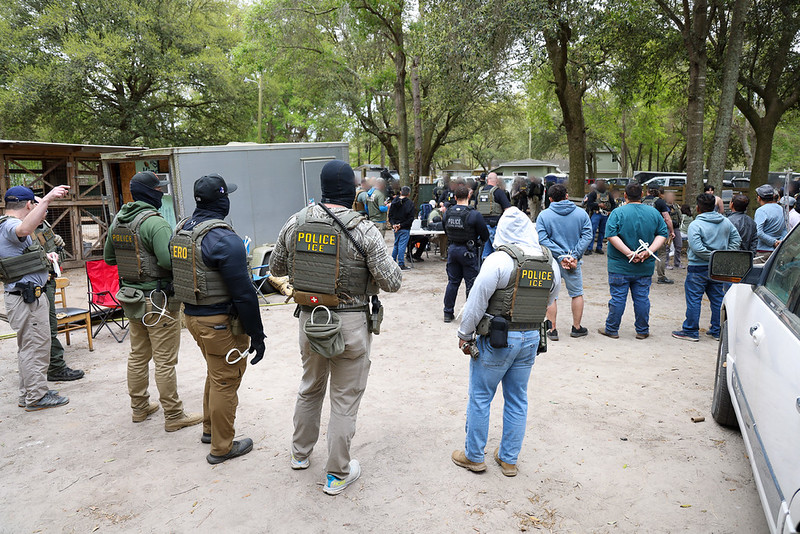
The U.S. Department of Homeland Security launched Operation “Midway Blitz” on September 8, 2025, as a major immigration enforcement operation in the Chicago area.
The operation was controversial from the outset because of the way federal agents conducted arrests and interacted with protesters and other residents. Legal challenges followed, and in one case a federal court issued a temporary order that, among other requirements, directed agents who were not working undercover to display visible identification.
Researchers at the University of Chicago who analyzed official ICE data found that the operation was not limited to immigrants with criminal convictions. People without criminal convictions were also arrested.
Why are Chicago residents filing police reports now?
Several Chicago residents have recently filed police reports alleging unlawful conduct by federal agents during last year’s operation. Among them is Marimar Martinez, whose case became one of the most prominent disputes associated with “Midway Blitz.”
These reports are significant because they could provide a basis for further investigation. An earlier effort sought the appointment of a special prosecutor to investigate the conduct of federal agents, but Cook County Judge Erica Reddick rejected that request in May. One of the central questions was who actually has the authority to initiate such an investigation.
Residents are now pursuing a different route by reporting specific incidents to the Chicago Police Department. If police determine that there are grounds for further action, the cases could be referred to the Cook County State’s Attorney’s Office.
That does not mean the agents will be charged. Filing a police report is only the beginning of the process, and any potential criminal liability would have to be determined separately in each case.
Federal agents are not above the law
ICE is a federal agency, and Chicago cannot prohibit federal authorities from enforcing federal immigration laws. However, being a federal agent does not provide unlimited immunity from legal accountability.
If there is evidence that a crime may have been committed during an operation, the relevant questions include whether the agent was acting within the scope of lawful federal authority and whether the use of force or other disputed conduct was legally justified.
This is why the new police reports matter. The dispute is no longer limited to the political conflict between Chicago and Washington; it now also involves an effort to have the specific conduct of individual federal agents examined through the regular legal process.
ICE is arresting more immigrants
All of this is happening as ICE significantly increases the number of immigrants it arrests across the United States.
Enforcement is no longer limited to large-scale operations such as “Midway Blitz.” Arrests are taking place in a variety of locations, including areas around immigration courts and other places where federal authorities can locate individuals they are seeking.
As federal authorities arrest growing numbers of immigrants, Chicago is increasingly confronting another question: What are the limits of ICE agents’ authority, and who can hold them accountable if they cross those limits?