

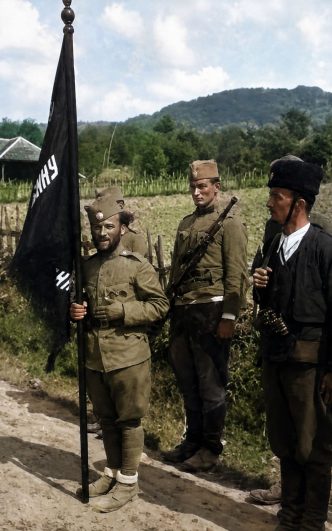
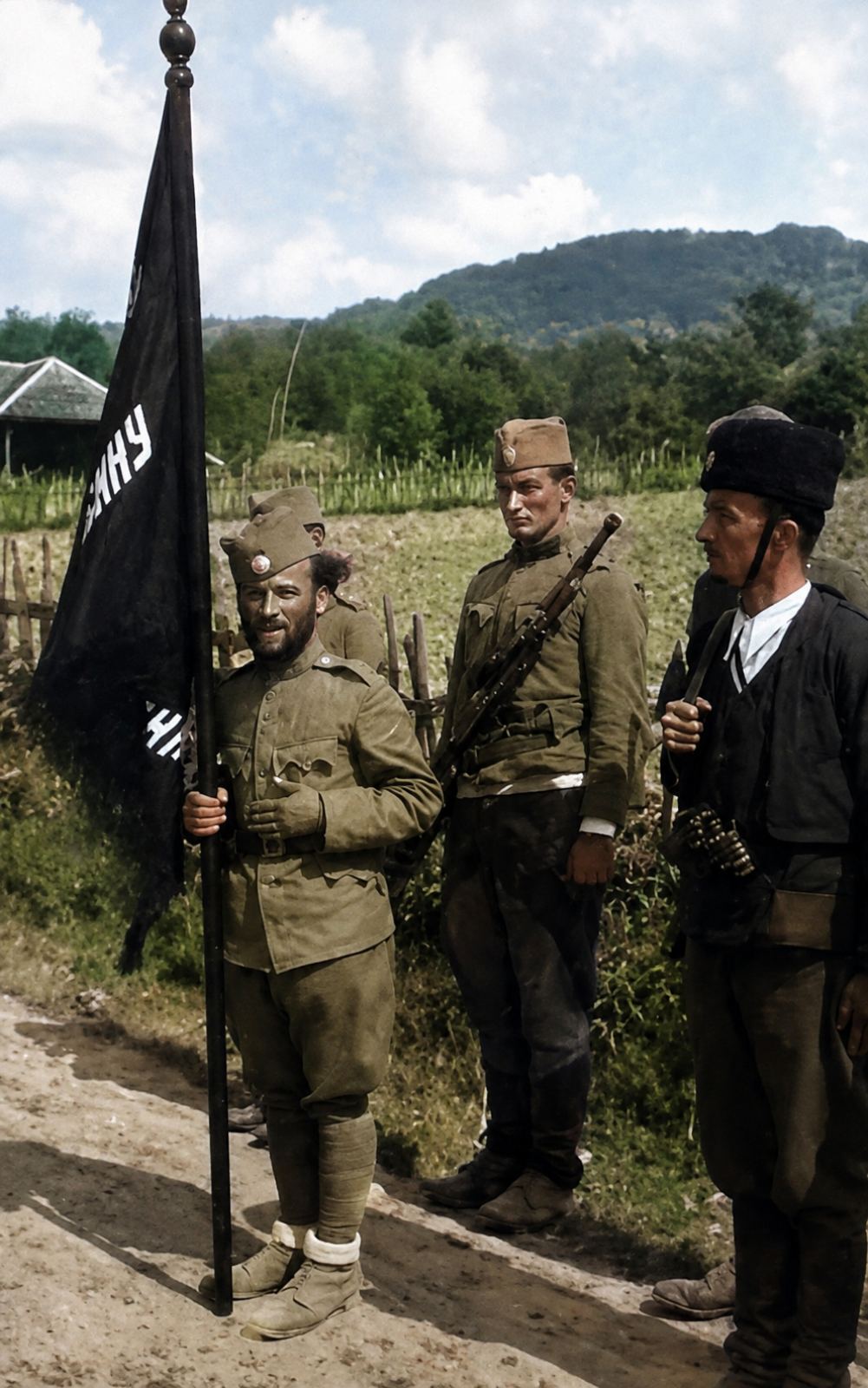
Infantry Second Lieutenant Krsta Kljajić was born in 1915 in Slunj.
From the earliest days, he placed himself at Colonel Mihailović’s disposal in organizing the resistance movement at Ravna Gora. Following the formation of the Takovo Chetnik Detachment and the arrival of Zvonko Vučković, Krsta Kljajić was assigned to his unit, where he performed various duties, including that of deputy detachment commander. He took part in the liberation of Gornji Milanovac on September 29, 1941. He subsequently fought against the Germans at Rudnik and Rapaj Hill and participated in the siege of Kraljevo. After the outbreak of the civil war, he also fought against the Communists, about whom he had no doubts.
In a proclamation broadcast by Radio London in October 1941, he was promoted to the rank of second lieutenant. On September 6, 1942, by decree of the Supreme Command, he was awarded the Order of the Star of Karađorđe, Fourth Class with Swords.
Severe Wounding and Return to Duty
During the attack on Ljig on November 15, 1942, he was severely wounded in the arm. Shortly afterward, doctors amputated it without anesthesia, using only an ordinary saw. Not long afterward, a German patrol came upon the house where he was recovering. Captain Vučković and his escorts barely managed to extract the gravely wounded Krsta, who was hovering between life and death, from the encirclement. In retaliation, German forces burned several houses in Takovo.
After a month of recovery, Krsta returned to duty in the newly formed First Ravna Gora Corps, where he served in various capacities: as commander of the headquarters company and acting commander of the First and later the Second Takovo Brigade.
During an attack on the gendarmerie station in Ugrinovci, he captured six Czech light machine guns, rifles, and crates of ammunition that the Chetniks desperately needed.
In retaliation, the occupying forces launched daily searches for Krsta and his men. On July 3, 1943, in the village of Gornja Crnuća, on the slopes of Mount Rudnik, Krsta Kljajić was killed in an ambush by Ljotić’s forces. He was buried at Ravna Gora, where his grave remains to this day.
Toward the end of the war, in 1944, a newly formed mobile brigade from the Takovo region, where Krsta had fought, was named after him in honor and memory of the legendary Krsta Kljajić.
A Song for the Fearless One-Armed Commander
In those days, throughout this part of Šumadija, a song was sung in memory of the fearless one-armed commander of Takovo. Part of it went:
“O Crnuća, dark is your fate,
For you lost Serbia’s finest son.
Does Krsta Kljajić’s mother know
Where the hero’s body now lies?”
Writing about Krsta’s death, his superior, Captain Zvonko Vučković, recorded the following in his memoir Wartime Memories:
Vučković’s Account of Krsta’s Death
“While visiting his battalions, Krsta, as was his custom, took only one three-man team with him… In the village of Gornje Crnuće, by the great oak trees on the edge of the Rudnik forest, he fell, struck in the heart by bursts of machine-gun fire. Informed by their spies about the direction of Krsta’s movements, the Ljotić men had slipped unnoticed during the night from the main road into the nearby forest and set up ambushes. When Krsta came along his usual route in the morning, they showered him with bullets at point-blank range. They paid no attention to his escorts, who, pinned to the ground, returned fire. A dead Krsta was all they wanted, yet even in death they did not dare approach him. When they had emptied their magazines, they ran headlong down the hill, never to return to that area again.
Krsta’s three inseparable escorts, who carried him down to the village in their arms, accompanied him for another two days. That was how long the journey took from Gornje Crnuće beneath Rudnik to the pastures of Ravna Gora, where we buried him. A huge crowd of local people, men and women from all the villages between Rudnik and Suvobor, accompanied Krsta on his final journey… Into the mound of hard, reddish earth, covered with wreaths of wildflowers, we planted a wooden cross to mark the place where we had left him.
When the ravages of time finally consume his grave marker, the nameless hillock, which from that day the people called ‘Krsta’s Grave,’ will remain, together with the legend of the small, fearless man who, in the epic tradition of the people to whom he belonged, refused to submit even to the greatest power in this world.”
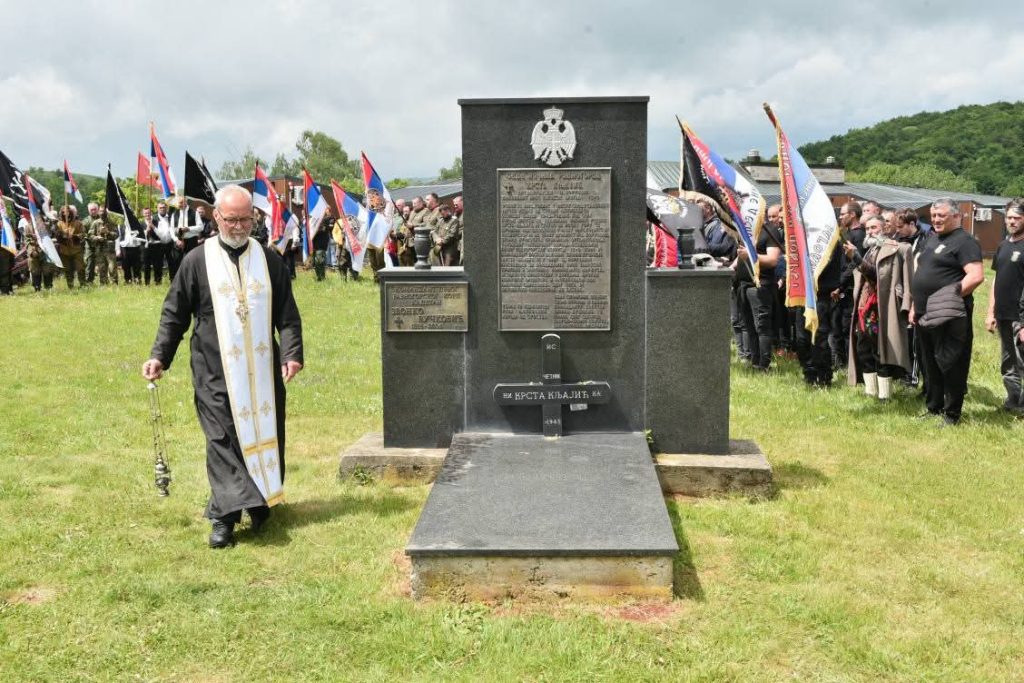
Krsta’s Grave and the Legacy of Ravna Gora
Krsta’s grave experienced a revival together with Ravna Gora in the 1990s. It became a traditional gathering place for members and supporters of the Ravna Gora Movement during the annual May assembly commemorating the beginning of the uprising at Ravna Gora.
Generations of young Serbs, Ravna Gora supporters, and Chetniks have taken an oath there, at the resting place of Second Lieutenant Krsta Kljajić, pledging themselves to their people, their king, God, and their homeland. It can be said that at his burial mound, at the very place where he rests, new generations of Serbs continue to emerge, ready to defend their history, customs, traditions, monarchy, and Orthodox faith.
In the absence of Draža’s grave, Krsta’s grave, standing where it does at Ravna Gora, holds enormous significance for supporters of the Ravna Gora Movement and the Yugoslav Army in the Homeland (JVuO).
On Vidovdan (St. Vitus Day) in 1944, in the presence of numerous rescued Allied airmen, soldiers, and civilians, a memorial service for Second Lieutenant Krsta Kljajić was held beside his grave. Since its reestablishment, the Ravna Gora Movement has, for decades, held a memorial service every May 8, on St. Mark’s Day, at Krsta’s grave. Together with clergy and the people, they commemorate General Mihailović’s soldiers whose graves remain unknown, Krsta Kljajić, and all the officers and soldiers.
Captain Zvonko Vučković kept his promise. After the fall of communism in our country, he replaced the wooden cross with a fitting monument at the resting place of the legendary Krsta.
Source and Photo: Ravnogorski pokret