

Who decides today what is true and what is disinformation? Where does the fight against fake news end and censorship begin? And what is the future of journalism in an era when technology makes it possible to produce and spread false content faster than ever before?
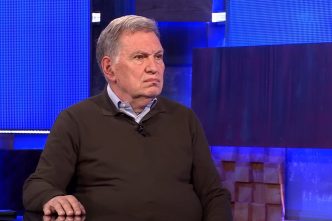
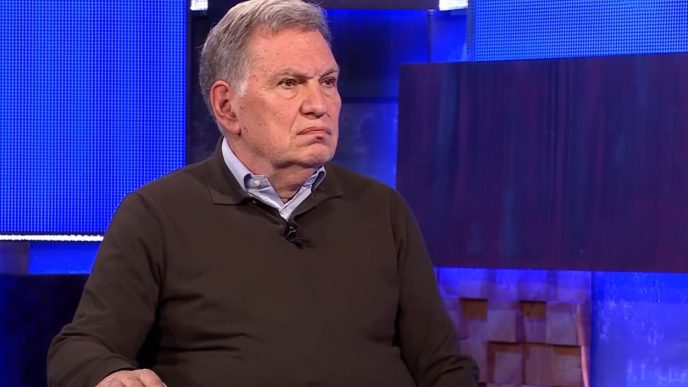
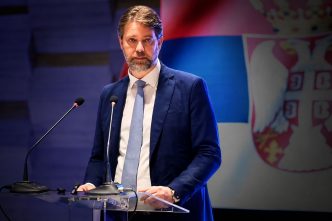
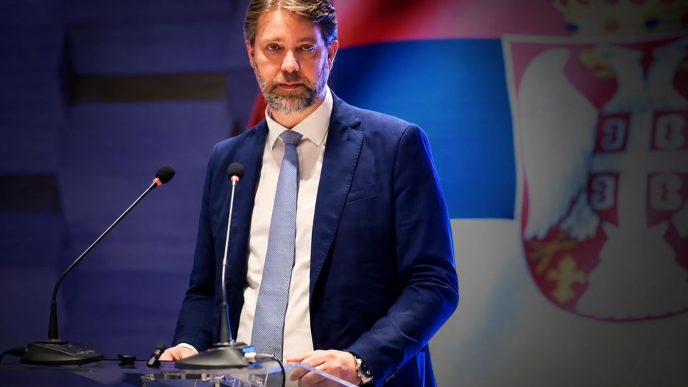
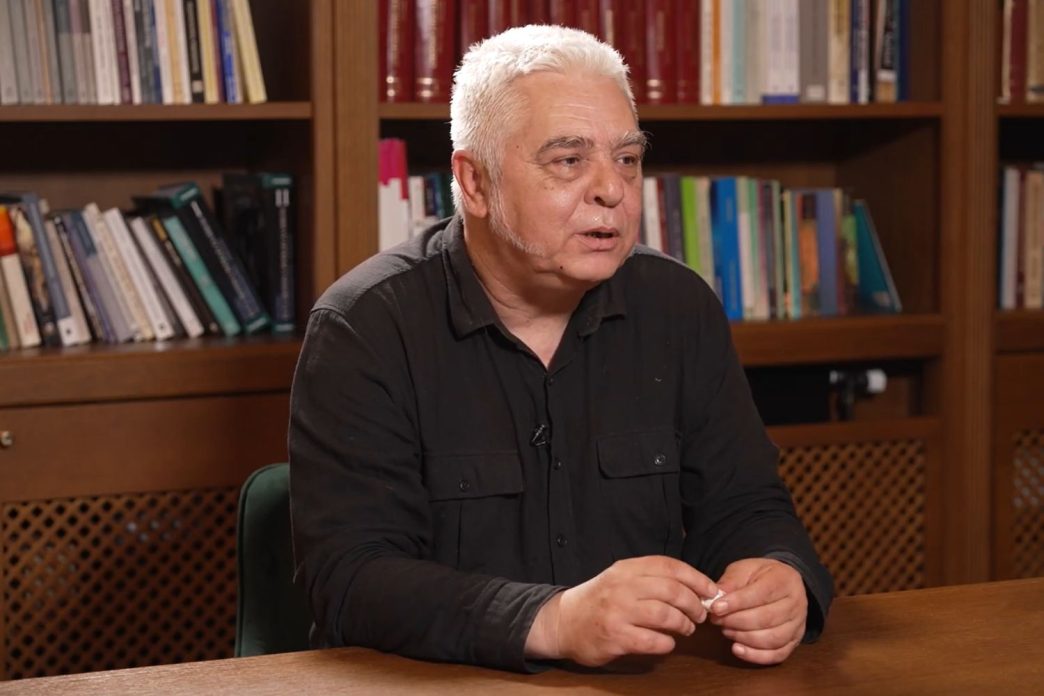
We spoke with Boris Bratina, Serbia’s Minister of Information and Telecommunications, about the country’s media landscape, media freedom, professional standards, and the challenges created by new technologies. We also discussed Serbian media in the United States, their role in informing Serbian communities abroad, and opportunities for closer cooperation with media organizations in Serbia.
1. How do you assess the current state of the media landscape in Serbia? What are we doing well, and what are we doing poorly?
We could say that the media landscape in Serbia is freer than in many other parts of the world. There is practically no censorship here, and there are a large number of television channels and different types of media content.
However, media freedom does not necessarily mean high-quality content. Citizens are exposed every day to a large amount of content that is commercial, sensationalist, biased, or insufficiently professionally edited.
When we speak specifically about Serbia, the media space is absolutely free, but at the same time there is also a problem with an unnecessarily high level of conflict among domestic media outlets. Instead of a professional and evidence-based approach, there is often an emphasis on conflict, divisions, and sensationalism. In my opinion, that is one of the biggest challenges facing our media environment.
2. In recent years, we have increasingly discussed digital sovereignty. When it comes to informing citizens, does Serbia have sufficient capacity of its own, or are we becoming increasingly dependent on global platforms that decide what audiences will see?
I believe independent media should operate completely freely and professionally, without pressure or influence from any side. Their primary responsibility is to provide the public with facts — where, what, how, when, and who — on the basis of which citizens can form their own opinions.
I also respect journalistic commentary and analysis, but it seems that today they are often burdened by particular interests and preferences toward one side or another. Very few commentators manage to remain completely outside those influences.
That is why it is important for media outlets to be as independent as possible, both in their editorial policies and in terms of ownership structure. No one should be told what to say or how to report. The essence of media freedom lies precisely in the ability of media organizations to investigate independently, report, and make professional editorial decisions.
3. In recent years, more and more people have been getting information through social media, video platforms, and other digital sources. In your view, how has this changed the role of professional media?
When it comes to Serbia, I believe we have achieved good results and have significant capacity in this area. Serbia continues to rank well on relevant international indexes, both in terms of media freedom and digital capacity.
It is important for Serbia to be an active and responsible voice in this process. No one should be told what to think or say. Instead, we should insist on facts and professional reporting. That is why we must continue raising professional standards for journalists, editors, and all other media professionals.
4. In recent years, there has been an increasing number of unregistered media outlets with significant influence on public information. In your view, does the existing legal framework adequately address these changes, and should such sources also bear responsibility for the content they publish?
When it comes to media outlets that are not entered in the Media Register, it is important to distinguish between genuine cross-border media and those that present themselves as such while actually operating within Serbia. If it is a cross-border media outlet that meets the prescribed conditions, there is no problem. However, we also have cases of media outlets that are not registered in Serbia but effectively produce and broadcast their programming from Serbia while presenting themselves as cross-border media.
This approach raises questions about compliance with domestic laws and obligations — from registration and tax payments to obligations toward the Regulatory Authority for Electronic Media (REM). One cannot invoke domestic laws when they are convenient while avoiding the obligations imposed by those same laws when they are not. This is one of the problems we must address systematically, because the rules should be the same for everyone operating in Serbia’s media market.
5. In your view, how can we find the right balance between combating disinformation and protecting the public interest on one hand, and preserving freedom of expression on the other?
That is an extremely important question, particularly because of the way you framed it. The phrase “fight against disinformation” is not infrequently used in the West as a euphemism for censorship, which is why it is important to make a clear distinction between a genuine fight against fake news and attempts to control media content.
Disinformation is a real problem. In recent years, we have seen numerous examples of inaccurate and unverified information, including cases in which accusations of excessive use of force were made against the police without basis, even though the circumstances were different. The problem of fake news has been further amplified by technological development. What was once limited to individual cases can now spread at enormous speed through digital platforms. Fake news, disinformation, or colloquially “fakes,” have become an almost daily occurrence.
A particular problem is that a correction almost never reaches the same audience as the original false information. Millions may hear or read a story, while the correction often goes unnoticed.
That is why combating disinformation is necessary, but it must not become an excuse for censorship. On the contrary, it must involve fact-checking, professional journalism, and clear opposition to the deliberate spread of false information. In circumstances in which Serbia also faces various forms of attempted destabilization, the responsibility of the media and state institutions in countering disinformation becomes even more significant.
6. Based on your observations, what are the most important differences between the way media in Serbia and media in the United States report?
For many years, Serbian diaspora media, particularly in the United States, were more ideological than informational. Some of those media outlets emerged among people who had left the former Yugoslavia and moved to the West, where they continued to maintain certain political and ideological views.
Today the situation is different, and there are more media outlets reporting about Serbia and the lives of Serbs in the diaspora. However, problems still exist, including unacceptable pressure and attacks on journalists. We have seen such examples abroad as well, including incidents at public forums in Germany where a journalist was physically attacked simply because he wanted to ask a question. Responsibility does not rest only with organizers, but also with hosts and venues where such events are held, which must provide conditions for everyone to participate safely and freely.
On the other hand, it is good that an increasing number of people in the diaspora are showing interest in Serbia and seeking information directly from the country. The internet has brought enormous change in that regard. The emergence of online media and journalists has made it faster and easier for people living abroad to obtain information about Serbia.
Of course, the internet requires caution and a critical approach to sources, but it has undoubtedly shortened the distance between information and readers, including our people who live outside Serbia.
7. How do you assess the work of Serbian media in the diaspora, particularly in the United States, and what could they adopt from American media practices to improve their work?
I believe Serbian and pro-Serbian media in the United States and other Western countries should have as much presence in Serbia as possible. The internet has significantly improved access to information, but it cannot replace direct contact, conversations, and work in the field. Journalism requires verifying information through multiple sources and obtaining answers from relevant institutions to questions that matter to the public.
That is why closer cooperation between diaspora media and media in Serbia is important. Major television networks once had correspondents around the world, and that direct contact with events on the ground was an integral part of journalism. It should still be that way today. That is why we appreciate the efforts of people like you, who obtain information and answers from relevant sources through proper journalistic work and then present them to readers in the United States. Technology now makes it possible to obtain information much faster and with fewer resources, but the need for professional journalism has not disappeared.
8. To what extent can Serbian media in the diaspora contribute to more accurate reporting for Serbs living abroad, and how could closer cooperation with media in Serbia strengthen that role?
It is good that Serbian portals and media outlets exist around the world and can present a more accurate picture of Serbia to people living abroad. Serbia today is not the country it was sometimes portrayed as being in the 1990s. It is a complex and dynamic country with significant economic potential, and its progress can be seen, among other things, in the growth of tourism and increasing interest among foreigners in our country.
That is why we want as many of our journalists who live and work abroad as possible to be involved in this process. Serbia is not an isolated island, nor can it be viewed outside the broader European and global context. That is precisely why diaspora media should report not only about Serbia but also about developments taking place in the European Union and around the world.
Ultimately, regardless of different interests and media interpretations, professional journalism always requires the same things — verified facts, multiple sources, and a willingness to present the public with the most complete and accurate picture of reality possible.
9. How do you see the media landscape developing over the next five to ten years?
Much depends on the developments ahead of us, but also on how we shape our media environment in the future. Today, on one side, we have authentic and professional journalism, while on the other we have increasingly sophisticated technologies for producing and spreading false content. It is a kind of clash of giants.
I hope that truth will, sooner or later, find its way and that there will be increasingly more space in Serbia for authentic information and reporting on real events. At the same time, we must improve technologies and methods for identifying and combating false content.
Of course, the entire political life of a country cannot fit within the media, but a significant amount of information can certainly be presented better than it is today. Endless repetition of the same content should particularly be avoided, because it too can become a means of exerting pressure on the public. This is not characteristic only of global media — unfortunately, such practices sometimes exist here as well.
If Serbia remains politically and militarily neutral, I believe we have a good opportunity to develop strong, professional, and independent journalism. This part of Europe has always been an important geopolitical and civilizational crossroads. Throughout its history, Serbia has had opportunities to host significant international events, and I believe there will be even more of them in the future.
For all of that, however, we also need courageous journalists — journalists willing to ask questions, investigate, and report without fear.
10. Artificial intelligence is already changing the way media content is produced and distributed. How do you see its impact on journalism, and do you believe it will primarily represent an opportunity or a challenge for the media?
When we attend digital forums, they usually last two days. On the first day, everyone talks about advances in digital technologies, artificial intelligence, and its potential, while the second day is devoted almost entirely to cybersecurity. It is clear that all the advantages of digital technologies can, under certain circumstances, also become tools for threatening another side.
That is why I believe artificial intelligence will undoubtedly change journalism significantly, but I do not believe it will replace journalists. It can be an extremely useful tool for faster data processing, fact-checking, analyzing large numbers of sources, and adapting content for different platforms. In that sense, it is primarily a major opportunity for media organizations that use it responsibly and professionally.
At the same time, artificial intelligence carries serious risks. The same technology that enables faster and higher-quality access to information can also be used to produce convincing fake news, manipulated recordings, and other forms of disinformation. That is why one of the greatest challenges facing modern journalism will be preserving trust in information and the ability to distinguish authentic content from deliberately manufactured fakes.
I therefore do not see the future as a choice between journalists and artificial intelligence, but rather as a combination of the two. Technology can help journalists work faster and more efficiently, but responsibility for professionalism, fact-checking, and the public word must remain with people. In the end, the most important values remain the same ones that have always formed the foundation of journalism — truth, professionalism, and courage.
Photo: Printscreen