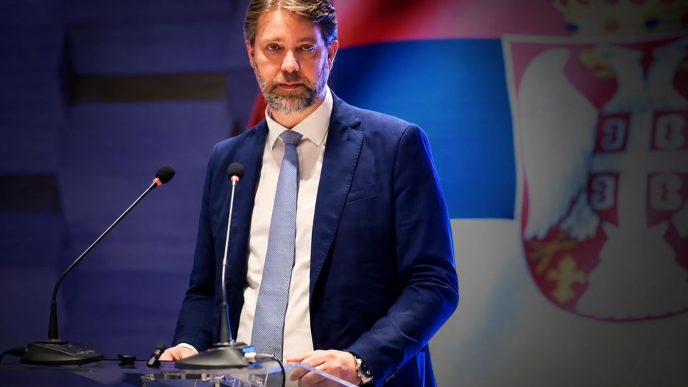



In Part One of his interview with Chicago na dlanu, Vukša Dragović, founder of Srpski suverenisti, discussed foreign funding of Serbia’s NGO sector, data obtained from the National Bank of Serbia and the network he calls the “NGO Hydra.”
In Part Two, the focus shifts to an issue particularly relevant to our readers in the United States: how can Serbs in the diaspora know who they are actually supporting when they donate money to organizations, foundations and initiatives in Serbia?
Dragović explains what he believes donors should check before sending money, gives examples of organizations whose activities he considers politically controversial, discusses legislative changes Srpski suverenisti plans to propose and explains where he draws the line between legitimate civil-society activity and political involvement.
6. This issue is particularly important to our readers in America. Serbs in the diaspora send millions of dollars to Serbia every year…
I do not want anyone to misunderstand me — there are wonderful nongovernmental organizations in Serbia engaged in humanitarian work, and I believe the state itself could provide them with support. However, there are also organizations that present themselves that way while using donations from citizens — including those from the diaspora — as cover for an influx of foreign money used to finance their political activities.
You cannot use citizens’ donations to bring down a government in any country. That is simply not serious.
For that reason, it is realistic that someone who sincerely wants to help Serbia could, without even being aware of it, indirectly finance an organization whose work we consider politically controversial or contrary to the country’s interests.
Citizens, particularly those in the diaspora, should pay attention to these organizations’ media appearances and the political messages they send. If they are involved in politics, then in almost every case their humanitarian and socially beneficial work is merely a cover for attracting public sympathy and collecting funds.
We have encountered such examples in our research.
An Example Dragović Points To: “Kreni – Promeni”
Take Savo Manojlović and the “Kreni – Promeni” movement. At first glance, they appear to be people fighting to protect the environment and improve the general situation in the country. While they were a nongovernmental organization, they received money, among other sources, from Rockefeller.
Once they became a political entity, the Law on Financing Political Activities prohibited that type of funding, so they established new nongovernmental organizations at the same address — such as “Srbija u pokretu” — through which they receive money from abroad and in that way finance their political activities.
About a month ago, they posted on social media that they were having difficulty financing the 13 offices they use. However, if you look at the average salary reported through the Serbian Business Registers Agency for “Kreni – Promeni,” you will see that it is 500,000 dinars, or approximately $4,900.
7. In your opinion, what should every Serb in America check before donating money to an organization?
The way they operate is key. If an organization has a clear political character and is also well organized, it is most often funded by or under the direct control of certain nongovernmental organizations. I can confirm that from personal experience, as someone who has been part of Serbia’s opposition scene for the past ten years.
Realistically, a small group of courageous individuals will operate at a guerrilla level — without serious infrastructure and without easy access to the media. The moment such an initiative appears on N1, Nova S, in the newspaper Danas, or in any other opposition media outlet, know that it is “theirs.” Those media outlets and organizations do not allow anyone who is not under their control to build a public profile.
I experienced that myself. Over the past ten years, the same media outlets have quoted me countless times, but they have almost never identified me as the source, much less invited me to present my opinion. Our movement has existed for only a few months, although preparations lasted for years, and when you look at our studio and the number of people in the organization, it is clear that we are still operating at a guerrilla level.
What Serbs in America Should Check Before Donating
That is why every Serb in America, before donating money, should examine precisely how the organization they want to support operates. Pay attention to the following:
- whether it is engaged exclusively in humanitarian work or also sends political messages;
- whether it appears exclusively in certain opposition media outlets;
- whether it avoids all dialogue with the state or seeks assistance, and whether it offers any solution to the problem at all.
I have always criticized the government, but in some cases I have encountered understanding and a rapid response.
One simple example: I posted that not a single air-conditioning unit was working at the “Narodni front” maternity hospital. The criticism went viral, and within two days the government replaced all of the air-conditioning units.
If an organization acts exclusively as an opposition force and refuses any form of dialogue with or assistance from the state, then its goal is not to solve the problem but to exploit it politically for campaign purposes.
Genuine humanitarian work is distinguished precisely by the fact that it seeks a concrete solution rather than merely political benefit. No one will thank you for that, but someone genuinely engaged in social work does not expect thanks.
8. It is obvious that foreign funding of the NGO sector is a serious issue…
The issue of foreign funding of the NGO sector is indeed serious. In our view, the Serbian government should introduce clear and binding rules that would make the entire system considerably more transparent, so that citizens can know at any given time who is financing organizations operating in Serbia.
In the coming period, we will present concrete proposals for what needs to be changed — both to make the work of nongovernmental organizations transparent and to prevent their political activity, thereby reducing their ability to exert pressure on the executive branch.
For now, we will not independently draft legislative proposals or collect signatures through citizens’ initiatives. Drafting legislation costs a significant amount of money, and the certification of signatures required to introduce an initiative into the parliamentary procedure is itself a major expense.
Our first step will be to present the idea and seek assistance and support from the state. That is a normal and responsible approach when someone genuinely wants something to change rather than merely running a political campaign.
If state support is not forthcoming, we will then launch a fundraising campaign to finance the drafting of legislative proposals and a citizens’ initiative to collect signatures.
Proposed Legal Changes and a Public Registry
We are working on proposed amendments to a set of laws that would bring nongovernmental organizations under proper regulation. At the same time, we are preparing a website that will group together all individuals from nongovernmental organizations who are actively involved in Serbia’s political life.
The goal is to make it easy for citizens to determine who is connected to whom, instead of having those same people presented to them as neutral analysts or professors.
The issue is not a change of government itself, but the way that change occurs and the way candidates and organizations are presented to the public. A “pig in a poke,” such as the so-called student list — where people are asked for support without being clearly told who the candidates are or what they stand for — is completely unacceptable to me. Anyone who does not care who comes to power does not love their country and does not care about it.
9. Your critics say that any criticism of foreign funding is actually an attack on civil society…
We are not asking anything of them that we are not prepared to do ourselves. Every donation received in the bank account of our association, Srpski suverenisti, is published each month, together with receipts showing how the money was spent.
We have also registered as producers of media content in order to impose on ourselves the obligation to immediately disclose on the website of the Serbian Business Registers Agency any financial assistance we receive from state institutions or companies in which the state is a co-owner. If we can do that, I see no reason why they cannot do the same.
One of the legislative measures we will seek is precisely such a registry for media outlets financed from abroad, so that citizens can see in real time who is giving them money.
We will also seek a requirement that all media outlets disclose on their websites and in television content who finances them. If they are funded by the state, the corner of the screen would have to state, “Media content co-financed by the Republic of Serbia.” If they are funded by foreigners, it would have to state, “Media content under foreign influence.” Citizens must know who finances the programming they are watching.
As for the accusations that our criticism is an attack on civil society as a whole — that simply is not true. As I have already said, around 200 nongovernmental organizations are participating in this color revolution and in promoting the “Student Movement,” and we will deal exclusively with them. We do not examine at all nongovernmental organizations that are engaged in humanitarian and socially beneficial work without involvement in political life.
The line is clear: legitimate NGO activity is humanitarian, environmental, or other socially beneficial work without a political agenda.
10. Finally, what would you say to Serbs in America who want to help their homeland?
I recommend that Serbs in America who want to help their homeland follow my account on X, formerly Twitter, and regularly follow which nongovernmental organizations we are examining. We clearly point out what they do and how they are involved in political developments.
They can also follow my YouTube channel, where we track political developments in Serbia and try every Saturday to publish information about new organizations and individuals connected with the color revolution.
We mapped the NGOs we consider controversial exclusively on the basis of their political activities and media appearances. All nongovernmental organizations and individuals we have examined so far can be viewed at the following link:
In that way, they can be more confident that their money is genuinely serving the purpose for which they sent it and is not ending up with organizations whose work they would not support if they had known in advance who finances them and exactly what they do.
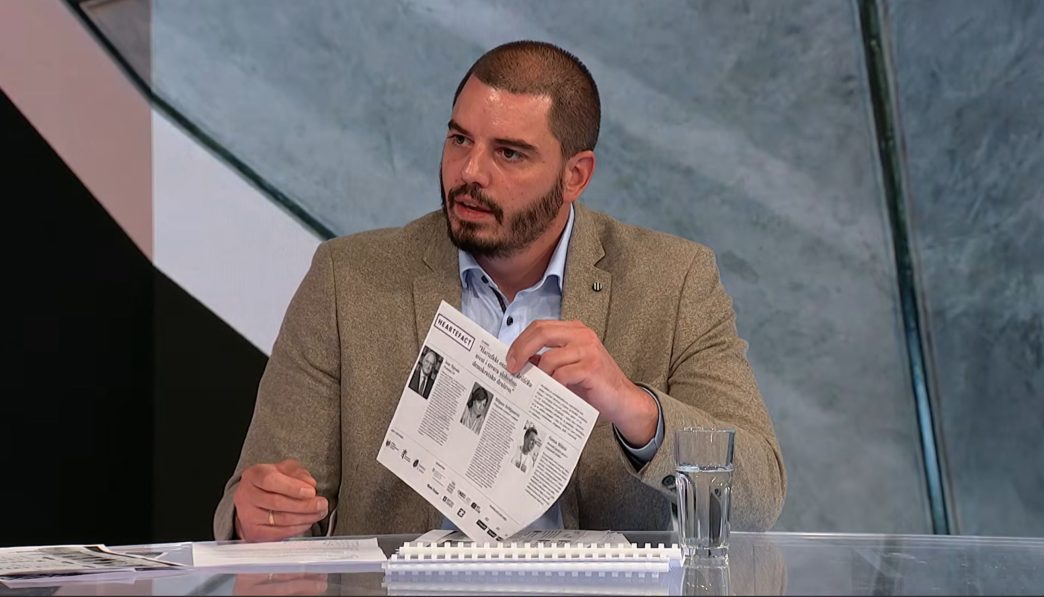
Photo: Printscreen