

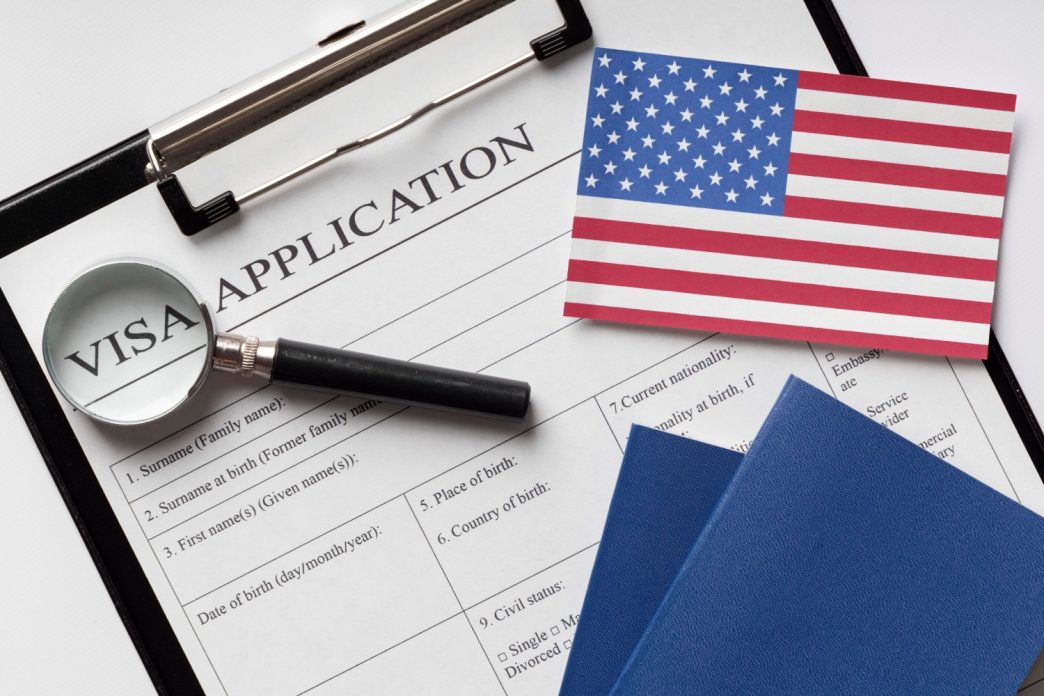
Securing a work visa for the United States has always been a complex legal journey, but recent regulatory overhauls, major fee restructuring, and stricter adjudication standards have significantly changed the rules of the game. Today, coming to work in the U.S. legally requires navigating a shifting U.S. Citizenship and Immigration Services (USCIS) framework where employer costs are rising and administrative mistakes can lead to delays, Requests for Evidence, or petition denials.
Primary Pathways: Temporary Non-Immigrant Visas and Permanent Green Cards
The U.S. system operates on a highly categorized structure of temporary non-immigrant visas and permanent immigrant green cards. One of the most sought-after temporary pathways is the H-1B visa for specialty occupations, which generally requires at least a U.S. bachelor’s degree or its equivalent in a field related to the position.
Congress has set the regular annual H-1B cap at 65,000, with an additional 20,000 places available under the U.S. advanced-degree exemption for qualifying beneficiaries who earned a master’s or higher degree from a U.S. institution. Some H-1B petitions are cap-exempt and do not count against those annual numbers.
For FY 2027 cap-subject cases, employers registered their candidates electronically during the initial registration period from March 4 through March 19, 2026. The electronic registration fee was $215 per beneficiary.
H-1B Is No Longer a Traditional Random Lottery
Under the beneficiary-centric system, multiple registrations submitted by different employers for the same individual no longer create the type of multiple-selection advantage that existed under the older registration system.
Beginning with FY 2027, another major change took effect. If the number of eligible registrations exceeds the available cap, USCIS uses a weighted selection process based on the highest applicable Occupational Employment and Wage Statistics, or OEWS, wage level.
A beneficiary at wage level IV receives four entries in the selection pool, level III receives three, level II receives two, and level I receives one.
This means beneficiaries associated with higher wage levels have a greater statistical chance of selection, while lower-wage-level candidates remain eligible.
If selected, the employer is allowed to file the full H-1B cap-subject petition during the designated filing period. Selection itself does not grant H-1B status or a visa. For new fiscal-year cap-subject cases, employment generally cannot begin before October 1.
L-1 and O-1 Follow Different Rules
For corporate transfers, the L-1 visa allows qualifying international companies to bring managers, executives, or specialized-knowledge employees into related U.S. operations.
The worker generally must have been continuously employed abroad by a qualifying parent, branch, subsidiary, affiliate, or other qualifying organization for at least one full continuous year during the relevant three-year period.
The L-1A visa for managers and executives is initially granted for up to three years for an established U.S. office and can be extended up to a maximum total duration of seven years. For a new-office L-1A case, the initial approval is generally limited to one year. The L-1B visa for specialized-knowledge employees has a maximum total stay of five years.
Meanwhile, highly accomplished individuals in science, education, business, athletics, or the arts may qualify for O-1 classification. The evidentiary requirements differ among O-1A and O-1B classifications, so it is inaccurate to say that every O-1 applicant simply must satisfy the same “three out of ten” criteria.
An initial O-1 period may be granted for up to three years, with extensions available when the applicable requirements continue to be met.
The Legal Blueprint: Step-by-Step Filing Procedures and Waiting Times
The path to an H-1B work visa involves three major administrative stages. L-1 and O-1 cases follow different procedures because they do not require a Labor Condition Application, or LCA.
First, for an H-1B case, the U.S. employer must file an LCA with the U.S. Department of Labor. The government reviews the wage conditions under which the foreign worker will be employed. The employer must agree to pay at least the required wage, which is the higher of the actual wage paid to comparable employees or the prevailing wage for that occupation in the area of intended employment. The Department of Labor reviews LCAs within seven working days for completeness and obvious errors or inaccuracies.
Second, once the LCA is certified, the employer files Form I-129, the Petition for a Nonimmigrant Worker, with USCIS. Under regular processing, this step can take months, depending on the petition type and the USCIS office handling the case.
However, employers can opt for Premium Processing by filing Form I-907. For relevant H-1B, L-1 and O-1 petitions, USCIS must take the required adjudicative action within 15 business days. This does not guarantee approval. USCIS may approve or deny the petition, issue a Request for Evidence or Notice of Intent to Deny, or take another qualifying adjudicative action.
The third stage is consular processing when the applicant needs a visa in a passport. The applicant completes the online DS-160 visa application and, when required, schedules an interview at a U.S. embassy or consulate.
Depending on location, season and visa category, interview wait times can vary considerably. The interview itself is generally relatively brief, but its length is not guaranteed. If approved, visa issuance times also vary, and some cases require additional administrative processing after the interview.
Financial Breakdown: Mandatory Corporate and Individual Processing Fees
The financial cost of this process has increased significantly due to major changes in government filing fees.
For a standard employer, the basic Form I-129 filing fee for an H-1B petition is $780. For an L-1 petition, the basic filing fee is $1,385. Reduced base fees apply to qualifying small employers and nonprofit organizations.
The Asylum Program Fee adds another potential cost. Most employers pay $600, qualifying small employers with 25 or fewer full-time-equivalent employees pay $300, while qualifying nonprofit organizations are exempt.
Certain H-1B petitions require a $500 Fraud Prevention and Detection Fee. Where the American Competitiveness and Workforce Improvement Act, or ACWIA, fee applies, it is $750 for employers with 25 or fewer full-time-equivalent employees and $1,500 for larger employers, subject to statutory exemptions.
A $500 Fraud Prevention and Detection Fee also applies to certain L-1 petitions.
Proposed Expansion of the $4,000 and $4,500 Surcharge
A separate 9-11 Response and Biometric Entry-Exit Fee applies only to certain large employers. The amounts themselves are not new: the surcharge is $4,000 for H-1B petitions and $4,500 for L-1 petitions.
DHS is preparing a final rule that would expand the existing fee to H-1B and L-1 extension-of-status petitions. The rule has advanced to the final-rule stage, but DHS has not yet published the final rule or announced an effective date.
The proposed rule would not affect every U.S. company. It would apply to petitioners that employ at least 50 employees in the United States when more than 50 percent of their U.S. employees, in the aggregate, are in H-1B, L-1A, or L-1B nonimmigrant status.
An amended petition that does not request an extension of the worker’s currently authorized H-1B or L-1 status would be exempt from this fee. Under the current statutory framework, the fee applies to qualifying petitions filed on or before September 30, 2027.
DHS estimates that expanding the fee would result in approximately $37.9 million in additional payments in FY 2026 and approximately $40.1 million in FY 2027.
Court Blocks $100,000 Payment Requirement for Certain H-1B Petitions
A presidential proclamation issued in September 2025 imposed a $100,000 payment requirement on certain new H-1B petitions, but the measure was later blocked by a federal court, and that ruling was upheld by a federal appeals court.
The proclamation had required a $100,000 payment to accompany certain new H-1B petitions filed after 12:01 a.m. Eastern on September 21, 2025.
It was not a universal $100,000 fee on every H-1B petition or every extension. USCIS issued specific guidance identifying which petitions were covered and the circumstances in which the requirement did not apply.
There was no corresponding $100,000 payment requirement for L-1 petitions.
Under the terms of the proclamation, the measure had been established for 12 months beginning September 21, 2025, unless extended or otherwise modified.
If an employer chooses Premium Processing, the fee is an additional $2,965 effective March 1, 2026. At the consular level, the nonrefundable visa application fee for petition-based H, L and O temporary worker visas is $205.
The Long Road: Permanent Residency and Recruitment Mandates
If the goal is permanent relocation, the employment-based green card system offers distinct preference categories, including EB-1, EB-2 and EB-3.
The EB-1 category covers certain priority workers. The EB-2 category targets professionals holding advanced degrees or individuals of exceptional ability and includes the National Interest Waiver, or NIW.
The NIW can allow a qualified foreign professional to bypass the traditional employer sponsorship and PERM labor certification requirements and self-petition using Form I-140, provided the applicant first qualifies for the underlying EB-2 category and also satisfies the separate NIW requirements.
The EB-3 category covers skilled workers, professionals and other workers.
For many other traditional employment-based green card cases, the employer must first complete the PERM labor certification process.
PERM Recruitment and Processing Times
For professional occupations, PERM requires an extensive real-world recruitment campaign.
This generally includes required Sunday newspaper advertising, a State Workforce Agency job order for 30 days, a notice of filing and three additional recruitment steps selected from the methods permitted by regulation.
The employer must document that no qualified, willing, able and available U.S. worker was found for the position.
As of August 7, 2026, the Department of Labor reported that PERM Analyst Review was processing cases with September 2025 priority dates. The average Analyst Review processing time for determinations completed in July 2026 was 372 calendar days.
Once PERM is approved, where PERM is required, the employer generally files Form I-140. The basic filing fee is $715, plus an applicable Asylum Program Fee where required.
If the applicant is already in the United States and eligible to adjust status, Form I-485 may eventually be filed. The standard filing fee is $1,440, with a lower fee available for certain children under age 14 filing with a parent.
How Long Does the Green Card Process Take?
Because of numerical limits, the actual wait depends on the employment preference category, priority date, country of chargeability, and availability of immigrant visa numbers.
The statutory per-country limit is not simply seven percent of all green cards. It is seven percent of the combined annual family-sponsored and employment-based preference limits.
In the August 2026 Visa Bulletin, Serbia falls under “All Chargeability Areas Except Those Listed.” Under the Final Action Dates chart, EB-1 and EB-2 are Current, EB-3 has a September 1, 2024 final action date, and Other Workers has an April 1, 2022 date.
It is therefore not accurate to state that every Serbian applicant will complete the employment-based green card process within two or three years.
Applicants chargeable to countries with much heavier demand, including India and China, can face substantially longer waits in certain categories. In August 2026, China EB-2 has a September 1, 2021 final action date and China EB-3 has a January 1, 2022 date. India EB-2 is listed as Unavailable, while India EB-3 has a January 1, 2014 final action date.
Zero Tolerance: The Heightened Scrutiny Environment
The administrative environment surrounding these applications has become increasingly strict. Immigration adjudicators may issue Requests for Evidence when the documentation initially submitted does not sufficiently establish eligibility for the requested classification.
Discrepancies between job descriptions, academic qualifications, corporate records or other documents can trigger additional scrutiny and delay a case, but they do not automatically result in denial.
Incomplete or inadequate translations, inconsistent dates, insufficient job descriptions and missing evidence can also create serious problems.
Every date, timeline and professional credential should therefore be carefully reviewed across the relevant forms and supporting documents. In the U.S. immigration system, administrative accuracy is not merely a formality — mistakes or insufficient evidence can significantly delay a case or affect its outcome.
Photo: Magnific