

Can Serbs living abroad understand today’s Serbia if they continue to view it through the divisions that drove their ancestors to leave their homeland? Do historical rifts still shape their relationship with Belgrade, or have today’s political conflicts taken their place?
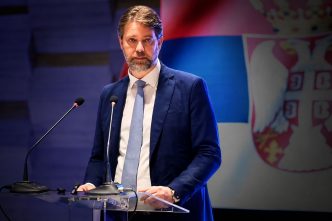
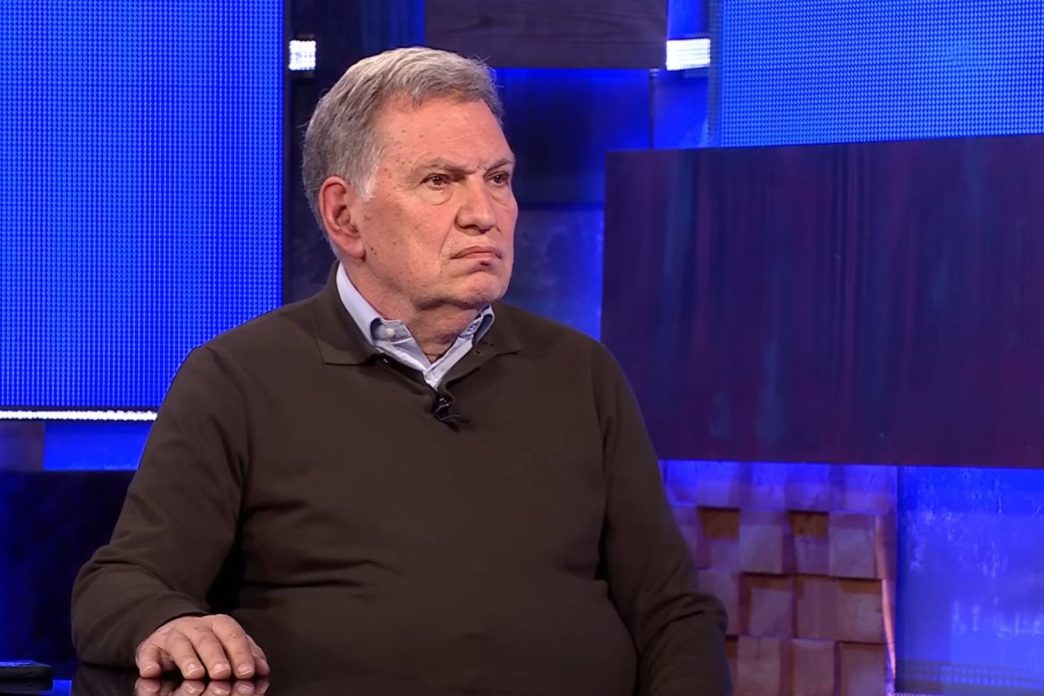
Philosopher Dragoljub Kojčić, former director and editor-in-chief of Serbia’s Institute for Textbooks, speaks with Chicago na dlanu about relations between Serbia and its diaspora, including the right of citizens living abroad to help determine the country’s future.
Kojčić openly defends the policies of Aleksandar Vučić while sharply criticizing student protests and blockades, questioning their authenticity and political objectives. Through his own interpretation of Serbia’s national interests, he examines the country’s economic direction, foreign influence and historical parallels with today’s political turmoil. He places particular emphasis on the lasting divide between Chetniks and Partisans, raising a central question for the Serbian community in America: how can trust be restored in a country that many left to escape ideological and political persecution?
Many Serbs in America, both those who left after World War II and those who emigrated two or three decades ago, are returning to their homeland less frequently. In an overwhelming flow of information where distinguishing truth from falsehood has become increasingly difficult, how would you objectively explain Serbia’s political situation to these people ahead of the upcoming elections?
It is obvious that ideological divisions originating in World War II, and the divisions among Serbs that characterized the period of Tito’s rule, continue to affect our people’s sense of national identity. In short, patriots are on one side and those nostalgic for Yugoslavia are on the other.
There would be no problem if both groups were devoted to the national interest and based their rivalry on which could do more good for Serbia. But the post-Tito ideology fails to understand that, since antiquity, politics has been about pursuing the common good of the community.
It cares neither about this country’s interests nor about democracy. It subordinates its activities to the instructions of numerous nongovernmental organizations, foreign intelligence networks or Croatian politicians who obstruct us in every possible way.
For example, when a parliamentary majority was formed for Plenković’s new term as prime minister, this was accomplished with the help of the Homeland Movement, whose condition was that no Serb should serve in that government. Today, that policy has people carrying out its work within the blockade movement here.
In these elections, patriots led on their electoral list by Aleksandar Vučić will face various kinds of self-hating Serbs led by Ilija Srdanović. Behind Vučić stands a policy grounded in principles and proven through action; behind the other man stands nothing. Above all, he has no theoretical understanding of political principles, has never participated in any political process or struggle, and lacks the presence and rhetoric that would make him resemble a capable statesman.
Now the blockaders and their supporters need to recognize that. To whom should the country be entrusted: a proven statesman or an amateur who will be controlled by puppet masters in Zagreb?
How can the diaspora be given an objective picture of Serbia’s current economic conditions? As someone who was away from the country between 2017 and 2024, I returned with the impression that significant progress had been made: living standards were higher and institutions more efficient. Is that merely my personal impression?
The guiding principle of the Serbian Progressive Party when it was coming to power can be summed up by Benjamin Franklin’s saying: “An empty sack cannot stand upright!”
The strengthening of the national economy began energetically and rapidly. That momentum raised every indicator important to the country’s development: unprecedented currency stability, a reduction in public debt unmatched even by many more developed European countries, energy security secured on very favorable terms and at favorable prices, more than 43 billion in foreign direct investment, and salaries and pensions that have quadrupled.
In addition, the healthcare system proved to be the most efficient in Europe during the coronavirus pandemic. Transportation infrastructure was built, including highways that exceed European technical standards and the particularly impressive Belgrade–Novi Sad–Subotica rail line.
The country’s credit rating, assessed by the IMF and other international institutions, has been confirmed by an economic growth rate exceeding 3.5 percent, as well as by the new appearance of cities, which demonstrates to every traveler that this is a place worth investing in or living in.
That, however, also motivated Serbia’s enemies in the surrounding region to activate local self-hating Serbs in an attempt to halt the country’s economic progress and place their activities under the slogan “Let Serbia Come to a Halt.”
Why is Serbia characterized by constant internal divisions? There were once Chetniks and Partisans, later supporters of Milošević and Đinđić, and today the “ćaci” and the “blockaders.” What keeps bringing us back to the same patterns, and is there a way to finally overcome these divisions?
The real dividing line today is between those who want a successful Serbia and those who want it to serve foreign strategists and their objectives. The blockade movement is not based on the principle of democratic competition, constructive criticism of the government or proposals explaining to citizens what the blockaders would do if they won the elections.
For two years, we have not heard a single well-intentioned idea. Instead of objective, well-founded criticism, we have heard only that they hate Vučić and that anyone who holds a different opinion should be hanged, thrown into rivers, deprived of voting rights, stewed, boiled in hot oil and so forth. Therefore, if the Ustaše did not fully carry out the genocide against the Serbs, that task has been assigned to the fifth column here.
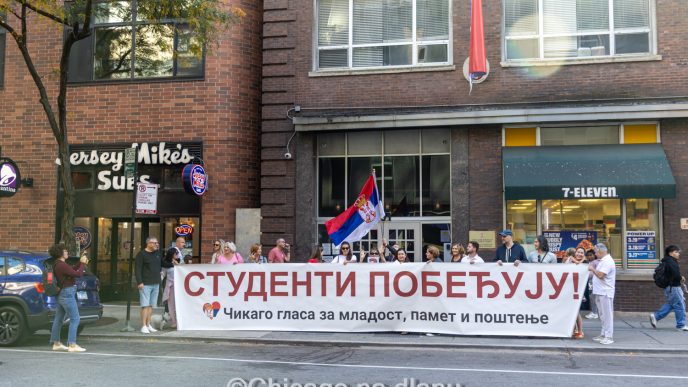
Are the current protests and the October 25 elections a case of history repeating itself? How closely do they resemble the demonstrations and elections of 2000, and how much do they resemble March 27, 1941, which many people compare with today’s student rebellion? Is that historical analogy justified at all?
The context in which today’s polarization is taking place is different. You may have noticed that I deliberately avoid calling this movement the opposition. To qualify as such, they would need a political structure: an ideology, programs, organization, ideological continuity and consistency, credible and even charismatic leaders. Instead, they are merely political illiterates, naked and unarticulated hatred of the legitimate government, the fueling of that hatred with money from abroad and, of course, a desire to seize power.
Not one of their leaders comes anywhere close to the charisma of Milošević or Đinđić, let alone Vučić. Nevertheless, it is entirely obvious that foreign centers of power, organizers and financiers had a hand in March 27, October 5 and the collapse of the canopy. This time, however, that subversion will not succeed. The Serbian people have endured the ordeals they were led through and know that freedom and sovereignty are the highest values.
Is there a parallel between the people who led SKOJ, DOS and the student movement? Can their goals and activities be compared at all?
One of the conclusions of the Communist Party of Yugoslavia at its 1928 congress in Dresden was that the backbone of Serbian hegemony in the Balkans had to be broken. That is a typical communist and globalist phrase that actually means breaking the backbone of Serbian sovereignty.
Serbs were expelled from Knin, Sarajevo and Priština and deprived of rights in Montenegro. In Croatia, they went from being a constituent people to barely 3.5 percent of the population and lost their status as a constituent people in territory they liberated in 1914. They also swept the killing of 700,000 of their compatriots under the rug for the sake of peace in the communist household. What kind of hegemony is that?
The blockade movement and the student electoral list are merely a continuation of attempts to remove Serbia from the path of revanchist powers dissatisfied with how World War II ended. There is an impression that today’s United States has recognized this and will develop its policy toward Serbia on fair principles.
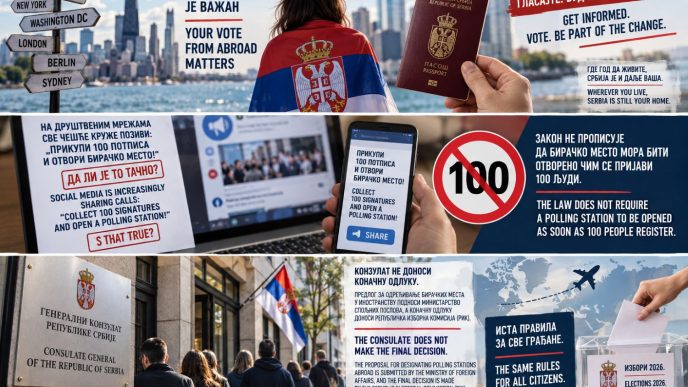
There is frequent public debate over whether Serbs living in the diaspora should have the right to vote, with particular controversy surrounding the participation of Serbs from Republika Srpska in Serbia’s elections. In your opinion, should people who do not live in Serbia be able to decide who governs the country, especially considering that many of them are not closely familiar with everyday life in their homeland?
The Serbian state space that existed within Yugoslavia was fragmented by the country’s dissolution in the early 1990s. There is a system in the region that allows people in the newly established republics to vote in elections in their country of origin. Many Croatian parliamentary representatives and officials come from Herceg-Bosna, as they call it.
I absolutely support the right of our compatriots who meet the formal legal requirements to vote in Serbia’s elections. For example, the fate of Republika Srpska and its citizens also depends on Serbia. Let me remind you that the student electoral list intends to eliminate Republika Srpska’s status under the Dayton Agreement and advocates the position that Serbs committed genocide in Srebrenica, with all the consequences such a claim would entail, including war reparations of $100 billion and the ultimate economic ruin of Serbia and the Serbian people.
Serbs in Chicago have traditionally harbored distrust toward the government and institutions in Belgrade. For many, that distrust goes back to members of the Chetnik movement fleeing the communist regime after World War II. How can Serbia’s authorities build bridges today and restore that community’s trust?
The painful divisions among the Serbian people that have their roots in World War II can and must be overcome. Personally, as a member of Serbia’s National Assembly in 2004, I advocated equal rights for members of the Ravna Gora movement and participants in the Partisan-led National Liberation Struggle.
The culture of remembrance, which has become part of strengthening our neglected national identity, should also include an objective understanding in remembering the period of senseless fratricidal war and contribute to organically overcoming those divisions. Ultimately, a new era demands national unity, including in how we view the past.
Photo: Printscreen